
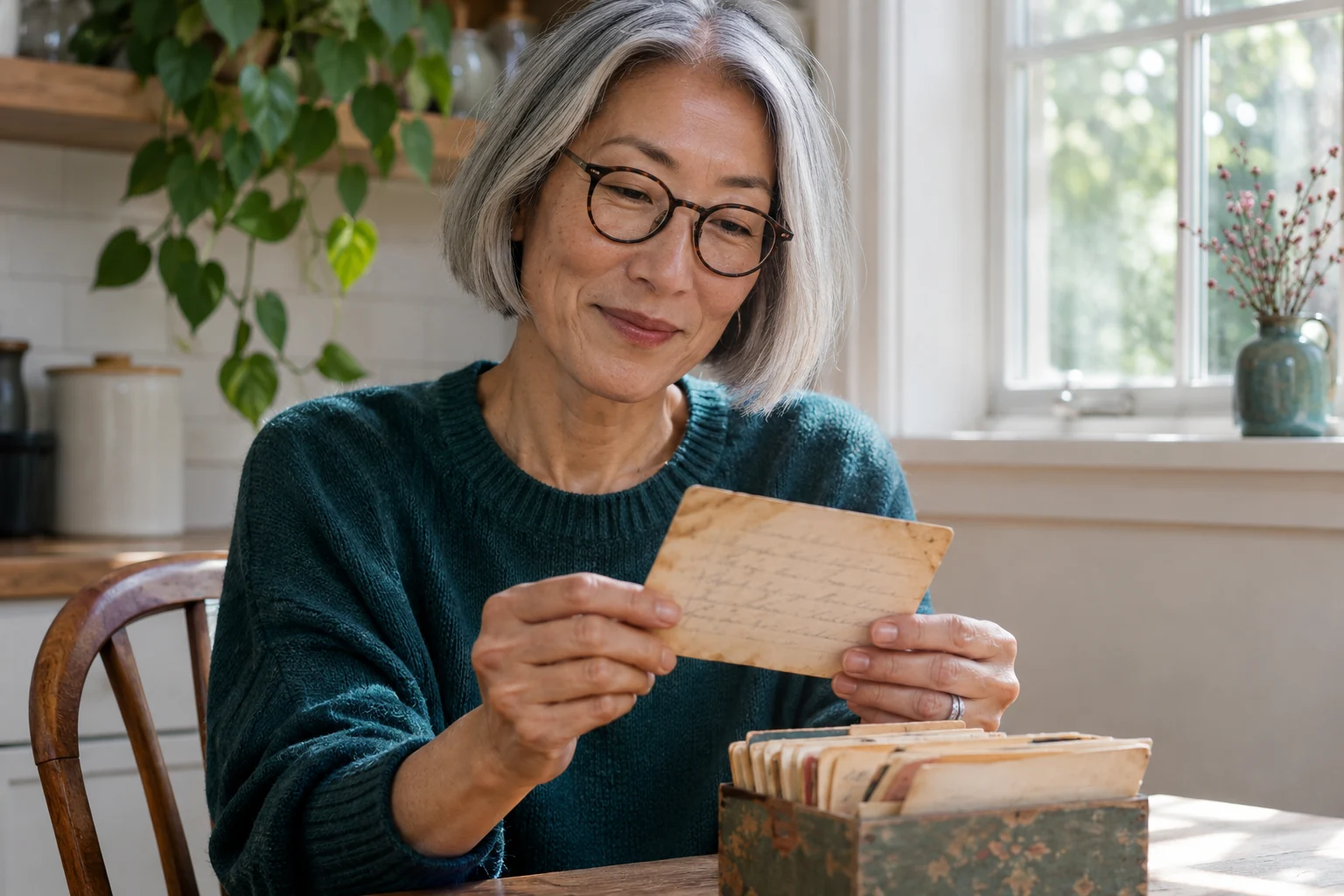
You know the card by its corners before you read the title. One side lists the ingredients. The other has a pencilled change that never made it into the typed version. If you want to preserve family recipes before another holiday season slips by, start with that card and the clue in the margin.
A small recipe collection can do three jobs. It can keep the handwriting safe, tell a cook what to do and give the next person enough context to add her own notes. One afternoon is a reasonable time to make a start. Set a limit of five recipes and choose the ones someone would actually ask you for.
Preserve family recipes in two versions
First, keep an image of the original, front and back. Take in the whole card, including the corners and any notes underneath the ingredient list. Then make a separate typed copy you can change as you cook. Call the first one the original and date the working copy so a cousin or friend can tell which is which.
Put clean, dry hands and a clear table ahead of fancy equipment. The U.S. National Archives’ guide to preserving recipes recommends handling papers carefully and keeping them flat where possible. If a card is brittle or a fold resists opening, photograph what you can reach without forcing it. Leave the dishes and drinks on a different surface while you work.
A recipe can survive in several forms. If your favourite version is in a bound notebook, capture the page where it sits. An envelope with cooking directions on the back deserves an image of both sides. If the story is entirely oral, ask the person who makes it whether they’d like you to take notes while they show you. Label those notes with the date and their name, with their permission.
Take a picture someone else can read
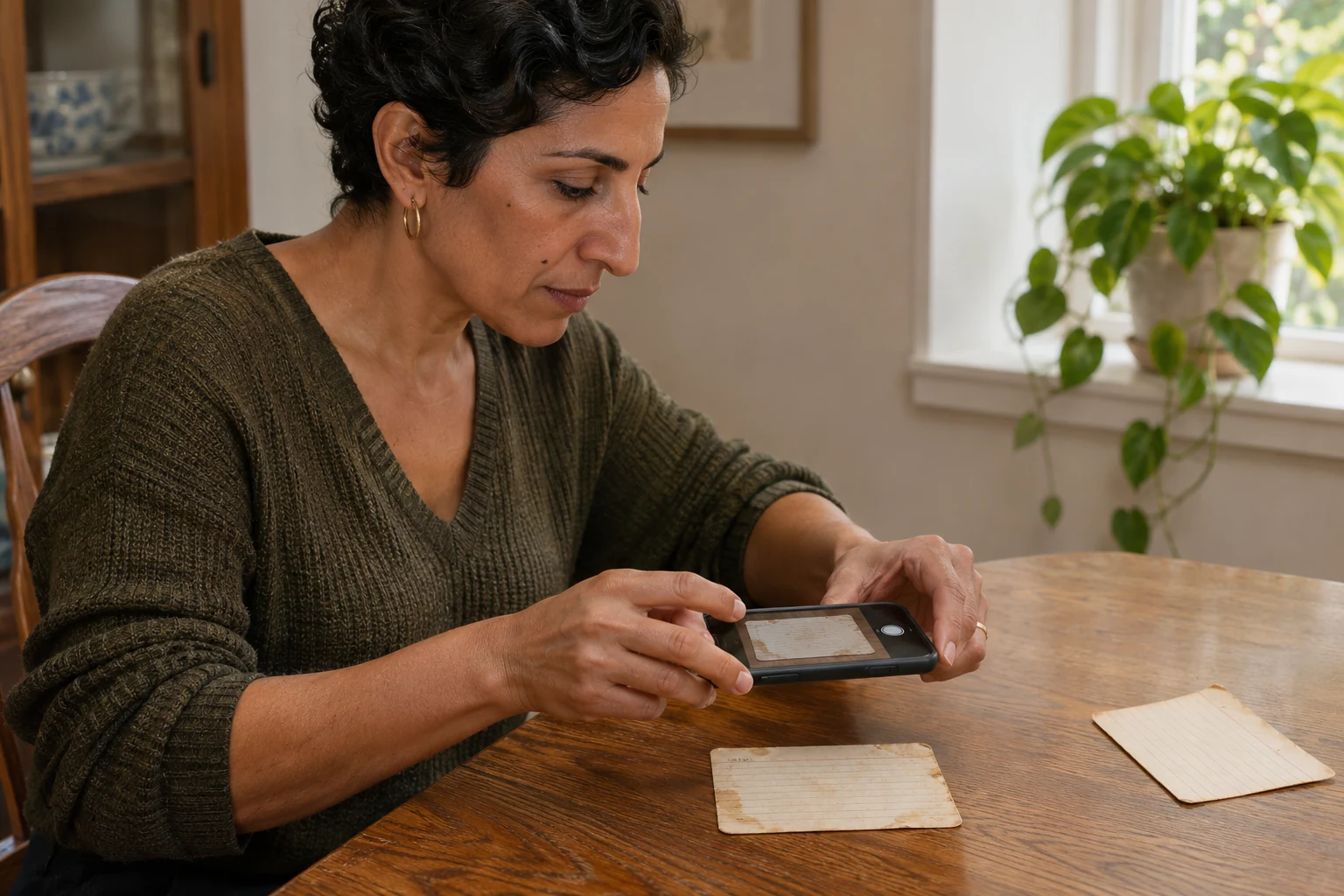
Set the card on a plain surface in indirect daylight. Hold your phone level above it to keep the page square. Before you move on, zoom in and check the faintest word or measurement. Take one extra close-up if a small handwritten change is hard to make out. For a two-sided card, name the files with the same recipe name followed by front and back.
If a sturdy flat card fits completely on a flatbed scanner, that is another option. The National Archives’ family-paper digitizing guidance specifies that the whole item should fit on the scanner surface and cautions against automatic-feed scanners for fragile or valuable papers. It also recommends keeping originals after digitizing. A picture gives the rest of the family something to open and read while the card stays in a safer place.
Check that you can find the full-size image from another device before you count it as shared. Keep one extra copy in a separate location you control. Use simple names, such as apple-cake-front and apple-cake-back. If there are three cakes with the same name, add the contributor or the occasion when the version is usually served.
Write down the details the card leaves out
Type the words as written before you interpret them. A line that reads “one glass” might refer to a particular glass in someone’s cupboard. Ask if anyone remembers which one. If there are two answers, put them in the notes under each person’s name, where appropriate. Leave a blank or mark a word unclear when you genuinely can’t read it.
Once the recipe has been cooked again, you can add what you measured and observed to the working copy. Record the date, pan size and what you used to decide the dish was ready. If readers will make it in different kitchens, separate details you tried from changes still to test. A recipe with one honest question left in it can be easier to use than a tidy page filled with guesses.
Give the memory one line of its own. Who served it, and when? A casserole brought to every autumn reunion may matter to you for a different reason than a recipe a neighbour wrote out after a summer barbecue. If you’re building the collection before having people over, pick one dish to talk about and use D’FYNE’s guide to planning a calmer dinner party to keep the rest of the evening manageable.
Include the serving detail someone might miss, such as whether a cake was iced or dusted with sugar before serving.
Make a copy for the kitchen
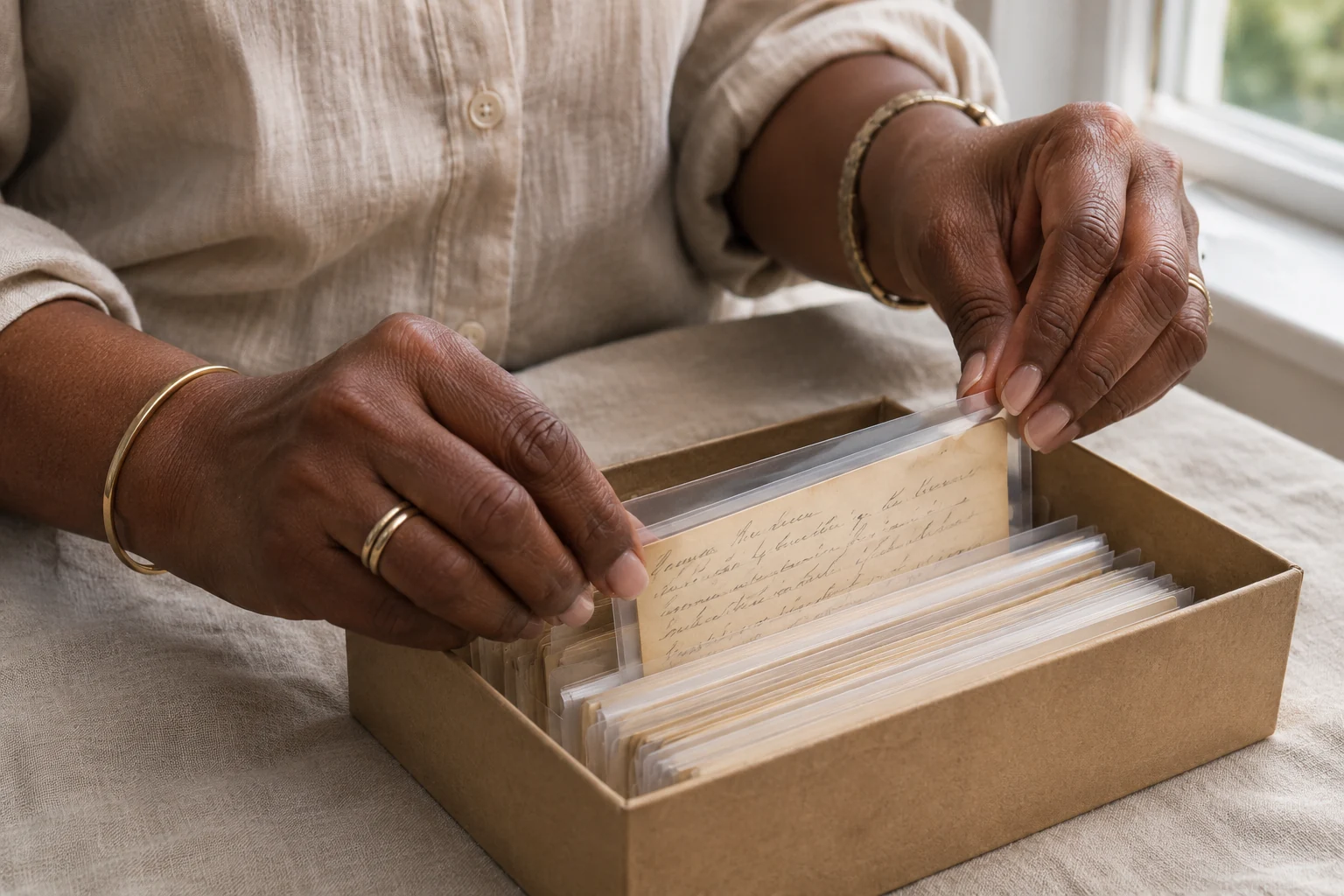
Put the original in a suitable archival-quality folder or box in a stable, dry place. For frequently handled cards, the National Archives describes polyester sleeves as one option and advises against self-adhesive album pages. Use a printed copy beside the mixing bowl so the paper you grew up seeing can stay put.
For a family share, make a simple index with the dish, contributor and a link to the typed version. Put the original images in a subfolder and share access with the people you intend. Check with contributors before making names, inscriptions or personal notes public. If some relatives prefer paper, send the typed copy and a small image of one card so the handwriting travels with it.
Finish with a single invitation. Ask each person for one recipe, one photograph and one sentence about where it came from. You can file the next one when it arrives. Five recipes with their handwriting, cooking notes and stories attached is enough to give someone something real to hand on.