
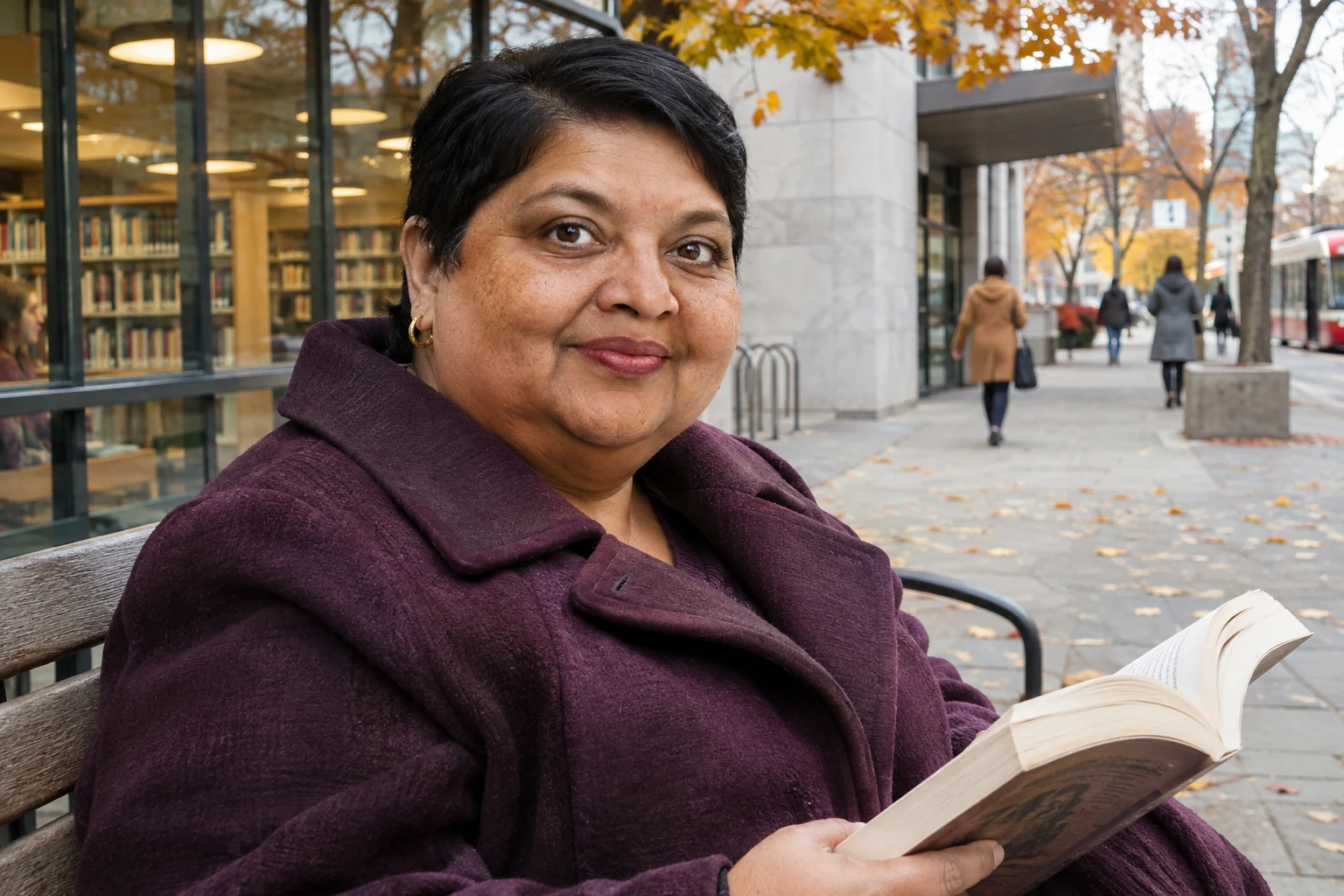
A book lover’s day in Toronto can begin with a question you have carried out of a novel. What did this city look like when the story was written? How did a character become familiar enough to recognize by a silhouette? Or what would you choose to read if you had a quiet hour and someone else had already gathered the books?
Build the afternoon around one collection or display, then leave time to read and talk. The Toronto Reference Library is a useful starting point for that kind of outing. For women who spend much of the week arranging other people’s schedules, choosing a subject purely because it interests you can be part of the pleasure.
Choose a question before choosing a route
Pick a subject broad enough to explore but small enough to hold in mind. It could be Sherlock Holmes, the history of a Toronto neighbourhood or the cover art of a favourite kind of fiction. Bring the title that prompted the question, written in a notebook or saved on your phone. A librarian can work with a clear starting point.
Browse the library’s special collections information before travelling. It describes resources including the Arthur Conan Doyle Collection and the Baldwin Collection of Canadiana. Collections have different access arrangements, and materials may need to be requested. Choose something you can actually see on the day you intend to go.
A travelling companion can bring a different question. Agree to spend some time together and some browsing independently. You can meet afterward with one thing to show or describe. Shared interests do not have to be identical for an afternoon to work.
A book lover’s day in Toronto needs a current access check
The Toronto Reference Library branch page places the library at 789 Yonge Street and lists its current hours, services and accessibility information. Read its notices close to departure. When planning a visit involving special materials, check those collection hours separately from the opening hours of the building.
The library’s renovation page also describes work affecting the building. Use the current notice to decide whether the services and spaces you want will be available. A project’s anticipated completion date is a reason to check again; it cannot tell you that every room is open for your visit.

The Arthur Conan Doyle Collection page currently carries a notice that its themed room is closed and access to materials is by appointment during renovations. Keep that restriction in the plan. Contact the collection through the details on its page before making a trip specifically to use those materials.
Let the collection lead you a little
If the material you want is available, give yourself time with a small selection. Read a description closely before moving on. Notice an edition’s cover, a date, a place name or a detail in an image that you would not have sought out on your own. Write down the item’s title and reference information so you can return to it later.
Ask staff about handling and photography before using special materials. Follow the instructions for supports, seating and where belongings should go. If you want to share something with a friend later, ask whether a digital version or catalogue record is available. It can be a useful way to carry the discovery home.
For visitors who prefer a display to a research session, check the TD Gallery’s current exhibition information. The current exhibition, A Legacy in Motion: The National Ballet of Canada at 75, is listed from September 26, 2026 to January 10, 2027. It brings together costumes, designs and archival materials. Confirm gallery access for your date, then choose this as your main stop if a special collection appointment is unavailable.
Make time for the book you brought
Leave an hour loose after the main stop. Find an appropriate public reading space if one is available, or choose somewhere nearby where you can sit comfortably. Open the paperback you carried with you. A page may feel different after looking at another edition, learning about an author or spending time with the city outside.
If you are with a friend, trade one detail each before discussing what to do next. You might have noticed the same object for different reasons. One person remembers a setting; another wants to know more about the illustrator. Give the conversation enough time to follow its own direction.
Choose the next stop according to the weather, walking distance and the time left. A café near your departure point may be the easiest ending. If you want a broader approach to planning around one cultural interest, D’FYNE’s feature on learning vacations offers related ideas.
Build the return journey into your timing. A comfortable margin lets you finish a chapter or a conversation without watching the clock through every page.
Bring home a small trail to follow
Before leaving, record one title to read, one question to look up and one place you would return to. Keep the notes short enough that you will recognize them next week. If an appointment or temporary closure changed your plan, save the official collection page so you can check it before trying again.
You could make the same kind of afternoon in a different city by starting with its public library or literary archive. For this visit, one available collection and a little time with a book are enough. Let the next question suggest the next outing.
Planning information checked November 22, 2026. Confirm library notices and collection appointments before travelling. Illustrations show imagined readers and spaces.