
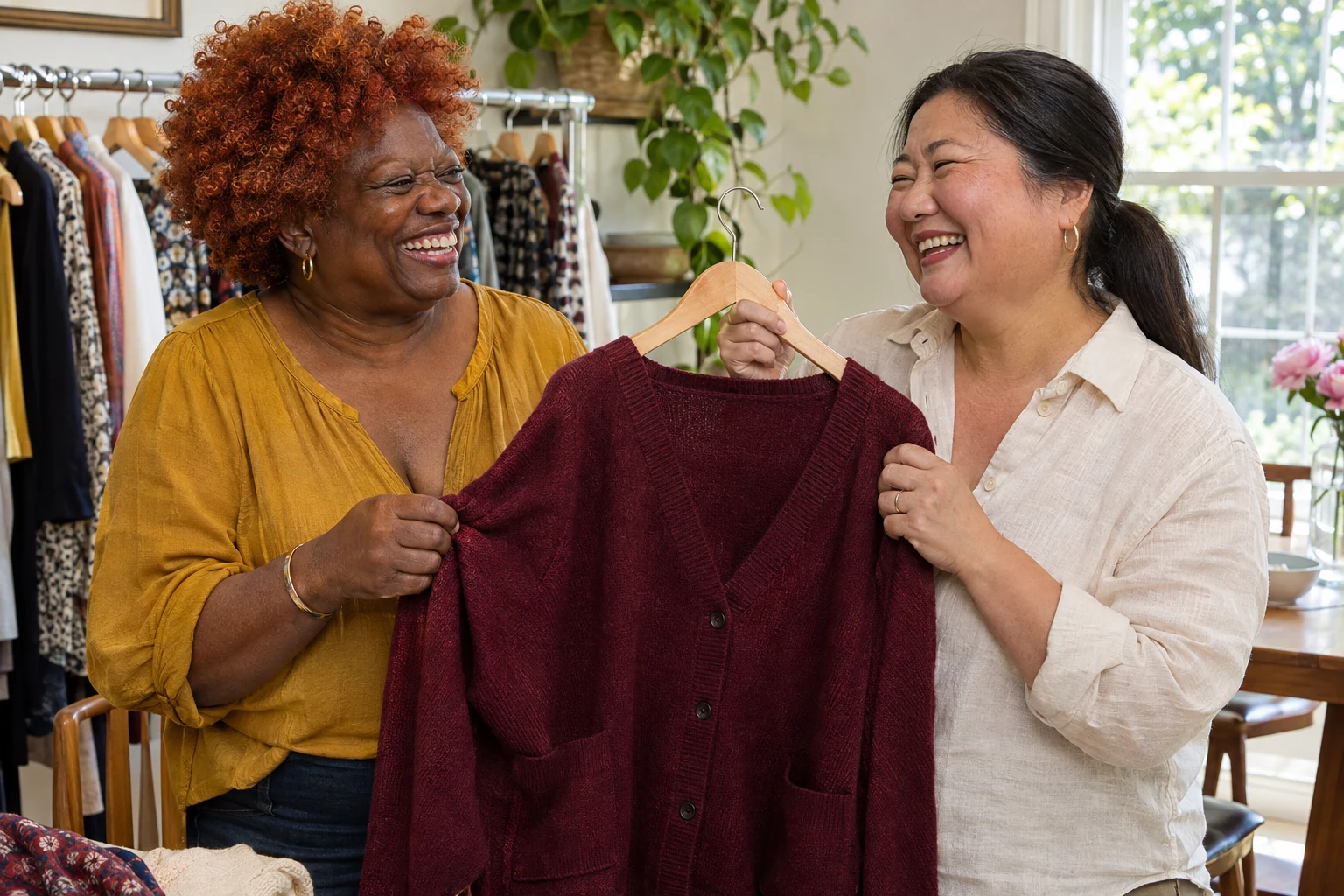
The cardigan is in good condition. You like the colour, but you have reached past it every week since last winter. If you want to host a clothes swap, start with that sort of piece: something another person could enjoy wearing now. Add a small group, a clear invitation and a plan for what happens after everyone leaves.
A swap can make a pleasant afternoon with friends while putting useful clothes back into circulation. Keep the first one small enough to manage in the room you have. You should be able to see the garments, move around comfortably and finish without inheriting everyone else’s sorting project.
Begin with the group and the space
Invite four to six people for a first attempt, adjusting the number to your space. Ask guests to bring a few clean pieces in good condition. Give them a specific limit, such as five items each, and let them know which categories you can accommodate. Scarves, bags and other accessories can offer choices across a wider range of sizes.
Ask for the sizes and types of garments people hope to find, without requesting body measurements. Share the range with the group so nobody arrives expecting a rail of options that will not be there. Invite guests to browse or simply enjoy the company if that suits them. Taking something home can remain a choice.
Environment and Climate Change Canada lists clothing swaps among practical ways to share and reuse goods. A small gathering is one way to try the idea. You can judge its success by whether the clothes find willing wearers and whether the people who came would enjoy doing it again.
Host a clothes swap with clear ground rules
Put the rules in the invitation. Ask for freshly cleaned, wearable items, with defects declared. Decide whether to include shoes, bags or jewellery. For a first event, keeping the range narrow makes setup and sorting easier. You can leave intimate apparel and anything requiring specialist cleaning outside the invitation.
Make one important decision in advance. Will everyone take home their unclaimed items, or is there an agreed donation plan? Ask before treating a brought garment as a donation. A guest may be happy to offer a coat to friends while wanting to keep it if no one chooses it.
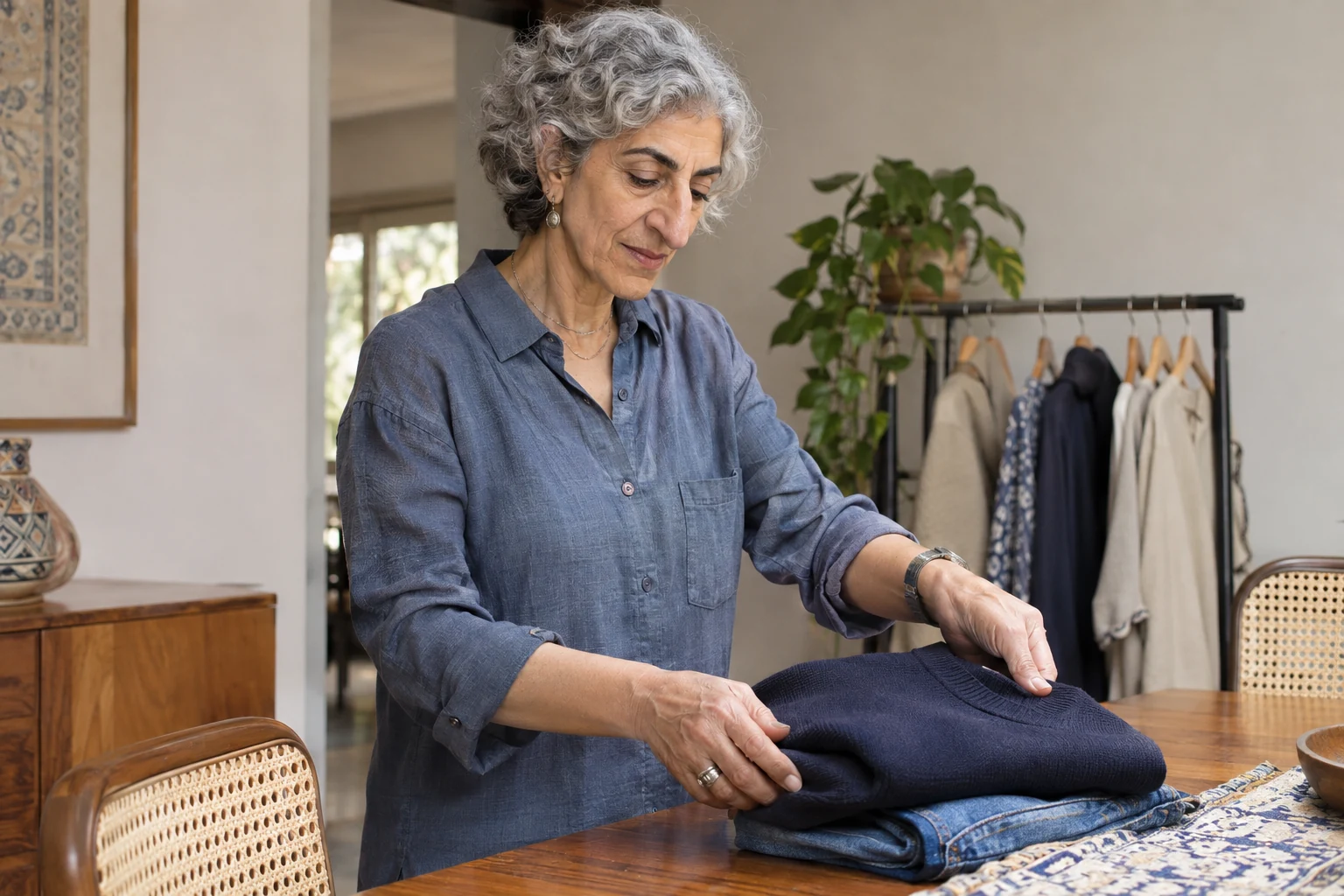
If a piece needs a repair, keep it out of the main selection unless that is clearly part of your arrangement. D’FYNE’s guide to making clothes last longer offers a way to decide which repairs are worth doing before you bring an item. A visible note about a missing button is more helpful than leaving the next wearer to discover it.
Give clothes room to be seen
Clear a table and use a sturdy rail if you have one. Borrow hangers before buying equipment. Separate folded knitwear from hanging pieces, and keep bags or scarves where people can look through them without emptying the whole table. Leave a clear path through the room and a place to put coats that are staying with their owners.
Choose a private place to try things on and explain where it is when people arrive. Have a mirror available if possible. If there is only one changing space, allow people to hold one piece while they wait. Ask before taking photographs, especially when someone is changing or considering a garment.
Keep food and drinks on a separate surface. Set out something simple that can wait while everyone browses. Hosting feels easier when you can sit down with the group, and a swap already has enough moving parts without a meal that needs constant attention.
Choose how the browsing will work
For a small group, try one shared look around before anyone claims an item. Then let each person choose one piece in turn, rotating who begins. After that first round, open the browsing more freely. Explain the system in a few sentences and leave room to adjust if the group finds a comfortable rhythm.
If two people want the same piece, agree on a simple method before the moment arises. Drawing names can work. You can also invite the two people to decide together without turning the room into a public debate. Avoid comparing who looks better in it. The swap works best when everyone has room to choose and to change her mind.
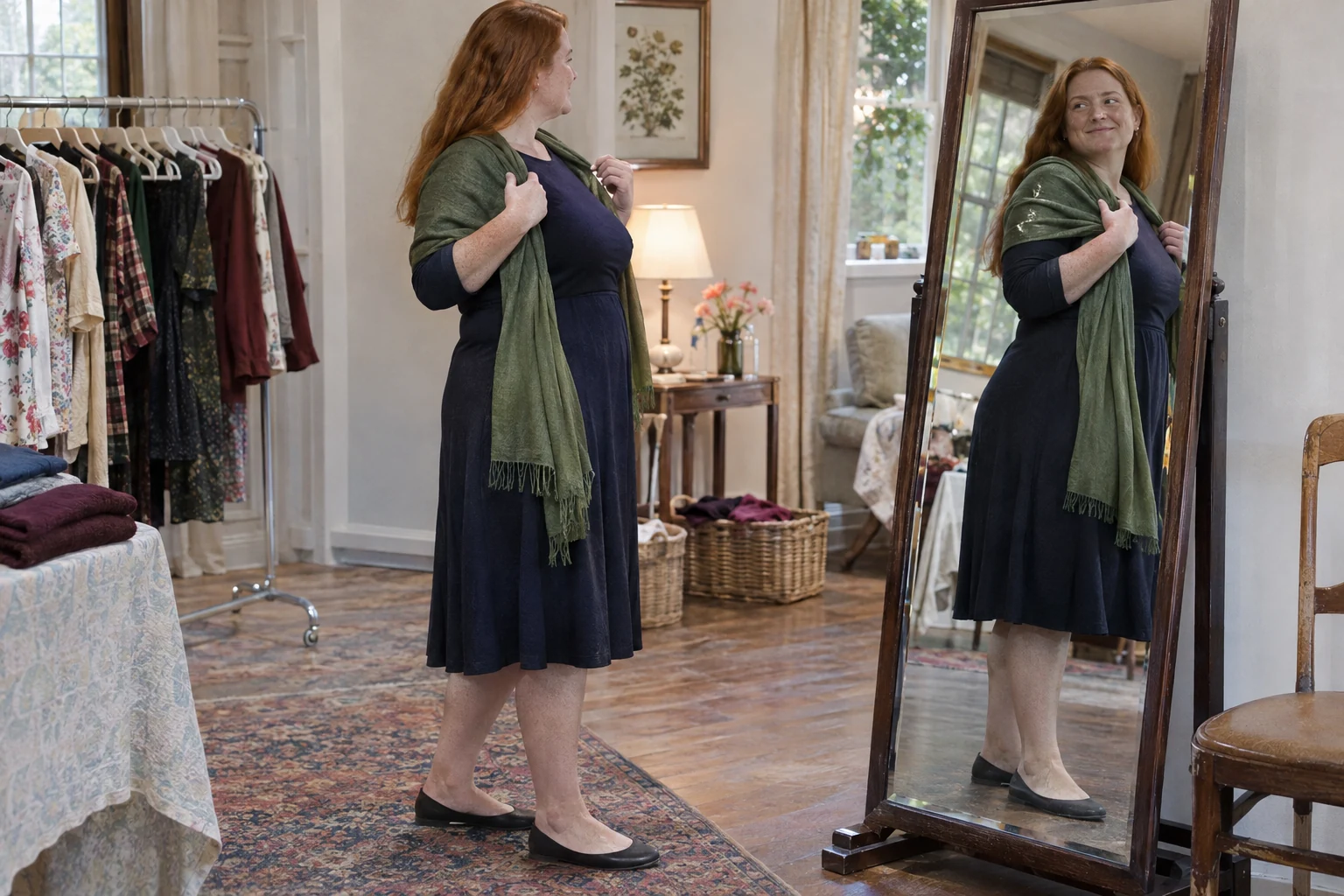
Offer observations about the clothes when asked: how the fabric feels, whether a pocket is real, what the care label says. Let each wearer decide how something fits her life. A friend may want a looser cardigan for reading at home or a bright scarf for a coat she already loves.
Finish while the room still feels manageable
Reserve the last fifteen minutes for sorting what remains. Return unclaimed pieces to their owners according to the invitation. If guests have agreed to donate, check the recipient’s current acceptance rules before delivering anything. Keep rejected or unsuitable items with their owner so they can choose the next step.
For a larger public event, look at existing arrangements before building your own. Toronto’s material exchange directory includes local clothing exchanges. Confirm dates and requirements directly with an organizer before attending. The directory can also give you ideas about a format that would suit your community.
After your own gathering, ask one question in the group chat: what made it easy to choose something you will wear? Use the answer if you host another swap. By then, the cardigan that kept waiting at the back of your wardrobe may already be out with someone else.