
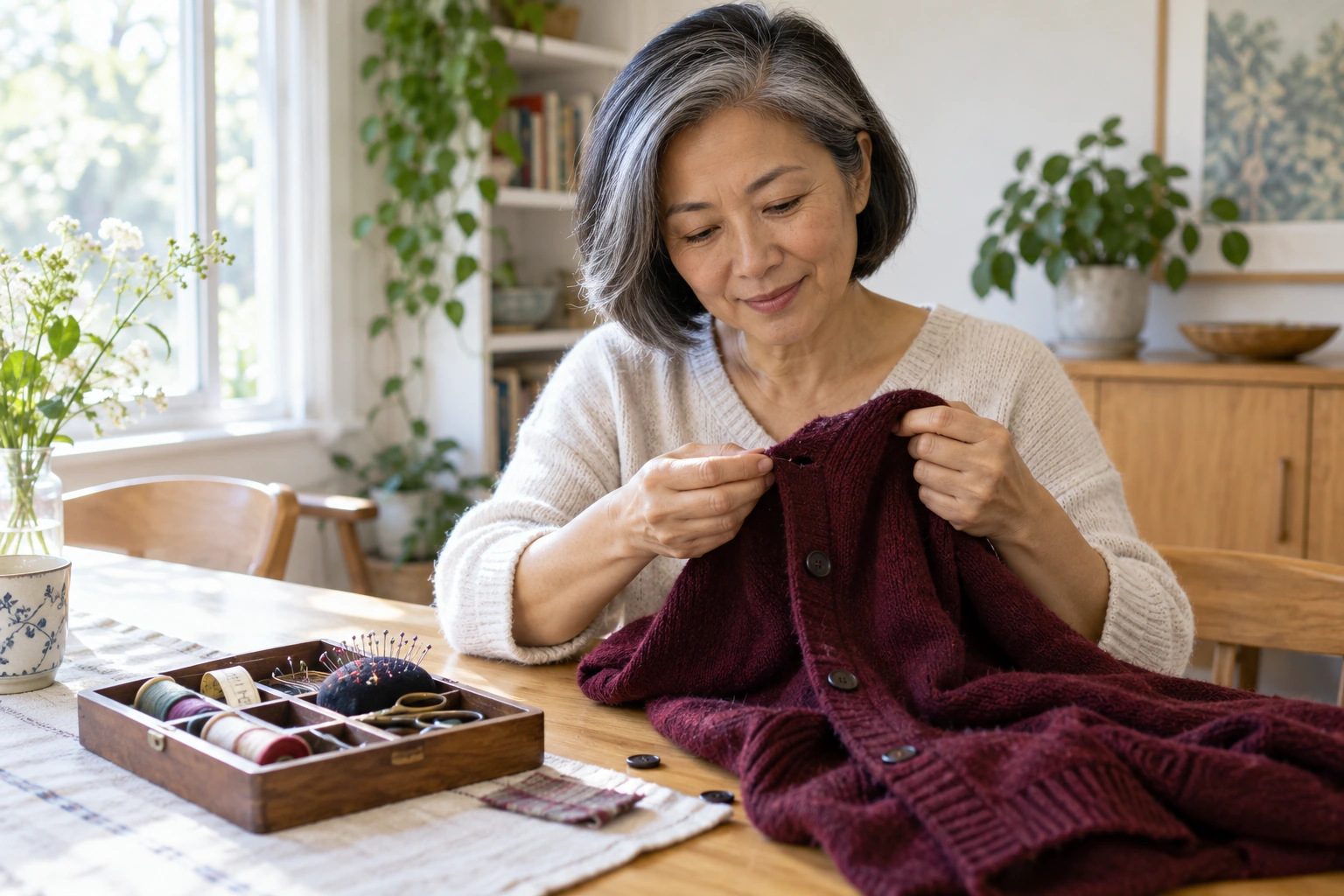
Start with a piece you already enjoy wearing, and identify what would bring it back into use. D’FYNE Illustration
A missing button should not be the end of a good shirt. Give the clothes you like a practical route back into rotation.
The cardigan is still lovely. The trousers still work with almost everything. Yet both have drifted to the far end of the wardrobe: one has a loose button, the other a hem that never quite sits right. Learning to make clothes last longer begins with noticing these small, unfinished decisions.
This is not a challenge to keep every garment forever, or an argument that a woman over 40 should dress more cautiously. It is a way to spend less attention on replacing things that could still serve you. The goal is a wardrobe that works on an ordinary Wednesday, not a perfect record of responsible consumption.
Start with what you want to wear
Choose three pieces you genuinely miss wearing. Not the expensive mistake you feel obliged to rescue, and not the jeans attached to a different body or a different life. Select clothes you would reach for now if one identifiable problem disappeared.
Write the problem in plain language: replace the button, shorten the sleeve, ask about the zip. Separate a real repair from a fit preference and from simple dislike. A tailor may be able to alter a waistband; no alteration can make you enjoy a fabric you have always found irritating.
The distinction keeps this exercise useful. You are not opening a second job as the custodian of every item in the house. You are making a few good clothes easier to wear.
Make clothes last longer by reading the label
The Government of Canada’s care-symbol guide groups instructions around washing, bleaching, drying, ironing and professional cleaning. The symbols are worth checking before you put an unfamiliar garment into the routine used for everything else.
Look at the whole instruction, including drying. A piece that can be washed may still need a particular drying method. Photograph a fading label so its advice remains available, and keep the image with the garment name in a simple phone note.
When instructions are missing or confusing, ask the maker or a professional cleaner before experimenting on a favourite. An online trick that worked on someone else’s sweater is not evidence that it suits your fabric, construction or trim.
Give one small repair a deadline
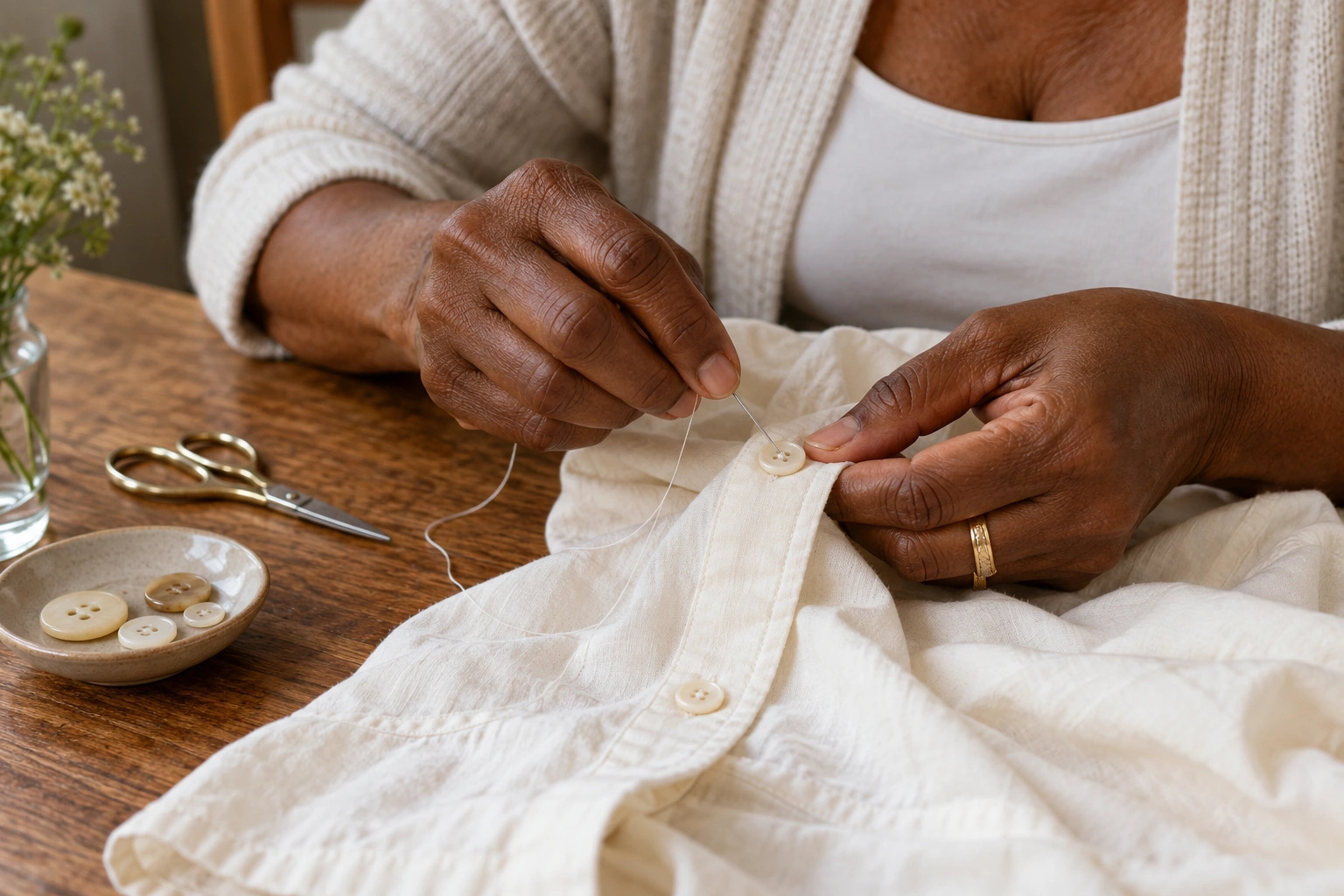
A loose button is manageable when it is one button. It becomes discouraging when it disappears into a bag of unrelated projects. Set aside the garment, the replacement and any matching thread together. Choose a short appointment to deal with it, or take it to someone who can.
Keep a modest kit: a needle, suitable thread, a few spare buttons and small scissors stored safely. You do not need to purchase a complete craft station to begin. If you would like to learn, ask a local sewing shop or community centre about beginner instruction rather than assuming a thirty-second clip explains the whole technique.
For unfamiliar fabrics, damaged zips, linings or valuable pieces, a repair estimate is often a better first step than trial and error. Ask what can realistically be achieved, what it will cost and whether the result will suit how you plan to use the garment.
Make wash day more deliberate
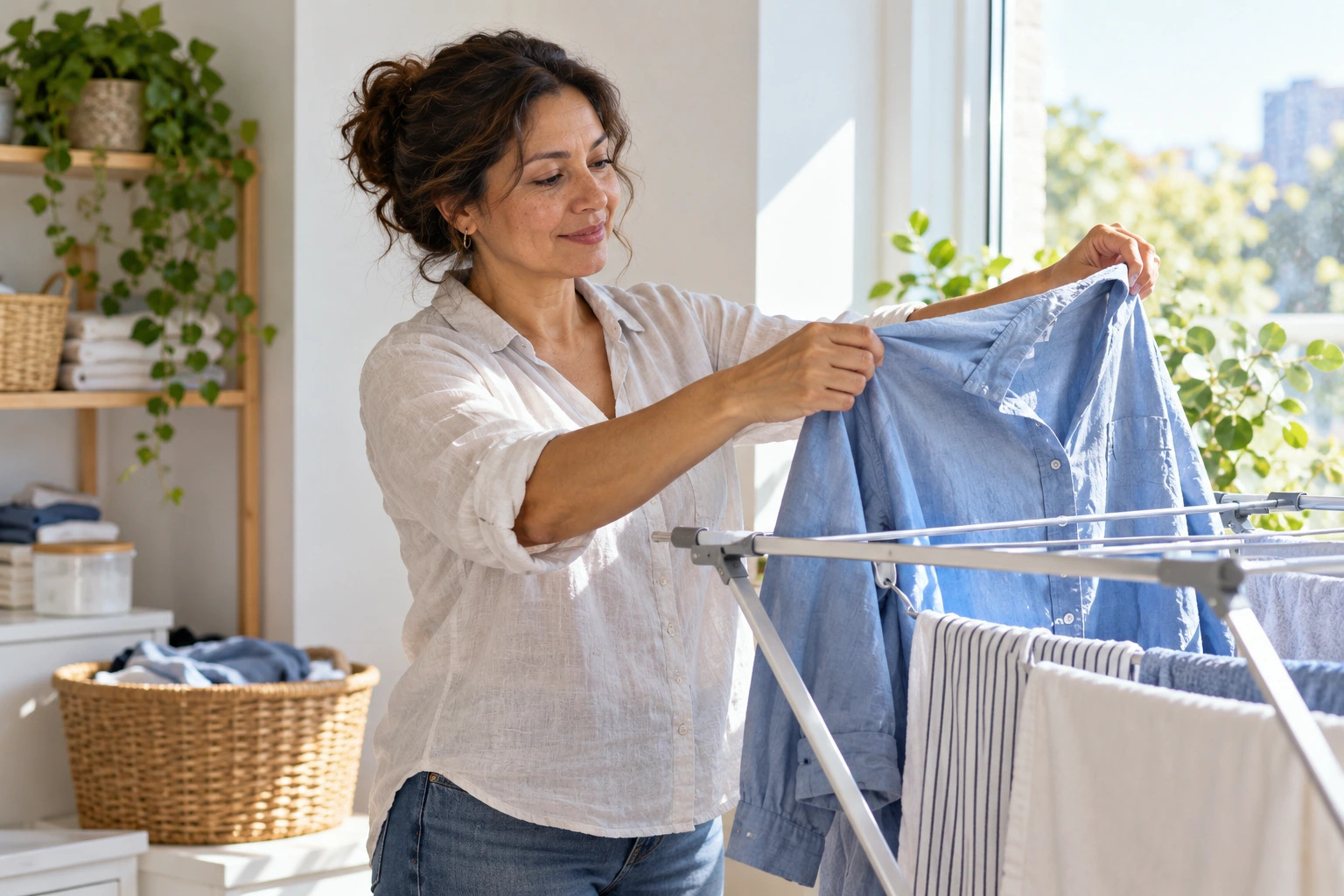
Natural Resources Canada recommends cold-water washing when possible, appropriate full loads without overfilling, and considering a drying rack or clothesline. These are energy-saving suggestions, not permission to ignore garment instructions or specific cleaning needs.
For everyday laundry, sort with care rather than speed alone. Check pockets, inspect the label and choose the appropriate programme before starting the machine. Keep a separate place for items that need different handling so they do not repeatedly arrive at the bottom of a rushed load.
Use the drying method the garment calls for. Air-drying is not a universal instruction to hang every shape from the shoulders. If a piece says to dry flat, arrange a suitable flat drying space. Leave enough time for the task, rather than discovering at bedtime that tomorrow’s preferred outfit is still wet.
Consider an alteration before a replacement
A garment can be in excellent condition and still stay unworn because its proportions no longer suit you. Try it with the shoes and layers you actually use. Then identify whether a specific adjustment would solve the problem.
The clothing-longevity guidance from WRAP includes alteration, repair and clear care information among ways to support longer usable clothing life. It does not mean every piece is worth rebuilding. Construction, fabric, cost and your own preference all matter.
Take one candidate to a tailor, not the whole wardrobe. Bring the relevant shoes and explain the intended result. An honest answer that a change is impractical can be as useful as a successful alteration: it lets you stop carrying the decision around.
Buy for the wardrobe you maintain
Our five-piece wardrobe reset begins with useful combinations rather than replacing everything. Add one more question before the next purchase: does this piece fit the level of care I am willing to provide?
A beautiful jacket that needs specialist attention may be entirely worthwhile. A supposedly easy everyday top that you will resent hand-washing may not be. Read the label while you can still decide, and consider whether repairs and spare components are available.
Enough is a useful standard
End with one finished action: a button secured, a repair booked, a care label understood. Put the rescued piece into an outfit for the coming week so it returns to use rather than becoming evidence of another completed household task.
You do not need to make every old garment new again. Making a few favourites dependable is a quieter, more achievable kind of wardrobe refresh. Sometimes the best addition is the shirt you already own, ready to wear at last.