
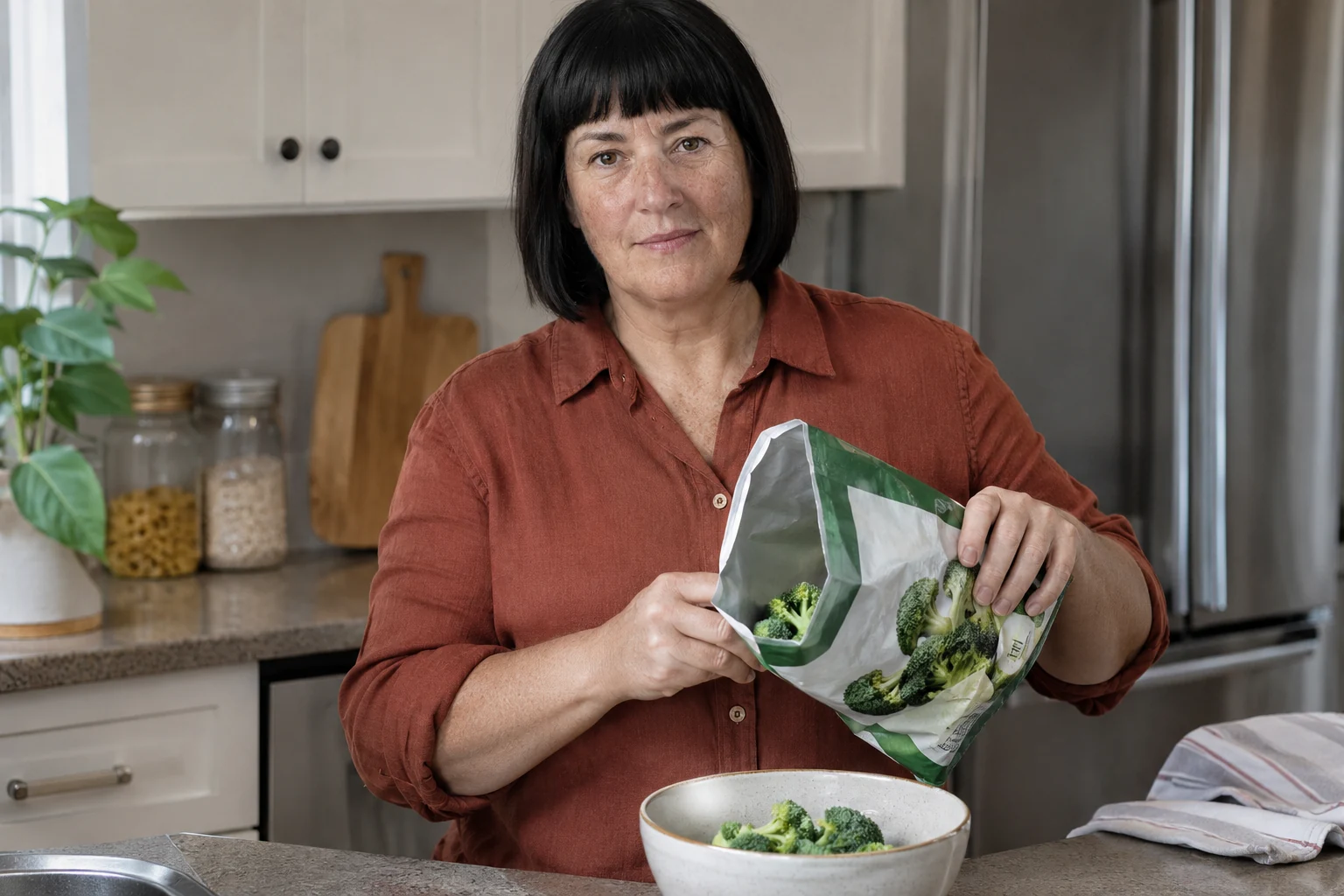
The bag in the freezer can be the beginning of dinner. Cooking with frozen vegetables becomes easier when you buy a few varieties you enjoy, decide what each one will join and leave enough room in the evening to cook them properly. Broccoli for a grain bowl, peas for a soup, a mixed bag for a familiar sauce: that is a useful starting collection.
For women balancing work, training, caring for relatives and the ordinary business of getting home, an ingredient that waits can be welcome. Choose a meal you already make and work backwards from it. The freezer needs to support your real week, including the nights when the plan changes.
A sound choice for everyday eating
Canada’s Food Guide includes fresh, frozen and canned produce as healthy options. Its advice for frozen vegetables is to choose varieties without added sugars, seasonings, breading or rich sauces. Read the ingredient list and compare products when choosing a bag you will use often.
Take texture into account as well as the label. If you enjoy broccoli with a little bite, follow the package directions and check the result as it cooks. If you prefer a soft vegetable in soup, choose a recipe that suits that texture. Buying something because you feel you ought to like it can leave the same unopened bag in the freezer for months.
The practical advantage is having a useful amount ready when you need it. Health Canada’s guide to frozen produce points out that you can take the portion you want and keep the rest for another meal. Start with one or two bags and learn where they fit before stocking a drawer full.
Give each bag a job
Think in meal combinations. Peas could join a familiar soup. Broccoli could go beside rice and beans. Chopped spinach could work in a recipe that already calls for it, provided you follow the recipe’s preparation and draining instructions. Match the form of the vegetable to what you want to make: florets, chopped leaves and a mixed selection do different jobs.
Before you shop, open the freezer and write down what is already there. Check the cooking instructions, too. Frozen products vary, and some require cooking before eating. Follow the package for preparation, storage and cooking rather than assuming that thawed vegetables are ready to serve. Keep the directions with the bag until you finish it.
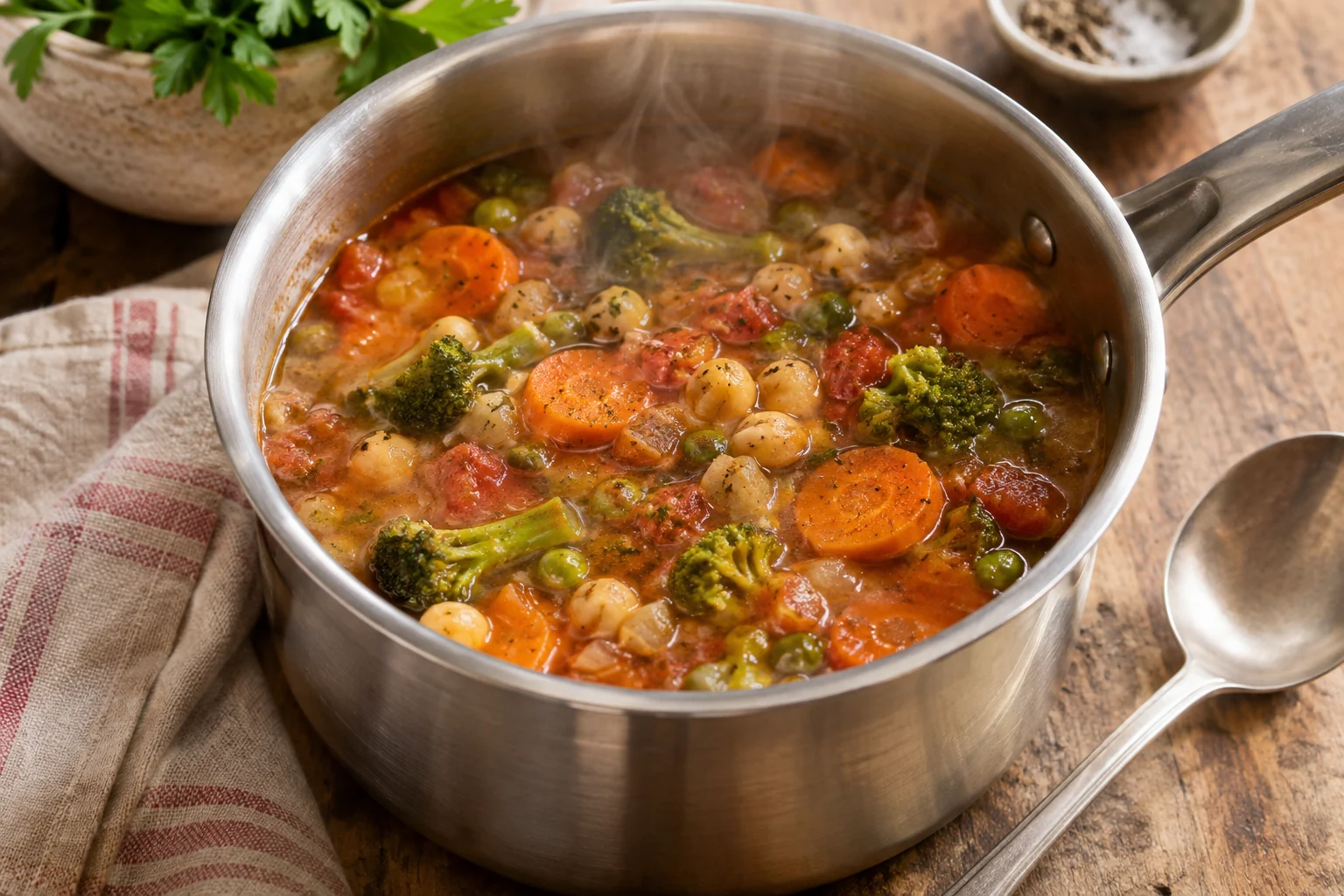
Then choose a cupboard ingredient and a protein food to go with your vegetables. Rice, pasta, barley, chickpeas, lentils and a sauce you like give you several possible directions. If you want more ideas for using beans and vegetables through the week, D’FYNE’s everyday fibre guide offers a related place to begin.
Cooking with frozen vegetables starts with the instructions
Use the cooking method on the bag as your first reference. If a recipe asks for thawing, draining or squeezing, allow time for that step. If it tells you to cook from frozen, start there. Read both sets of directions before you heat the pan, particularly when a meal combines several ingredients with different cooking times.
Put out the bowl, colander or spoon you will need before you start. Measure the portion for the meal and return the rest to the freezer promptly, following the storage instructions. A clip that closes the bag well and a clear label can save a small search the next time you cook. Keep the product name and preparation instructions readable.
With a new bag, make one ordinary meal before deciding whether it belongs in the regular shop. Notice the size of the pieces and whether the finished texture suits your dish. If you liked the vegetables but found the sauce too strong, change the sauce on the next attempt. That gives you a useful adjustment to make without buying a whole new set of ingredients.
Build three possible dinners
A soup. Begin with a soup recipe you know, using its quantities and timing. Choose a frozen vegetable it can accommodate and cook it according to the product instructions. Chickpeas or lentils can give the bowl another substantial ingredient. Taste the completed dish before adding more seasoning.
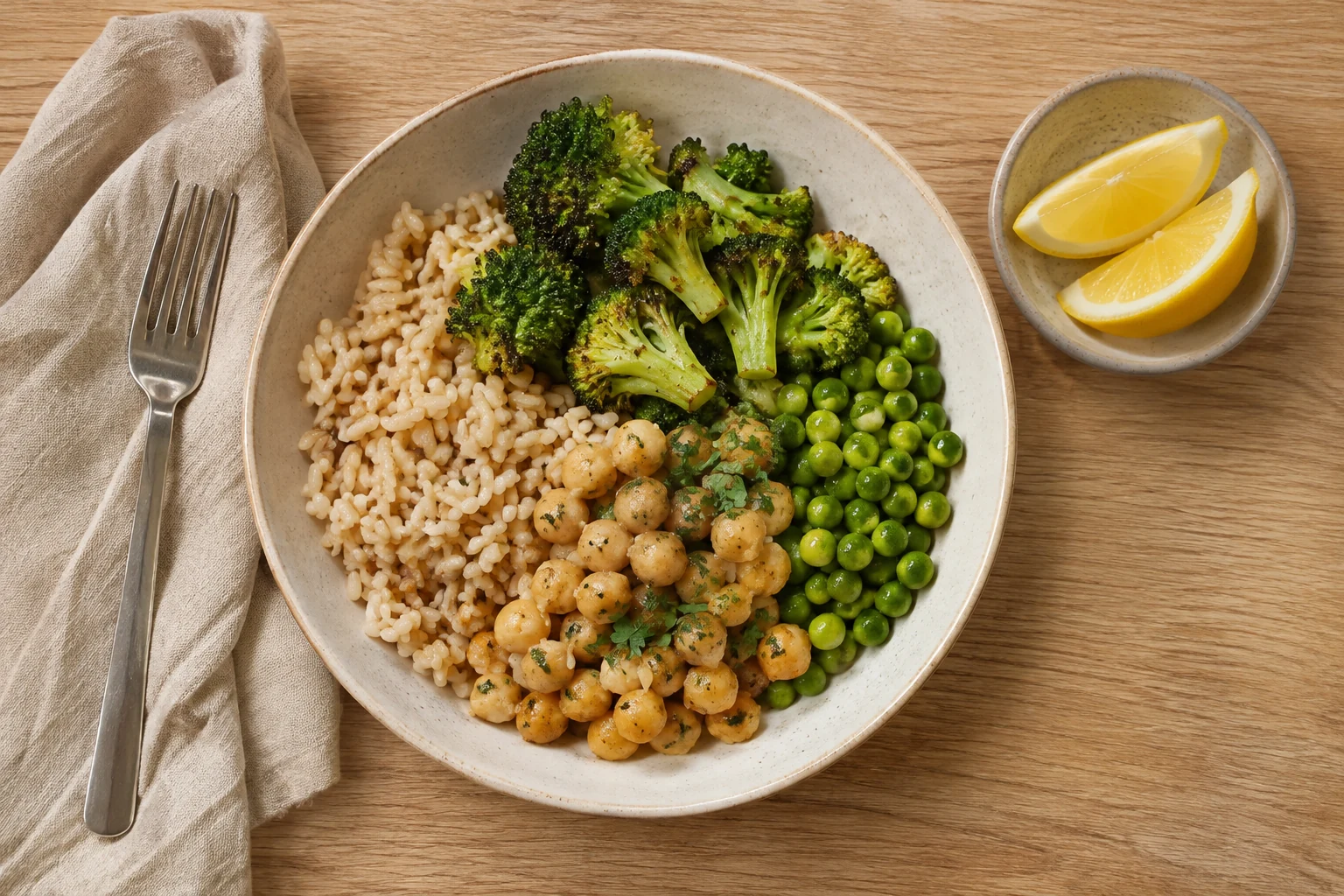
A grain bowl. Prepare the grain, cook the vegetables and add a protein food you enjoy. Put a small amount of dressing or sauce alongside so everyone can choose how much to use. A lemon wedge or chopped herbs can give the finished bowl a different flavour the next time you make it.
A familiar pasta. Look for a recipe that uses the frozen vegetable you have, and follow its instructions. Keep the rest of the meal straightforward. The goal for the first attempt is to learn one combination you would happily cook again. These are meal ideas to adapt with established recipes and package directions.
If two people cook in your household, leave the meal note where both can see it. Either person can then finish the shopping list.
Leave yourself one easy decision
At the end of the week, write down the combination that worked and what you would change. Perhaps you needed a smaller bag, preferred peas to the mixed selection or wanted more sauce on the side. Keep that note with the shopping list. Buy the next bag for a named meal.
Health Canada’s cooking guidance recommends keeping useful ingredients on hand. A small, familiar collection lets you put that advice into practice. When the next busy evening arrives, you can open the freezer knowing which dinner is already partly planned.