

Add lentils to a familiar meal rather than rebuilding your menu. D’FYNE Illustration.
A bowl of soup, a pear in your bag, a scoop of lentils beside dinner: everyday fibre does not need a separate eating plan. It can live inside meals you already know how to make. For busy women over 40, that is a more useful starting point than another pantry overhaul.
This is a food guide, not a prescription. The aim is to notice where plant foods already fit, make one useful addition and repeat it. You do not need to turn every meal into a project or buy a product with an impressive promise on the front.
Health Canada identifies fruit, vegetables, legumes, nuts, seeds and whole grains as sources of fibre. That gives you several routes into the habit. A breakfast change is one option; a familiar lunch or a reliable afternoon snack may be the easier place to begin.
Start with one meal you repeat
Choose the meal with the least friction. If breakfast is automatic, keep its basic shape and add one plant food you like. Put pear slices beside eggs and toast. Add oats or fruit to an unsweetened yogurt bowl. Keep whole grain bread in the freezer so weekday convenience does not depend on a fresh shopping trip.
You are adding a useful option, not correcting a personal failure. A rushed morning can still be a rushed morning. Keep the change small enough that you can do it without thinking, including on the day when the dog needs a walk and the first meeting starts early.
Our protein-at-breakfast guide takes the same practical approach: work with foods you enjoy. Protein and fibre do not need competing plans. Build a breakfast that has room for both, rather than treating one nutrient as the entire meal.
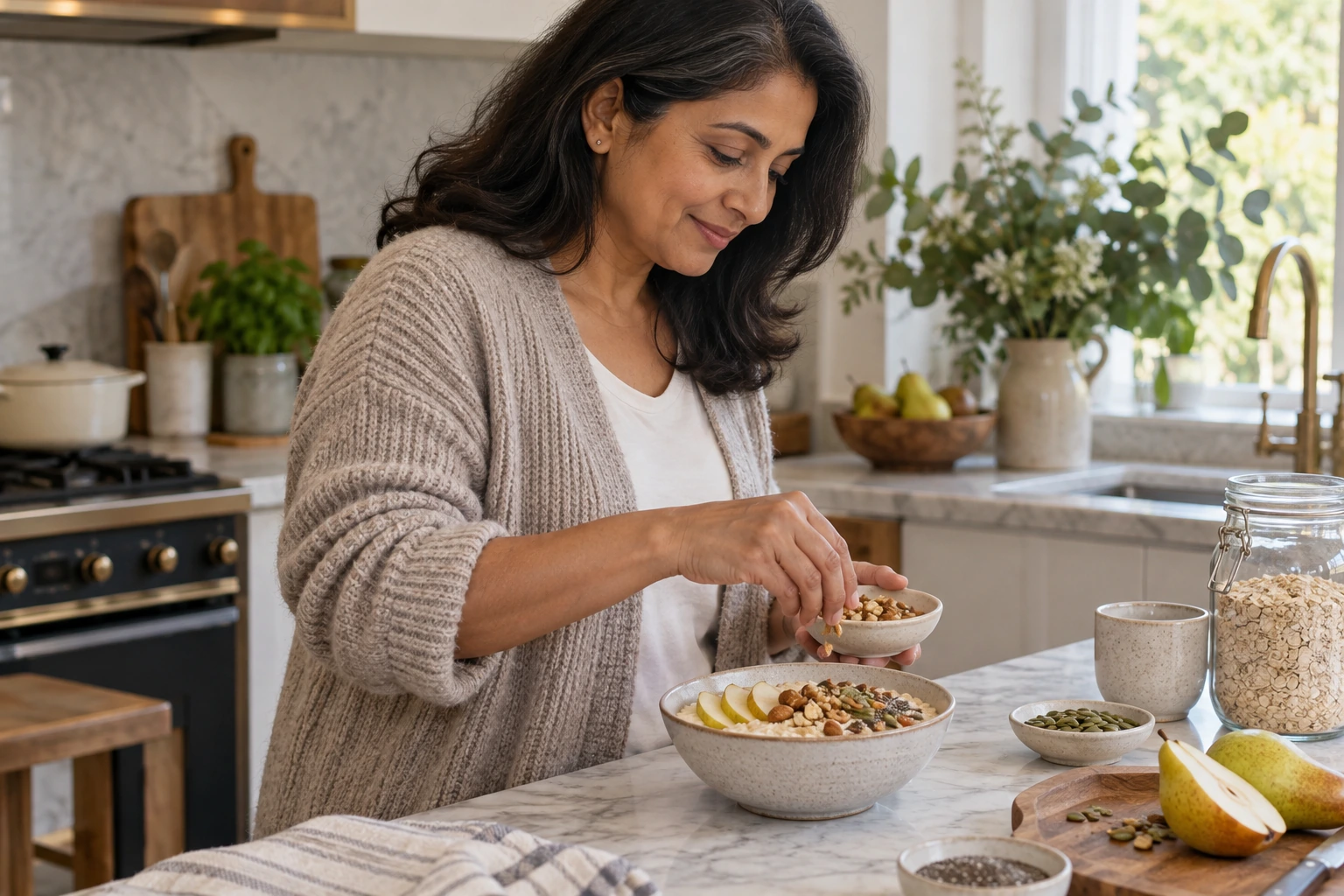
Make lunch do some of the work
Lunch often inherits whatever is left in the refrigerator. Give it two dependable building blocks. A tin of beans and a cooked grain can become a salad, a bowl or the base of a quick soup. Add chopped vegetables, a dressing you enjoy and another ingredient that makes the result feel like lunch rather than a worthy obligation.
If beans are new to your usual rotation, try a small amount in a familiar dish. Stir a few spoonfuls into tomato soup, fold lentils into a pasta sauce or add chickpeas to a salad you already make. These are cooking suggestions, not a rule that every meal must be vegetarian.
A purchased lunch can work, too. Look for a vegetable or bean side, or choose a whole grain option when one you enjoy is available. One choice does not have to carry the whole day. The point is to build a few repeatable possibilities, not to judge lunch by a single ingredient.
Read the useful part of the package
The colour of a loaf and the word multigrain do not tell the whole story. Canada’s Food Guide recommends checking the ingredient list for whole grain ingredients near the beginning. Its guidance also encourages comparing fibre on the Nutrition Facts table.
Compare similar products using comparable serving sizes. A larger listed serving can make one cereal appear to offer more than another simply because the portion is larger. Read the amount you would actually eat. Then consider taste, price and whether the food fits your routine.
There is no prize for choosing the highest number if the product stays untouched. A bread you enjoy and use regularly may be a better household purchase than a costly specialist loaf you resent. Packaging language can suggest a starting point; the ingredient list and nutrition table give you more concrete information.
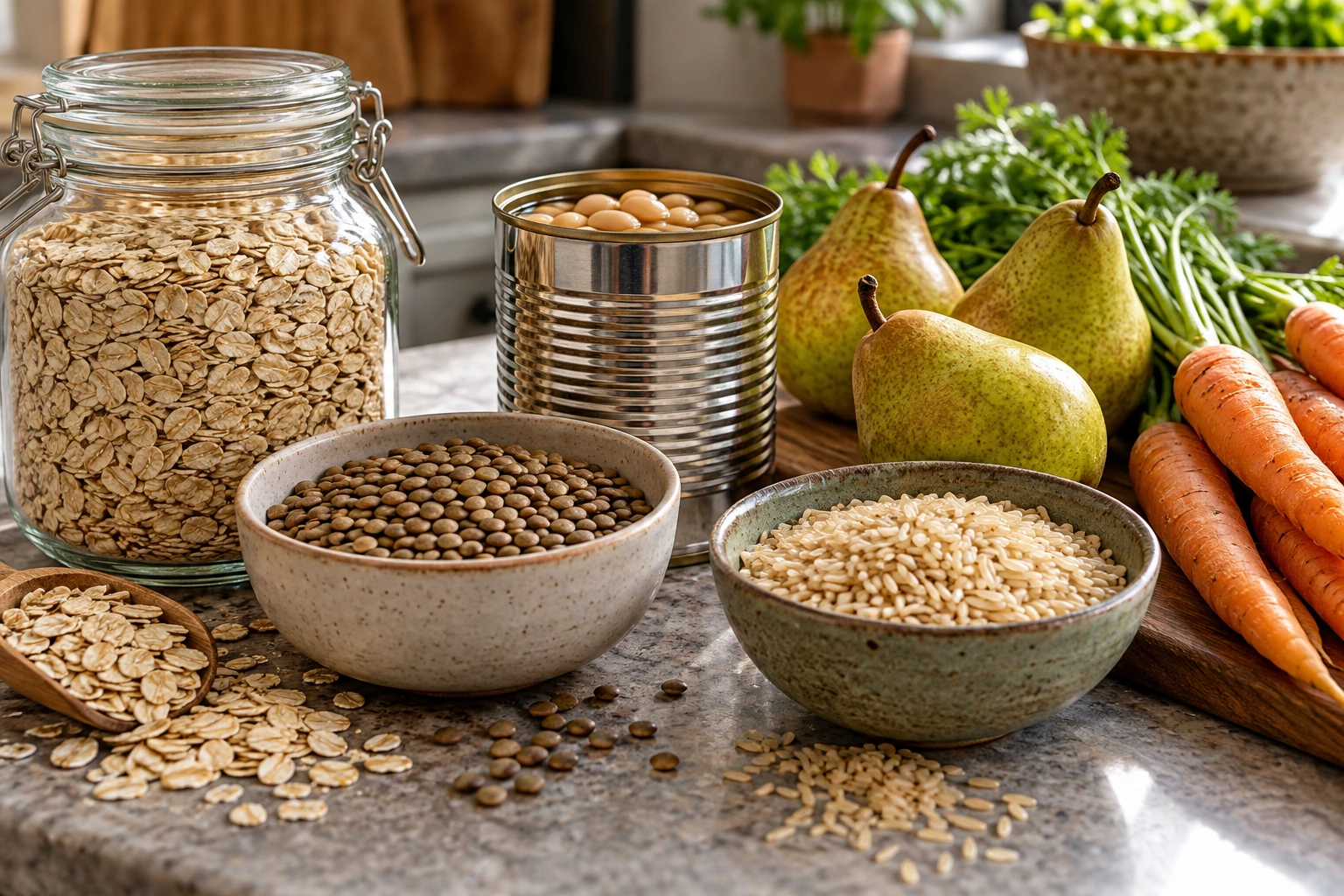
Keep a small working pantry
Begin with a short list: oats, one whole grain you cook comfortably, beans or lentils, and nuts or seeds if you eat them. Add fruit and vegetables that suit your budget and appetite. Frozen vegetables can reduce the pressure to use everything immediately; fresh produce can bring the crunch or flavour you want.
Put the ingredients where they are easy to reach. An open bag of oats behind six baking supplies is less useful than a clearly stored breakfast staple. Label containers so you know what you have, and keep preparation instructions when transferring foods from their original packages.
At the shop, replace one item you have run out of rather than buying six unfamiliar foods at once. If brown rice is not your favourite, try another whole grain. If you dislike chickpeas, lentils or a different bean may suit you. The best pantry supports your meals; it does not become a collection of good intentions.
Use dinner as an addition, not a redesign
Keep the main dish you planned and look at the space around it. Add a vegetable side. Use a grain you enjoy. Include beans in a casserole or serve them alongside fish, tofu or chicken. An ordinary plate can carry several different plant foods without becoming elaborate.
Flavour matters. Lemon, herbs, toasted spices or a familiar dressing can make a bowl feel finished. Texture matters, too: crisp vegetables alongside soft beans, or a spoonful of seeds on a soup. Enjoyment is part of making the habit repeatable.
Choose your next easy step
For the coming week, choose one change and one backup. The change might be fruit beside breakfast; the backup might be a tin of beans for the evening when shopping did not happen. Write both on the grocery list. Leave the rest of the week flexible.
Everyday fibre becomes easier when it is attached to real meals, available ingredients and your own preferences. Start with something you would happily eat again. That is a more dependable beginning than a perfect plan that lasts until Tuesday.
General food education. This article does not provide individualized medical or dietary treatment advice.