
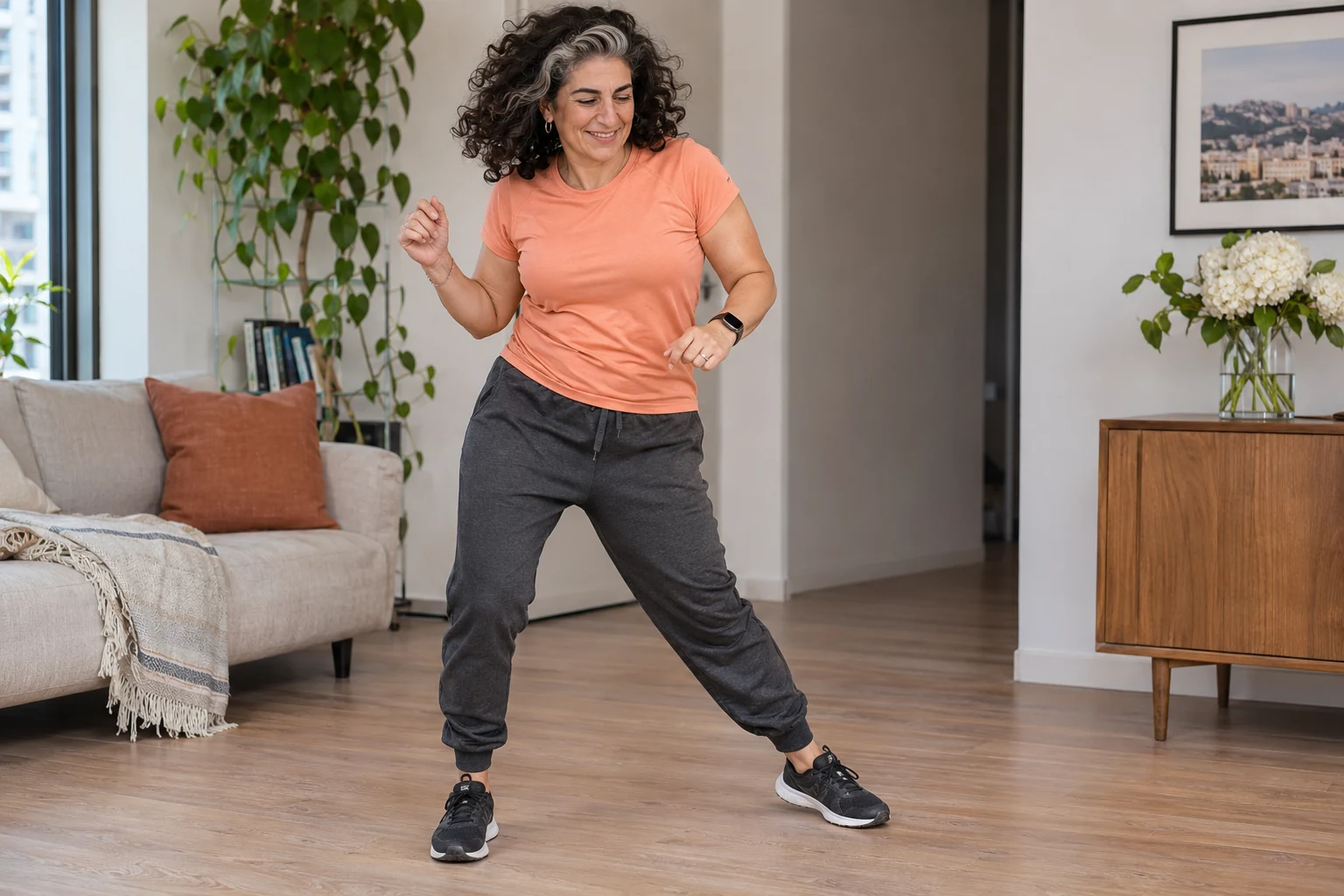
The pavement is wet, dinner is an hour away and the treadmill is somewhere you aren’t. Indoor cardio without equipment can be as ordinary as putting on a favourite song and taking a few deliberate steps across the living room. The real question is how to turn a little space and a little time into movement you’ll want to repeat.
Start with three moves you can remember without looking at a screen. Establish a pace you can talk through. Then give the session a place in the day you already have. An indoor option earns its keep when bad weather or a crowded calendar would otherwise send the whole plan sideways.
Make room for a small circuit
Choose a dry, level surface with enough space to step in each direction and swing your arms comfortably. Move the rug, cords and anything else that can catch a shoe. Keep headphones quiet enough to hear what’s going on around you if other people or pets share the space.
Start with a gentle march. Take short, easy steps and let your arms swing at your sides. Next, try a step-touch. Step to the right, then bring the left foot in for a light touch. Reverse it. Keep the steps small until the rhythm feels familiar. Finally, try a heel tap in front, returning the foot under you before switching sides. Leave the kicks and quick turns for another day.
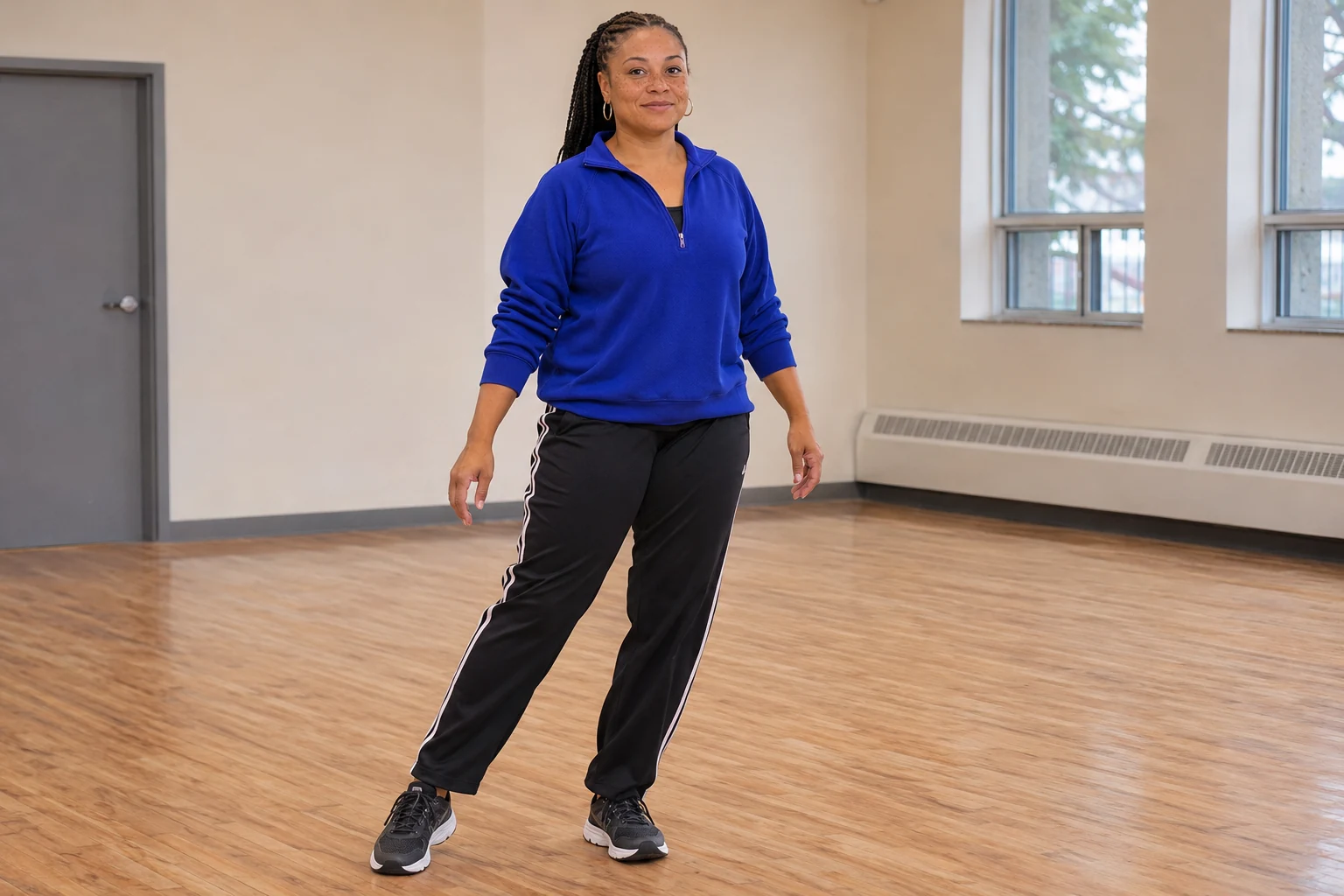
You can do all three facing the same direction. If a move takes up more space than you have, shorten it. If keeping time to the music makes your feet feel rushed, step on every other beat. On a day when you’d rather keep things simple, march for the whole work interval and walk easily between rounds.
Use your voice to check the pace
The CDC’s guide to physical activity intensity describes a simple cue. During moderate activity, most people can still talk but would have trouble singing. If you can only get a few words out before taking a breath, it’s a harder effort. Two people doing the same steps can experience them differently.
Try saying, “I could keep this up for another round.” A steady sentence gives you something more useful than the speed of someone in a video. To bring the effort up a little, make your arm swing more purposeful or take slightly quicker steps. To bring it down, shorten the steps, relax your arms and let the beat move on without you.
Canada’s public health guidance on physical activity recommends at least 150 minutes of moderate-to-vigorous aerobic activity a week for adults. Think of this session as one possible contribution. Some days your first round will feel light throughout, and you can keep it that way while learning the motions. Moderate minutes from brisk walks, dancing and other activities can sit alongside the time you spend indoors.
Try 12 minutes of indoor cardio without equipment
Minutes 1–3. Begin with a comfortable walk or march in place. Bring in the side steps and the heel taps once each, slowly enough to remember what comes next. This is your time to check the floor and settle into the rhythm. D’FYNE’s guide to warming up before exercise explains how a gradual start can fit into a short session.
Minutes 4–10. Alternate 40 seconds of one movement with 20 seconds of easy marching. Rotate through step-touch, march and heel taps, returning to your favourite for the seventh round. Let your breathing settle during the easy intervals. By the midpoint, try the talk test. If the pace feels too brisk, stay with the easy march for as long as you need.
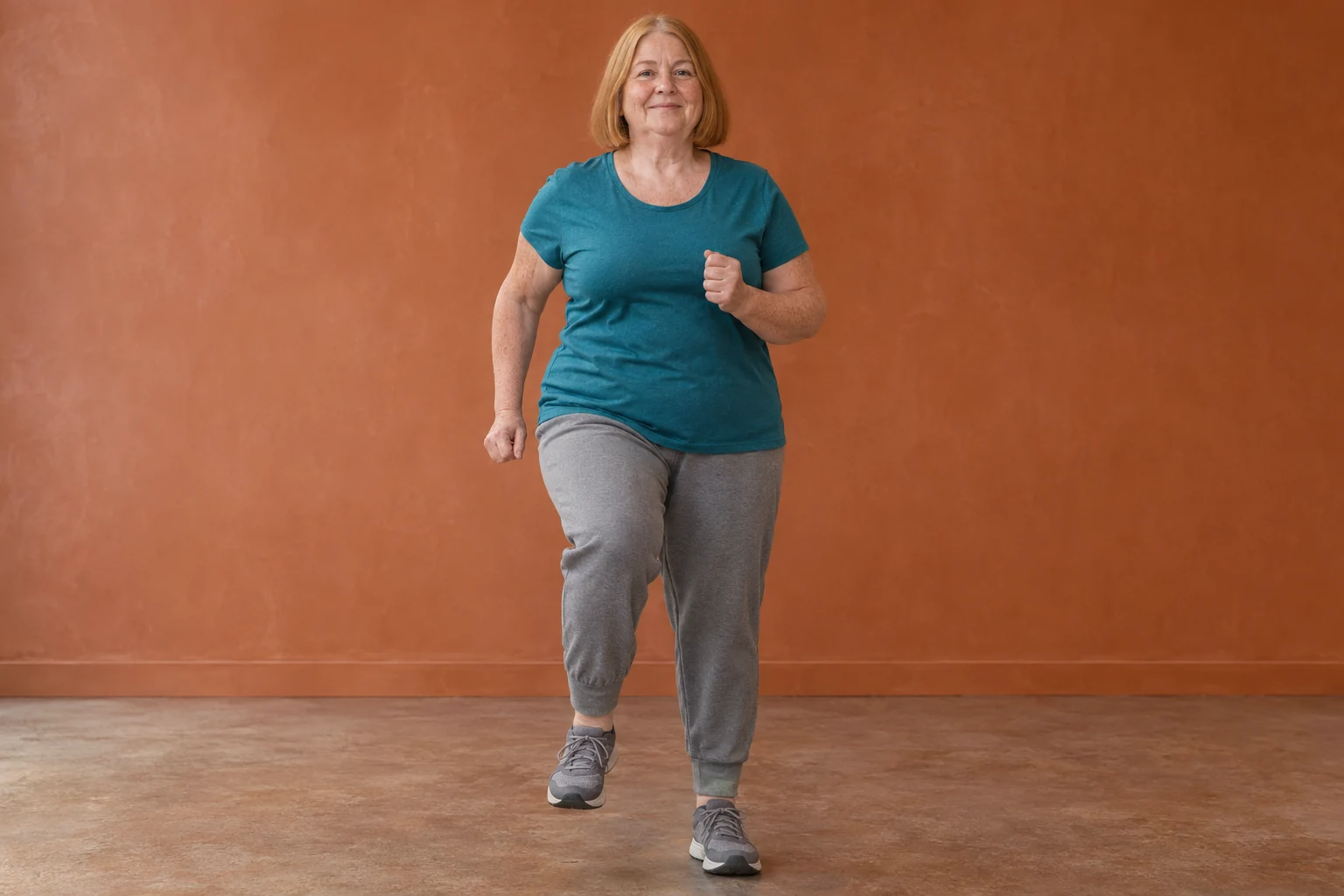
Minutes 11–12. Ease back to an easy walk or gentle steps. Let the arm swing settle and finish when you can speak comfortably. Give yourself a minute to put the room back as you found it, especially if it’s also the spot where everyone leaves their shoes.
If 12 minutes feels like a stretch, take the first three minutes and one or two rounds. Once you’re comfortable with the sequence, add one round or choose a slightly brisker pace the next time. Changing one thing at a time makes it easier to tell what suits you.
Remember which side you began on and switch it in the next round. There is no need to count steps; giving both directions some attention keeps the sequence easy to follow.
Give the session a regular place
Look for a moment that already has a clear start. Maybe it’s when you close your laptop on Tuesday and Thursday, before you make coffee on Saturday, or while a friend finishes their own short workout on a video call. Pick two openings for the first week and decide which song will start each one.
If your room doubles as an office or a play space, keep the setup brief. You could leave a pair of trainers by the door and save a playlist in the order you want it. In an upstairs flat, try keeping the steps quiet and close to the floor. On a day with too many interruptions, choose a single song and keep that smaller appointment.
After a week, ask which version you’d happily do again. Perhaps heel taps felt fussy and you liked the march. Perhaps the steps felt better before supper than first thing in the morning. Change the session to suit what you learned. You can step outside when the weather turns and come back to the same familiar sequence the next time it doesn’t.