

An easy beginning belongs inside the workout, not outside the schedule. D’FYNE Illustration
Before the brisk walk, the class or the first working set, give yourself a beginning that is easy to repeat.
You have found a gap in the day, changed your shoes and silenced the phone. The temptation is to get straight to the useful part. But deciding to warm up before exercise does not have to mean adding an elaborate ritual. It can mean beginning the activity gently, then moving towards the effort you intended.
For women over 40 with work, family and everything else competing for time, that distinction matters. The warm-up is not an admission that you are less capable. Nor is it a test of flexibility. It is simply the first part of the session, planned with the same attention as the rest.
Begin gradually, not dramatically
The American Heart Association recommends warming up for five to ten minutes and starting the activity you plan to do at a slower pace. Its guidance describes a gradual increase in breathing and heart rate, rather than an abrupt jump into harder effort.
That is the useful principle to borrow. Before a brisk walk, start with easier walking. Before cycling, pedal gently. The opening minutes should not feel like a competition with the workout that follows. There is no need to make the sequence impressive enough to film.
Think of the transition as part of your appointment with yourself. If you have thirty minutes available, do not mentally book thirty demanding minutes and then wonder where the warm-up will fit. Reserve the beginning before deciding how much harder work belongs in the middle.
Warm up before exercise: start with the familiar
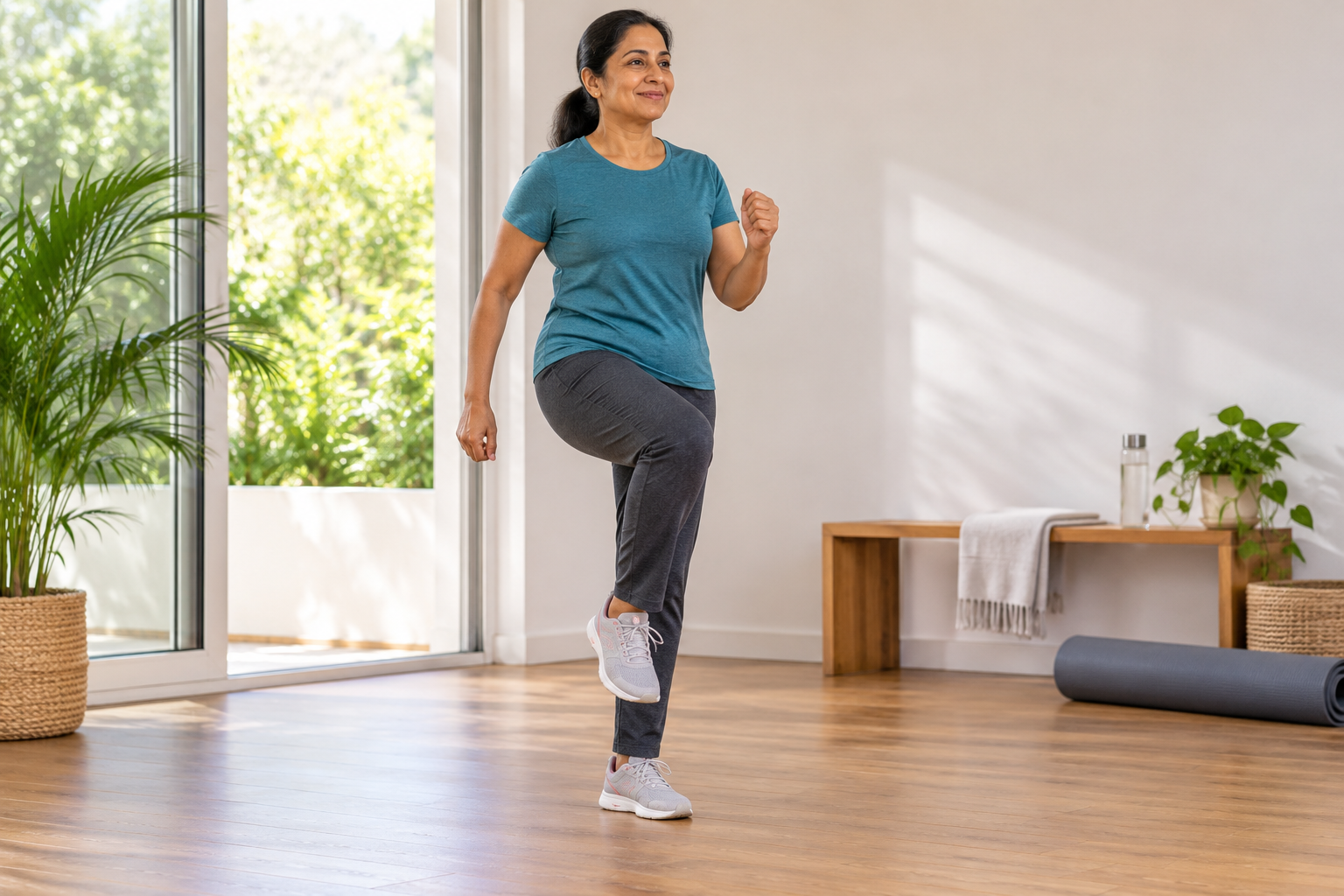
The NHS general warm-up guide, reviewed in June 2026, includes marching, heel digs, knee lifts, shoulder rolls and shallow knee bends. These are examples, not a requirement to perform every movement before every activity.
Choose a few familiar actions that suit the session and the space. At home, clear enough floor to move without catching a shoe on a mat. Outdoors, begin on an even section of the route rather than the steepest hill. In a busy gym, find your starting place before pressing play on a timer.
Keep the movements modest. March rather than driving the knees as high as possible. Let the arms swing comfortably. If you use shoulder rolls, keep them relaxed. There is no prize for the largest motion, and a warm-up does not need to become a demonstration of everything your body can do.
Rehearse what comes next
The American Council on Exercise discusses dynamic warm-ups as movement-based preparation. The practical takeaway is to connect the beginning of a session with the activity that follows, rather than select a random collection of difficult exercises.
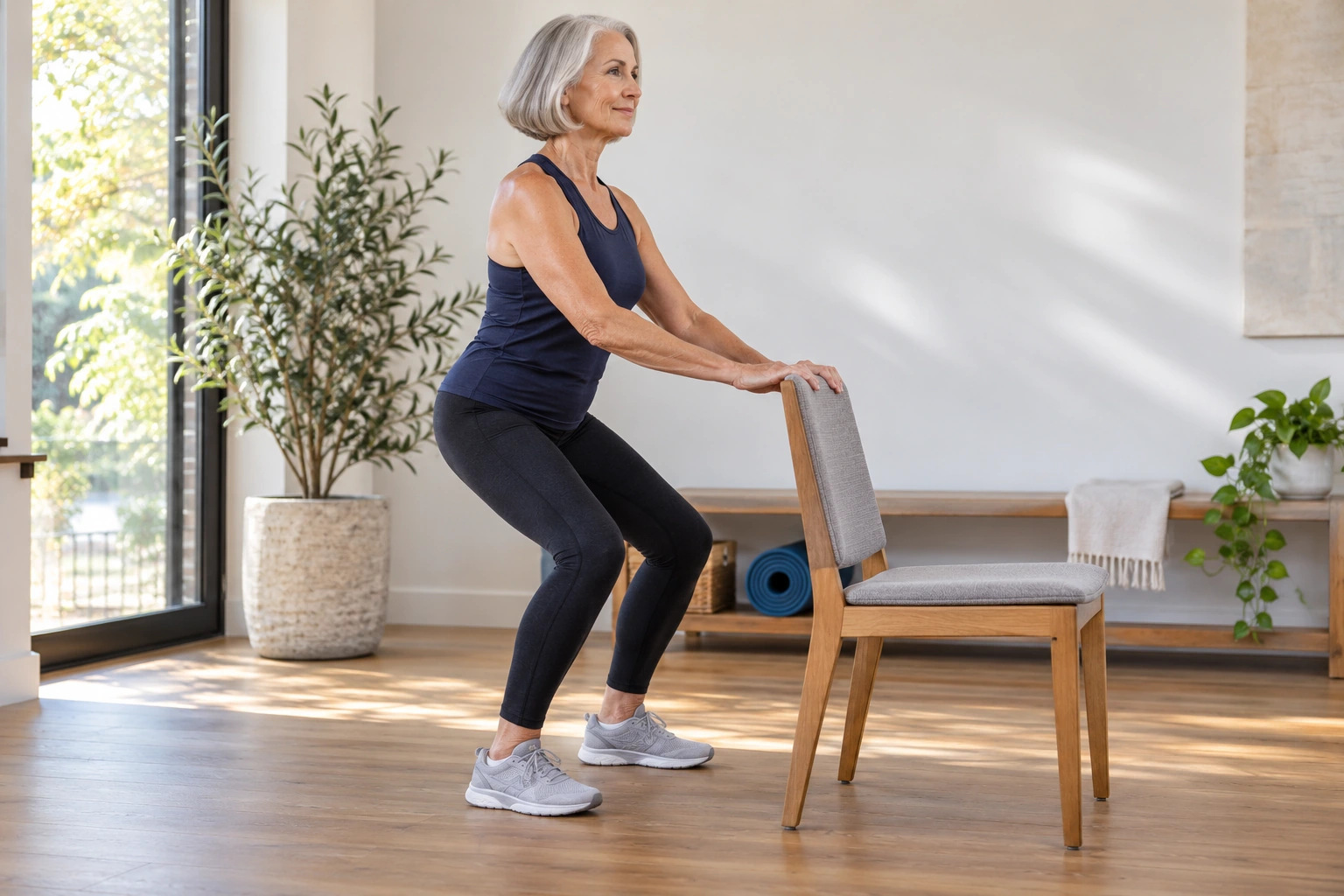
If your planned workout already contains a familiar bodyweight knee bend, an easy rehearsal may help you settle into its setup. Use the version you already know, including an established support if needed. This is not the moment to add a new balance challenge or copy a complicated movement from a short video.
For a class, tell the instructor if you are unsure how its opening sequence fits your experience. If you arrive late, do not assume the group has just begun because everyone is still smiling. Ask where to join and allow yourself an appropriate start.
A simple session, on paper
Here is an editorial planning example, not a personalized exercise prescription. For a familiar walking outing, put an easy opening stretch of the route first, follow it with your intended walking pace, and leave time to finish more gently. Use the five-to-ten-minute warm-up guidance as a starting framework rather than treating the clock as a command to accelerate.
For a familiar indoor session, begin with easy movement, then practise a few of its established actions without turning the rehearsal into a demanding circuit. Place equipment where you can reach it without stepping over loose items. If a trainer has given you a specific preparation sequence, follow that instead of layering this example on top.
A written plan can be as small as three words: easy, session, finish. The point is not to generate more administration. It is to make the transition visible before time pressure edits it out.
Make the easy choice the default
Keep the warm-up beside the activity in your calendar: “walk, including easy start,” rather than two separate tasks. At home, leave a clear starting space. For a group outing, agree that the first part of the route will be unhurried so nobody feels obliged to sprint after the fastest person.
If company helps you get out of the door, our guide to welcoming walking clubs explores how clear expectations can make shared movement more inviting. Agreeing on the beginning is one more way to make those expectations practical.
Try repeating the same suitable beginning for a week before deciding that it needs more variety. Familiarity can make the sequence easier to remember when the day is crowded. Change it because the session calls for something different, not because repetition looks less interesting online.
Preparation is not a promise
No short routine guarantees an injury-free workout, cancels out excessive effort or replaces individual guidance. This article does not prescribe exercise for symptoms or a medical condition. Stop if movement causes pain or you feel unwell; seek qualified advice if you are unsure what is appropriate for you.
The most useful warm-up is not necessarily the one with the most steps. It is a suitable, repeatable beginning that you actually leave time to do. Put it inside the session, keep it familiar and let the harder part arrive gradually.