Short bursts of movement are having a moment. The useful part is not the catchy name; it is the permission to stop treating exercise as an all-or-nothing appointment.
There is a particular kind of optimism that appears on Sunday night. This will be the week, we tell ourselves, when the gym bag stays packed, the calendar behaves and a proper workout slides neatly into the day. By Tuesday, work runs late, someone needs a favour, dinner still has to happen and the promised hour has disappeared.
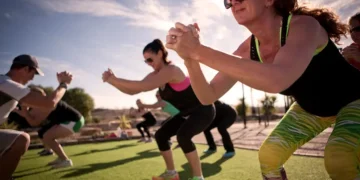
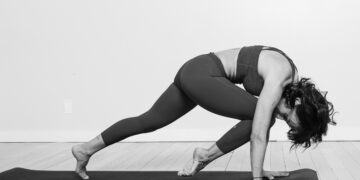
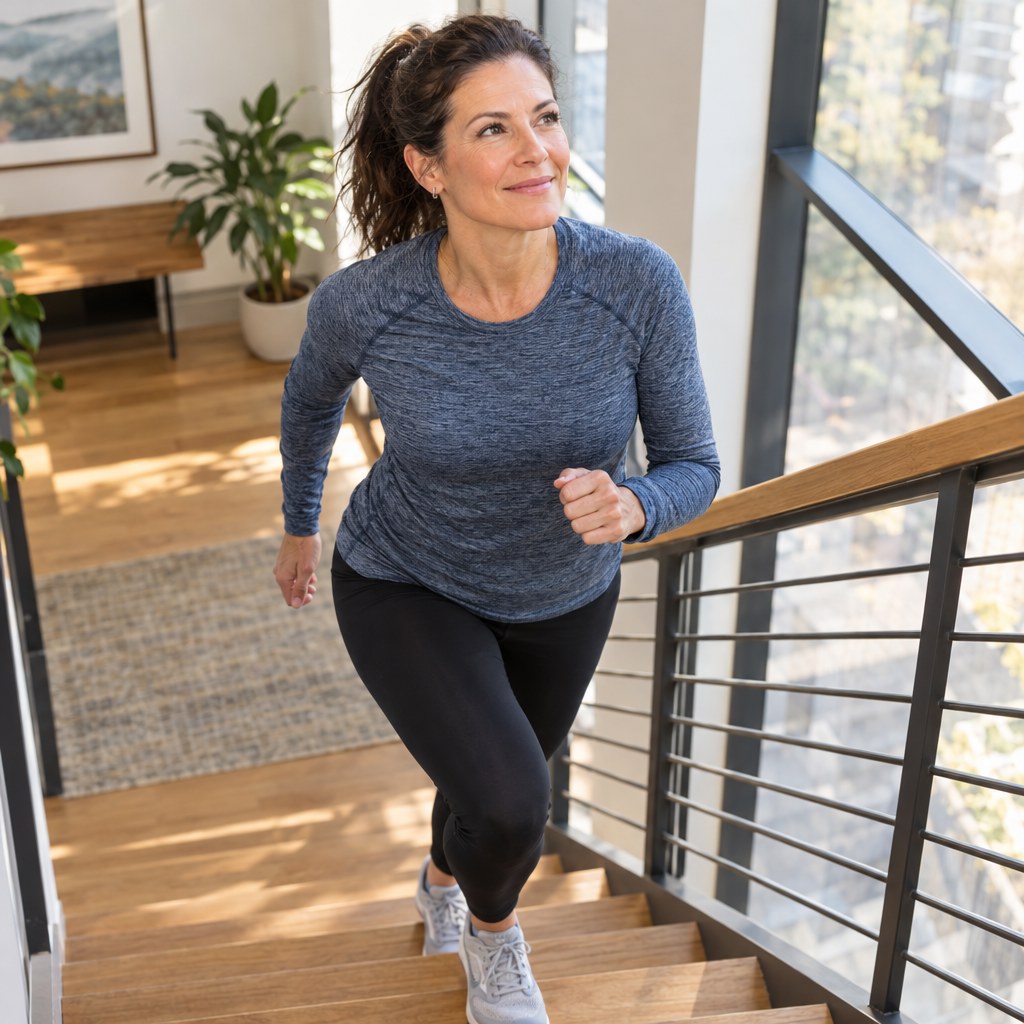
Enter the “exercise snack”: a brief, deliberate burst of activity, usually repeated during the day. It might be two minutes of brisk stair climbing, a quick set of sit-to-stands, a fast walk around the block or a compact bodyweight circuit between meetings. The idea is not to pretend that 90 seconds is the same as a full training session. It is to make movement easier to begin—and easier to repeat.
What the research actually says
A 2025 systematic review examined 11 randomized controlled trials involving 414 participants, with ages spanning adolescence to older adulthood. The protocols varied, but most used two- to five-minute bouts of moderate-to-vigorous activity, performed at least twice a day on three or more days per week. The review found promising improvements in cardiorespiratory fitness among inactive adults and in muscular endurance among older adults. It also reported strong adherence across the included studies.
That is encouraging, but it is not a licence for inflated promises. The trials were generally small, the routines differed and the evidence was stronger for some outcomes than others. Exercise snacks are best understood as a practical strategy for accumulating activity—not a miracle method and not proof that longer aerobic or strength sessions no longer matter.
The larger public-health message supports that flexible approach. The World Health Organization recommends that adults accumulate 150 to 300 minutes of moderate aerobic activity, or 75 to 150 minutes of vigorous activity, each week, along with muscle-strengthening work on two or more days. Current guidance no longer requires activity to happen in ten-minute blocks. Movement can count even when it arrives in smaller pieces.
Why this approach can suit midlife
After 40, the problem is often not knowing that movement matters. It is finding a form that survives real life. Careers may be at their busiest. Parents may be helping children and older relatives at the same time. Energy can fluctuate, and a packed schedule can turn one missed workout into a week of doing nothing.
Exercise snacks lower the entry cost. There is no commute, no special outfit and less negotiation with yourself. A two-minute plan can begin before motivation has time to object. Just as important, completing a small bout preserves the identity of being an active person on a day when a formal workout is not possible.
They can also add variety. One snack can raise the heart rate; another can challenge legs or upper-body endurance; a third can simply interrupt a long spell of sitting. The goal is not exhaustion. It is a small, repeatable dose that feels purposeful.
A realistic menu of movement
Choose options that match your current ability and surroundings. Keep the effort controlled enough that your technique stays tidy.
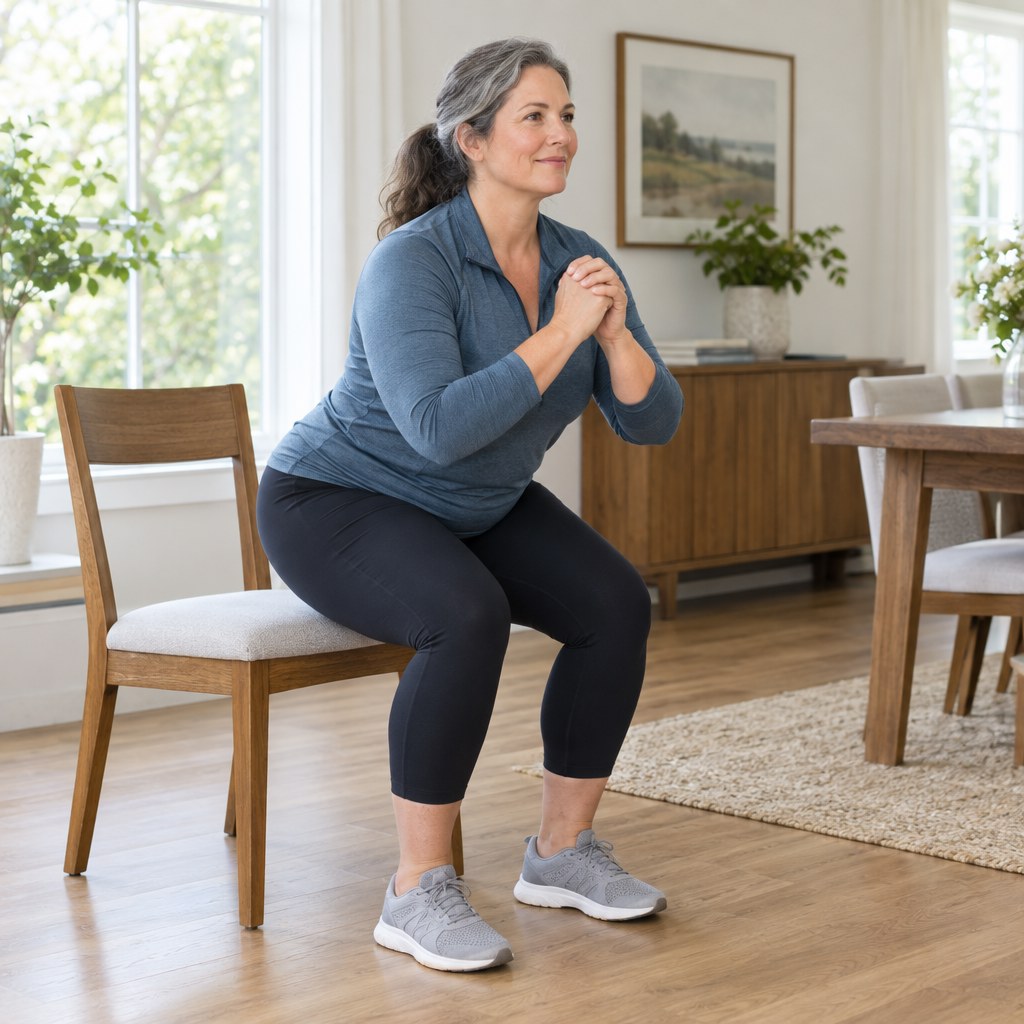
- The kettle set: While water boils, alternate eight to twelve chair squats with countertop push-ups. Rest, then repeat if time allows.
- The stair minute: Walk briskly up a flight of stairs, return at an easy pace and repeat for one to three minutes. A hallway or short hill works too.
- The meeting reset: After a long call, walk for three minutes, then do ten slow calf raises and ten supported reverse steps.
- The television circuit: During one break between episodes, perform sit-to-stands, wall push-ups and a supported march for 30 seconds each.
- The carry: Carry two evenly weighted grocery bags or dumbbells through a clear space for 30 to 60 seconds, staying tall and moving carefully.
None of these examples needs to be intense. “Brisk” should still mean controlled. Use a stable chair or counter when balance is a concern, and stop if you feel pain, dizziness, chest pressure or unusual shortness of breath. Anyone returning after a long break, managing an injury or living with a condition that affects exercise should get personal guidance from a qualified professional.
Build a system, not another challenge
The easiest way to make exercise snacks useful is to attach them to things that already happen. Pair one with your morning coffee, lunch break and the moment you close your laptop. Three cues are easier to remember than a vague promise to “move more.”
Start with one or two bouts a day for a week. Pick movements you can perform confidently and leave yourself wanting to do them again. If the routine becomes automatic, add time, resistance or another daily cue—not all three at once.
Keep formal workouts when you can. A well-designed strength session offers progressive loading that scattered mini-bouts may not provide. A longer walk, ride or swim builds endurance in a way that a few minutes cannot fully reproduce. The snacks fill the spaces between those sessions and give busy days a better default.
The takeaway
Fitness does not have to wait for an empty hour. Small bouts are not a consolation prize; they are a legitimate way to add movement and create momentum. The most useful routine is not the one that looks impressive on paper. It is the one that still exists on a crowded Wednesday.
For more practical fitness and wellness ideas for women 40+, visit dfynemag.com.