
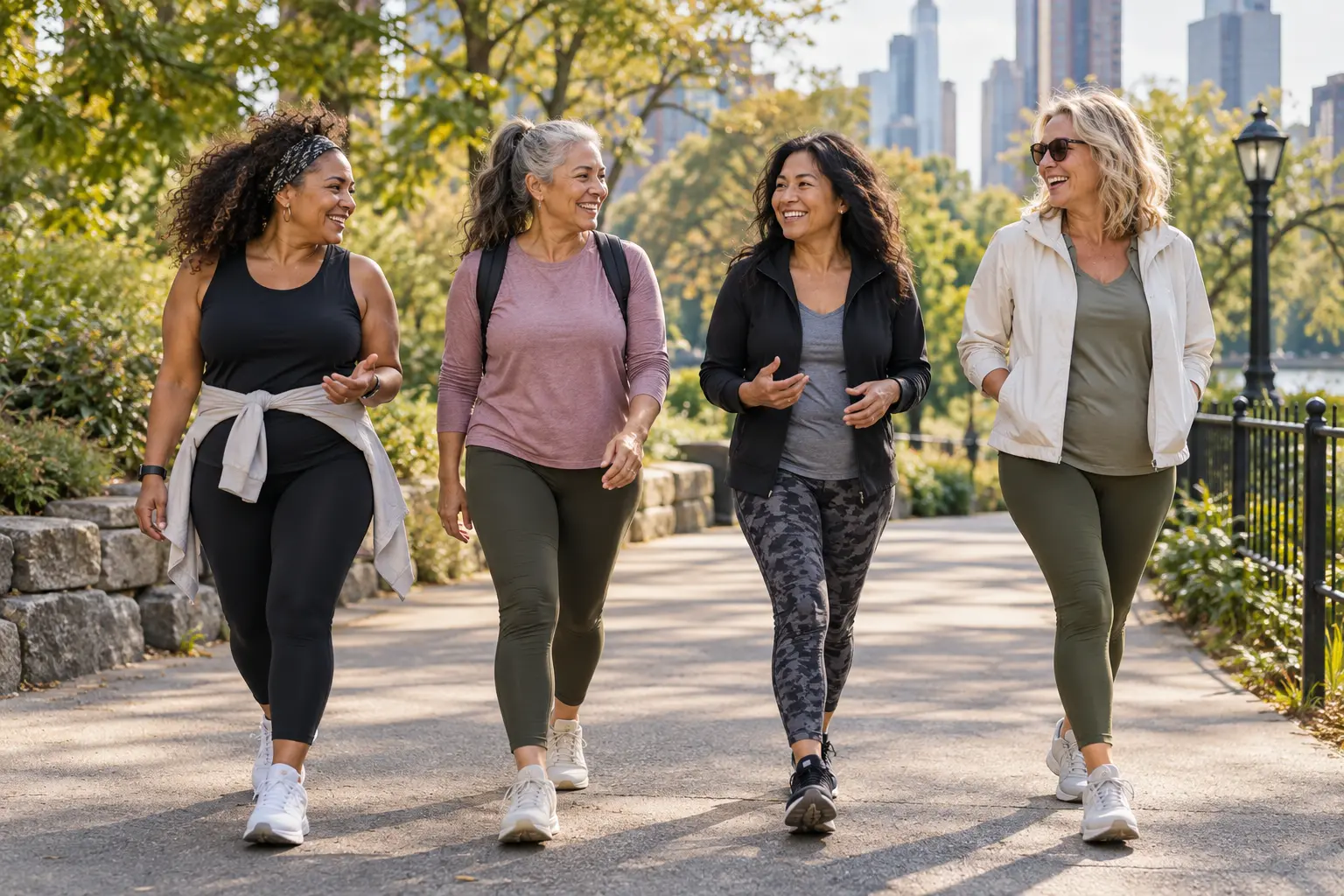
Running clubs made group fitness social again. Now walking and hiking groups are widening the invitation—with less pressure, more conversation and room for many different paces.
Walking clubs for women offer a simple way to combine movement, conversation and regular connection—without the pressure of a race or a demanding workout.
At the edge of a weekday evening, a small crowd gathers in comfortable shoes. Nobody is pinning on a race number. There is no starting gun, no podium and no expectation that the person beside you wants to chase a personal best. The plan is simpler: walk together, talk if you feel like it and finish somewhere pleasant.
The walking club is becoming a modern third place—a setting outside home and work where regular connection can happen without an elaborate occasion. It has the informality of a coffee date, the forward motion of a workout and one useful advantage over both: conversation does not have to carry the entire experience.
The data behind the stroll
The broader movement is visible in activity-platform data. Strava’s 2025 Year in Sport report, based on its global activity data and a survey of more than 30,000 people, found that walking was its second-most recorded activity after running. Hiking-club participation grew almost sixfold during the year, outpacing the already visible rise of run clubs.
That does not mean every neighbourhood suddenly has a formal walking organization, or that one app represents all adults. It does show that low-barrier, social movement is attracting real interest. In September 2026, reporting from France described social run clubs drawing newcomers and more women by emphasizing community and flexible participation as much as performance. Walking groups take that inclusive logic another step: you do not need to identify as an athlete before arriving.
Why walking changes the conversation
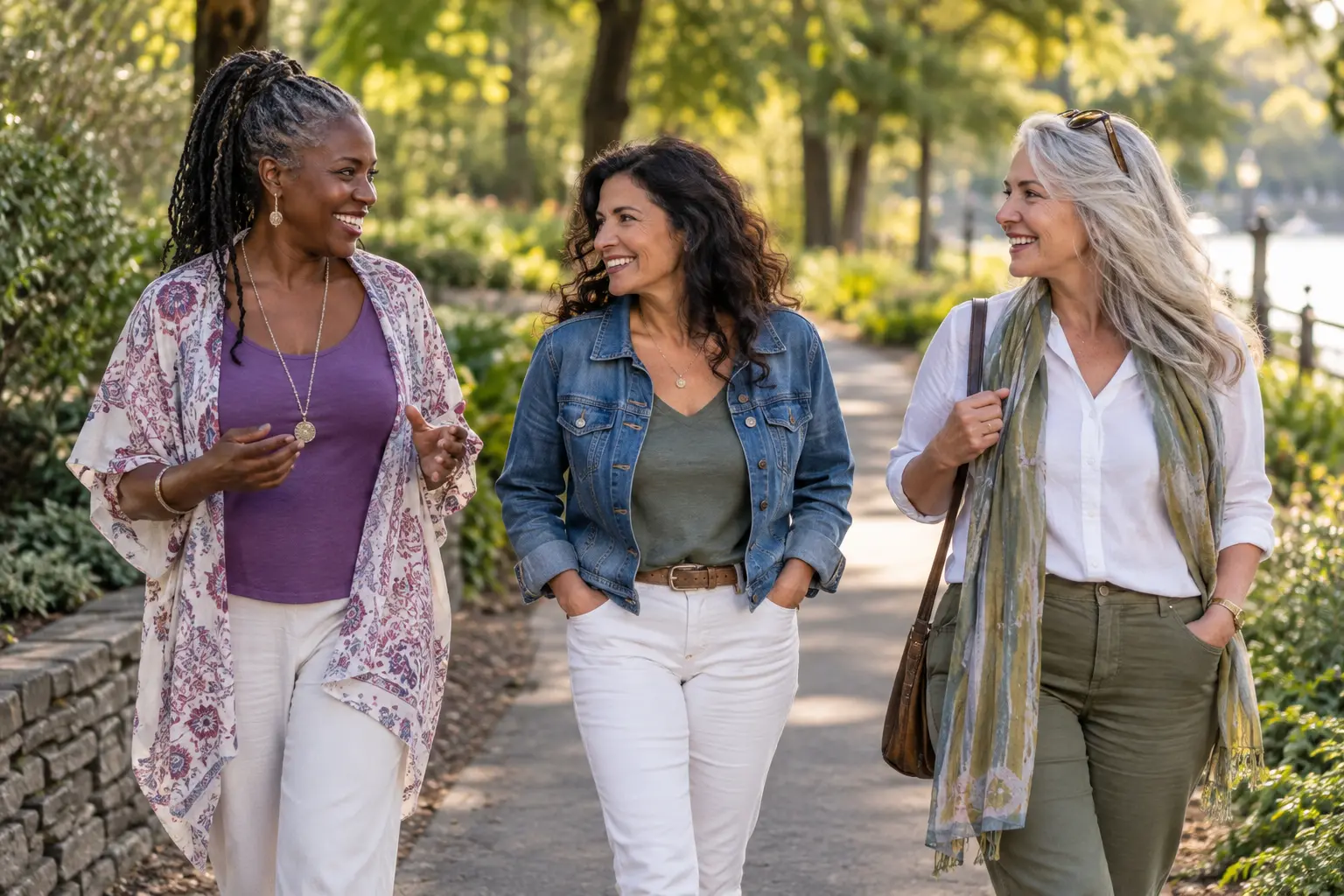
Face-to-face conversation can feel intense, particularly with someone new. Walking places both people beside each other and gives the eyes somewhere else to rest. A pause is not awkward when there is a crossing to navigate or a view to notice. The activity supplies a natural beginning, middle and end.
For women over 40, that format can fit a life in which friendship often has to compete with work, caregiving, family logistics and established routines. A walk can be meaningful without requiring a full evening, expensive tickets or a perfectly coordinated plan. It can also bring together women whose fitness histories are completely different.
The appeal is not that walking is effortless. Pace, distance, hills and terrain can turn it into a substantial outing. The appeal is that the starting threshold is adjustable. A 30-minute neighbourhood loop and a two-hour trail walk belong to the same family.
For days when a group walk will not fit your schedule, explore our guide to exercise snacks for women over 40 for ideas on fitting short bursts of movement into everyday life.
What a welcoming club looks like
The best groups make expectations visible before anyone arrives. They state the distance, terrain, approximate pace, lighting, washroom access and whether the route returns to the starting point. They explain whether the group stays together or separates by pace, and they name a leader or sweep who will remain at the back.
Language matters. “All paces welcome” sounds inclusive, but it is only useful if the route plan supports it. A group can offer two distances, schedule regrouping points or designate a conversational pace that allows people to speak in full sentences. Leaders should avoid treating the fastest walkers as the default.
Small practical choices make participation easier: start near transit or reliable parking, choose a familiar public route, check weather and trail conditions, and share a cancellation plan. After-dark walks need reflective clothing, adequate lighting and a route that feels safe to the people using it—not simply one that looks short on a map.
Walking clubs for women: how to find or start one
Begin locally. Recreation departments, libraries, community centres, outdoor stores and neighbourhood groups often list walking events. Activity platforms and social networks can help, but read the details closely. A “walk” may mean a relaxed park loop, a speed-walking workout or a rugged hike.
If nothing suitable exists, start with a four-week pilot rather than announcing a permanent club. Invite a small group, choose the same day and time, and repeat one well-lit route. Consistency helps people decide whether it fits their lives.
A simple invitation is enough: “Thursday Walk and Talk, 6:30 p.m., 45 minutes, comfortable conversational pace, paved route, rain decision by 4 p.m.” Ask participants to register or message the organizer so no one is left searching for the group.
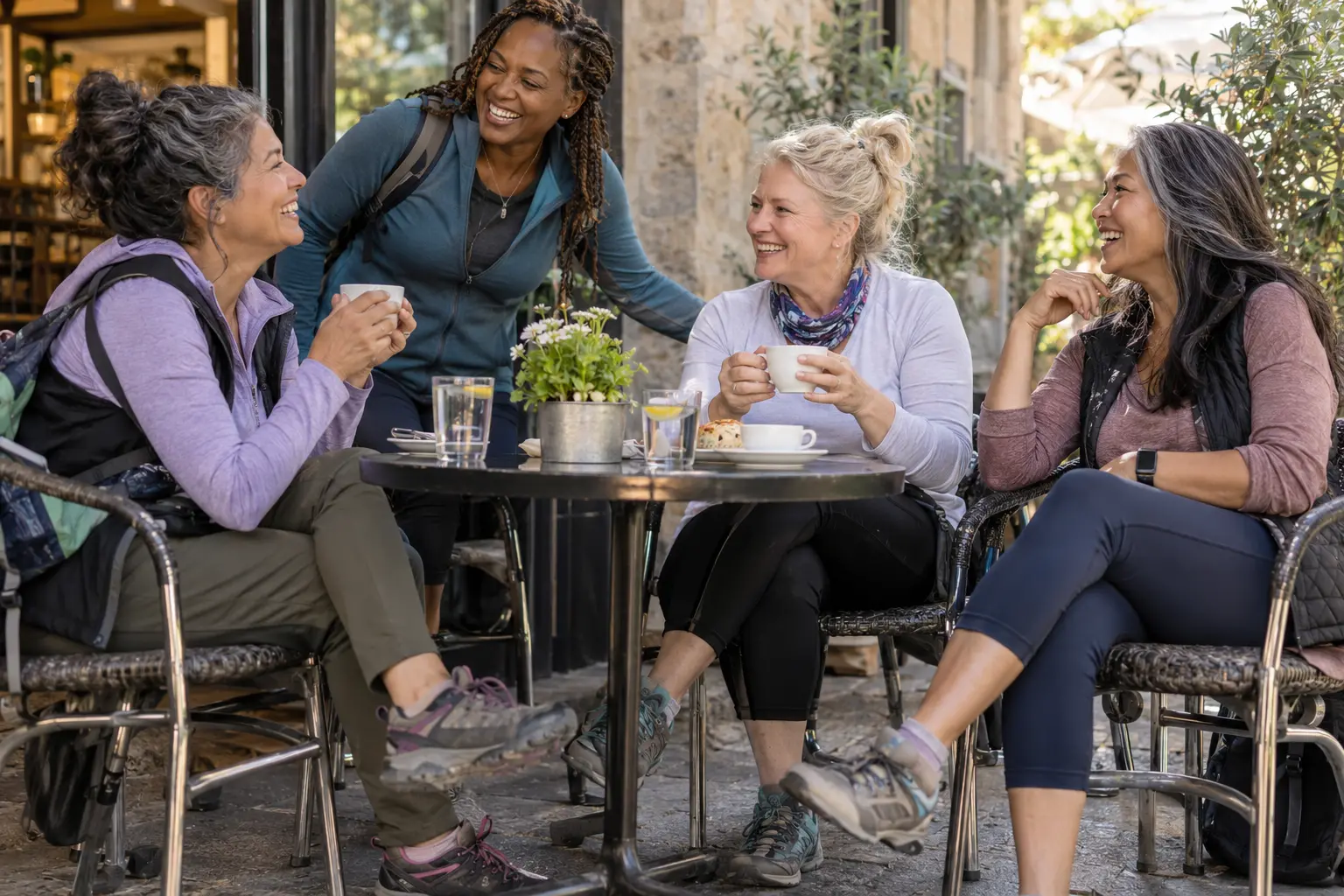
Keep the social finish optional. A café stop can deepen connection, but it should not make the walk feel like a purchase requirement. Sometimes the most inclusive ending is simply a warm goodbye and the date of the next outing.
A note on safety and scope
For urban routes, follow pedestrian rules, avoid blocking paths and keep headphones low enough to hear traffic and instructions. For trails, match the route to the least experienced participant, carry water and basic supplies, and use official maps and current conditions. A casual group should be honest about what it can and cannot provide; it is not a substitute for a trained guide on technical or remote terrain.
Personal information deserves care too. Avoid posting a participant’s live location or identifiable photographs without permission. Publicize the meeting point, but consider sharing detailed participant lists only with organizers.
The point is the return
The success of a walking club is not measured by kilometres alone. It is the familiar wave across a parking lot, the person who notices when someone is missing and the conversation that resumes next week without needing a formal invitation.
Fitness trends come and go, usually carrying new equipment and new rules. The walking-club revival is appealing because it asks for so little: a route, a time and a willingness to move at a pace that leaves room for another person.
Explore more stories about active life after 40 at dfynemag.com.