
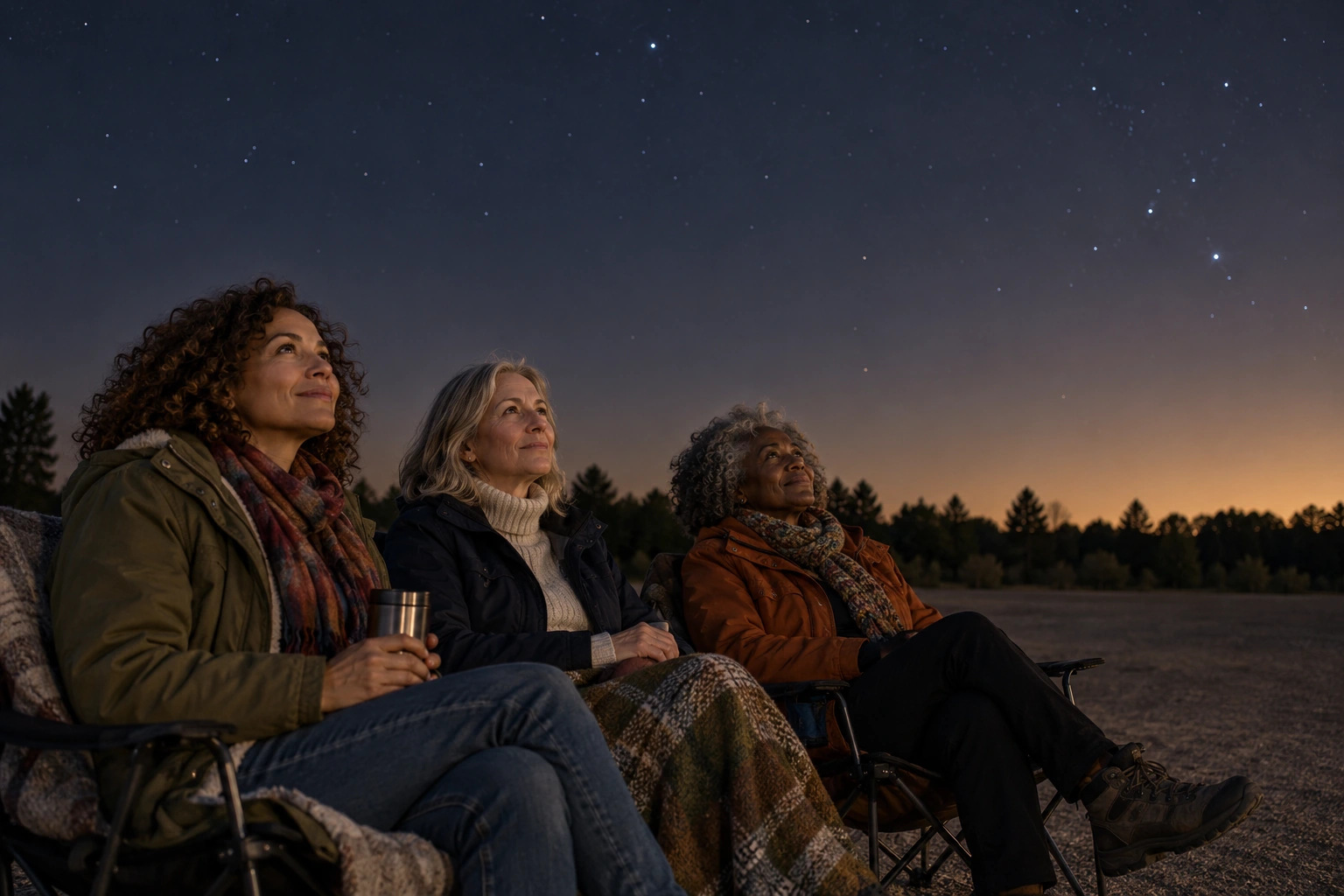
A comfortable place to sit can matter more than an ambitious list of things to see. Scene illustration, not a record of a particular sky or location. D’FYNE Illustration
Leave the ambitious itinerary at home. A first night of skywatching can begin with a warm coat, a clear plan and somewhere comfortable to sit.
Consider an evening with no restaurant booking, no performance to catch and no pressure to keep the conversation moving. You arrive before dark, unfold a chair and wait for the landscape to lose its daytime edges. Stargazing for beginners can be this ordinary, and that is part of its appeal.
There is no need to turn it into a grand expedition. For women over 40 used to arranging the practical details of everybody else’s leisure, an outing with one simple purpose can feel refreshingly clear. The purpose is to look up. Everything you plan should make that easier, not add another layer of achievement.
Choose the place before the equipment
The U.S. National Park Service suggests beginning at home, in local open spaces or at an astronomy club’s public event. A telescope is not the entry ticket. A suitable location and realistic expectations are more useful starting points.
A familiar backyard may be enough for a first attempt. For an outing, look for a place where after-dark access is explicitly allowed, with a clear route back and a surface that suits everyone coming. A site marked green on a map is not automatically open at night.
Check the land manager’s current advice, parking arrangements and closing time. If access involves an unfamiliar trail, consider a guided or organized event instead. Darkness is not a reason to improvise a route beside water, steep ground or a road.
Stargazing for beginners: give the sky time
Our eyes do not switch instantly from a brightly lit room to a dark landscape. Parks Canada’s Kejimkujik guidance notes that dark adaptation takes roughly twenty to thirty minutes and advises using red light during night programmes.
Leave room for that settling-in period rather than arriving, taking a bright phone photograph and deciding there is nothing to see. Keep the pace slow enough that waiting is part of the outing. You can notice the horizon, listen to the space around you and allow your attention to become less hurried.
That is an invitation, not a wellness prescription. A quiet evening does not need claims about hormones, sleep or healing to justify itself. Enjoyment is enough.
Pack for the evening you will actually have
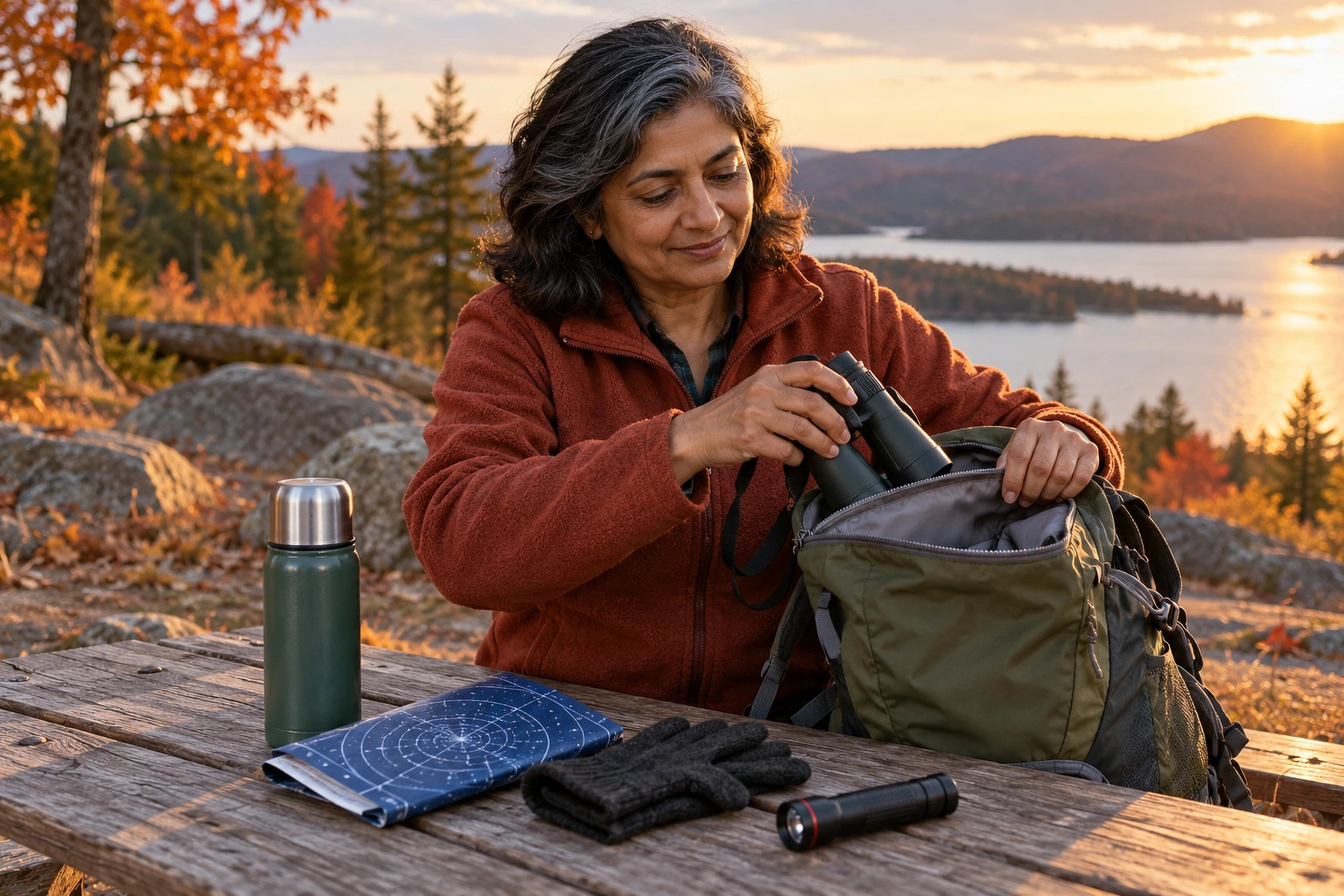
Prepare while there is still daylight. Choose warm layers, suitable footwear and a stable chair if the location permits one. Bring a drink, the essentials for the place you are visiting and a light you know how to operate. Test unfamiliar equipment at home rather than in a dark car park.
The National Park Service explains why red lights are preferred for skywatching: bright white lights and screens interfere with night vision. Keep any light directed down and use only what you need. Safety still comes first if the ground or route requires clearer illumination.
A phone remains useful for navigation and emergencies. Download essential information before leaving, reduce unnecessary screen use and avoid depending on mobile coverage. If you use a sky app, learn its controls in advance so the evening does not become a tutorial conducted at full brightness.
Let conditions decide the plan
Check a local weather forecast and the site’s current notices before setting off. Cloud, moonlight and nearby artificial lighting affect what you can see. The National Park Service notes that a bright full Moon makes the Milky Way harder to observe; a moonlit outing is not necessarily a bad outing, but it is a different one.
NASA’s October 2026 skywatching guide offers a current starting point for learning about the month’s sky. Treat it as a planning resource, not a guarantee for your latitude, weather or chosen time. Check the relevant date before setting your expectations around a particular event.
Give the plan an easy alternative. If cloud settles in, go another night or choose an indoor astronomy programme with verified opening times. A postponed outing is preferable to driving farther into worsening conditions because the group has already packed the thermos.
Share the sky without turning it into a test
Invite one or two people who like the sound of a low-key evening. Agree on the finish time, the practical arrangements and how much walking is involved. A friend who enjoys a conversation outdoors may not want a midnight hike, and there is no reason to confuse the two invitations.
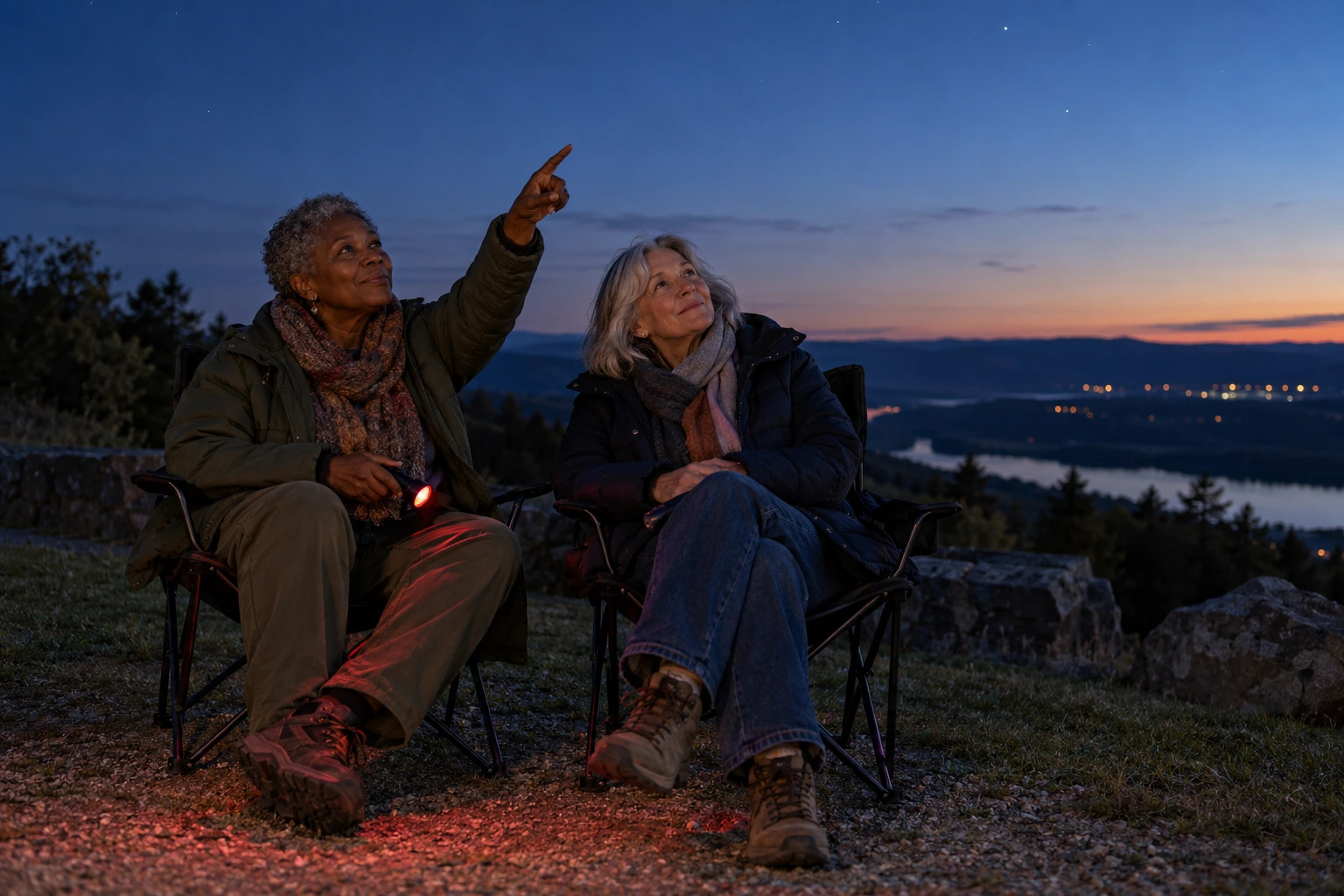
Let the person with astronomy knowledge share it without making everyone else sit an informal exam. Nobody needs to identify every constellation to belong. Take turns looking, asking and simply being quiet. Seek permission before photographing companions, particularly if the image reveals where they are that evening.
If the group would enjoy more guidance, look for a current public event run by a local astronomy organization or park. Confirm registration, accessibility and cancellation details directly. Do not assume an attractive photograph on an old event page means a session is running this week.
Respect the place that hosts you
Kejimkujik National Park and National Historic Site is one real Canadian example of a Dark-Sky Preserve with official visitor information. It is an illustration of what to research, not a claim that a specific programme, rental or overnight space is available for your dates.
Wherever you go, follow posted rules, stay in permitted areas and take belongings and litter home. Keep voices and lights considerate. The darkness is shared with other visitors and the life of the place, not a backdrop reserved for your photograph.
Bring home a reason to return
Our guide to purpose-led travel starts with the experience you want rather than a list of destinations. Apply the same idea here: companionship, curiosity or simply a different way to spend an evening.
You may come home without a spectacular photograph or a list of discoveries. You may still remember the conversation, the cooling air and the moment everyone stopped checking the time. That is enough material for an evening worth repeating.