
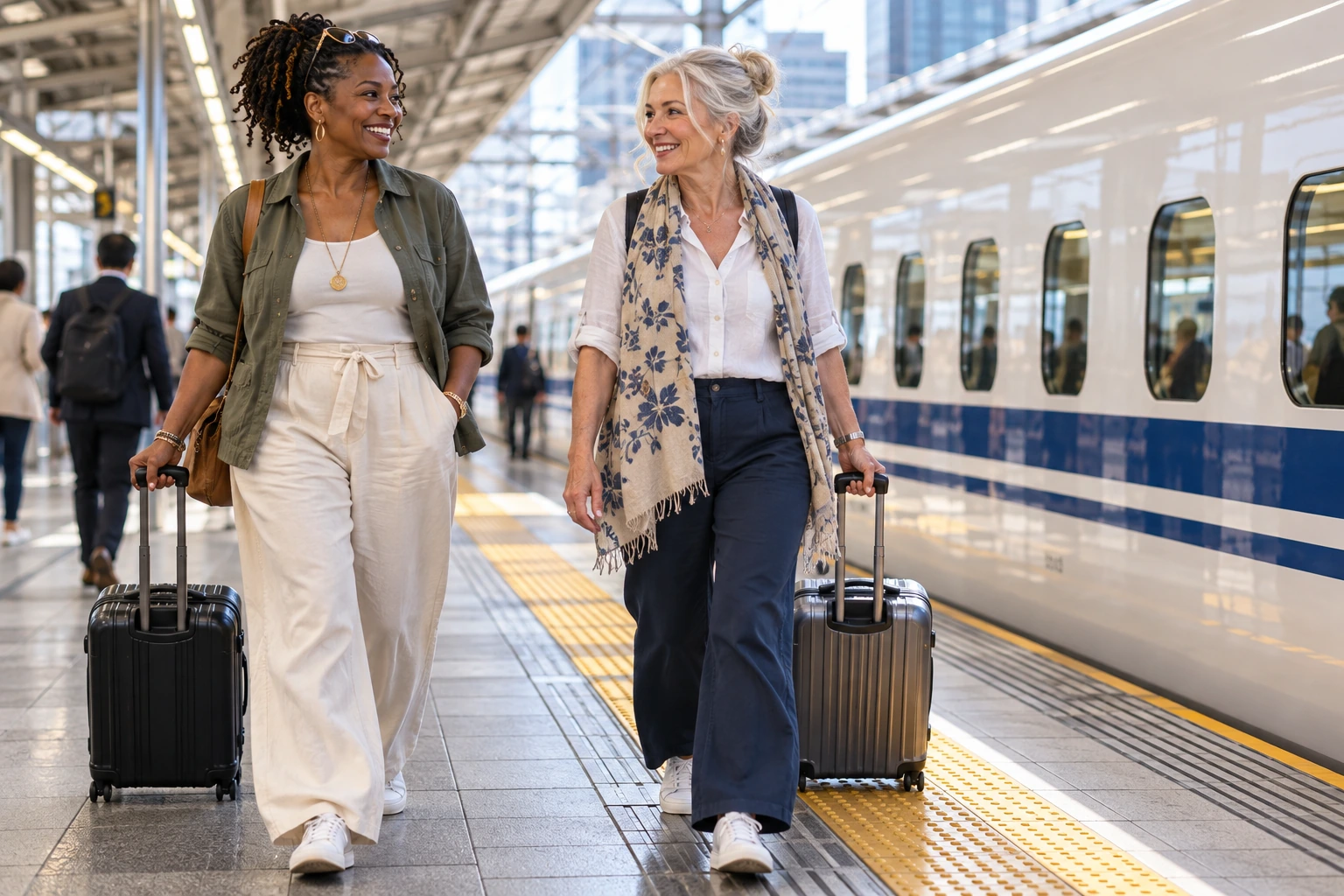
Keep luggage manageable and leave time to find your platform. Illustrative travel scene. D’FYNE Illustration.
A journey can feel crowded before you have bought the first ticket. Tokyo, Kyoto, another city, another hotel: the list grows, and soon the holiday is organized around departure times. Japan by rail offers another possibility. Keep the movement you enjoy and remove the movement that is only there to satisfy a checklist.
For women over 40 planning a first visit or a long-awaited return, an unhurried rail trip is less about age than preference. You may want comfortable transfers, time to walk and an evening that does not begin with repacking. Those are legitimate planning choices.
This is a researched planning guide, not an account of an interview or a journey we claim to have taken. The illustrations depict travel situations, not documentary photographs of specific stations or sights. Check operator information for your own route before booking.
Choose bases before attractions
Begin with the places where you will sleep. Two longer stays can create a different rhythm from five short ones. You unpack once, learn the nearby streets and make day trips without carrying the entire holiday.
A first outline might pair Tokyo with Kyoto, leaving room within each stay for neighbourhood exploring and a day trip. That is an example, not the only good route or a guarantee of an easy connection. Choose bases that fit your interests, arrival airport and onward plans.
Ask what each move adds. A new hotel might put you closer to a place you deeply want to see. It might also trade an enjoyable afternoon for a checkout, a station search and another check-in. Keep moves that earn their place. Remove the ones that only make the itinerary look impressive.
Understand the train you are booking
Japan’s rail network includes local services, private railway lines, limited express trains and the Shinkansen. The Japan National Tourism Organization’s rail guide explains these distinctions and points travellers toward route-planning and booking resources.
Do not assume one ticket, card or pass covers everything. Check the actual service, seat arrangements, transfer stations and ticket requirements for each journey. A national pass is a purchase to assess against your route, not an automatic starting point. Prices and conditions can change, so compare current official information before paying.
Save the important details in a form you can find quickly: date, departure station, service, time and booking reference. Keep the hotel name and address accessible, too. A tidy travel note is more useful on a busy platform than twenty screenshots mixed with restaurant ideas.
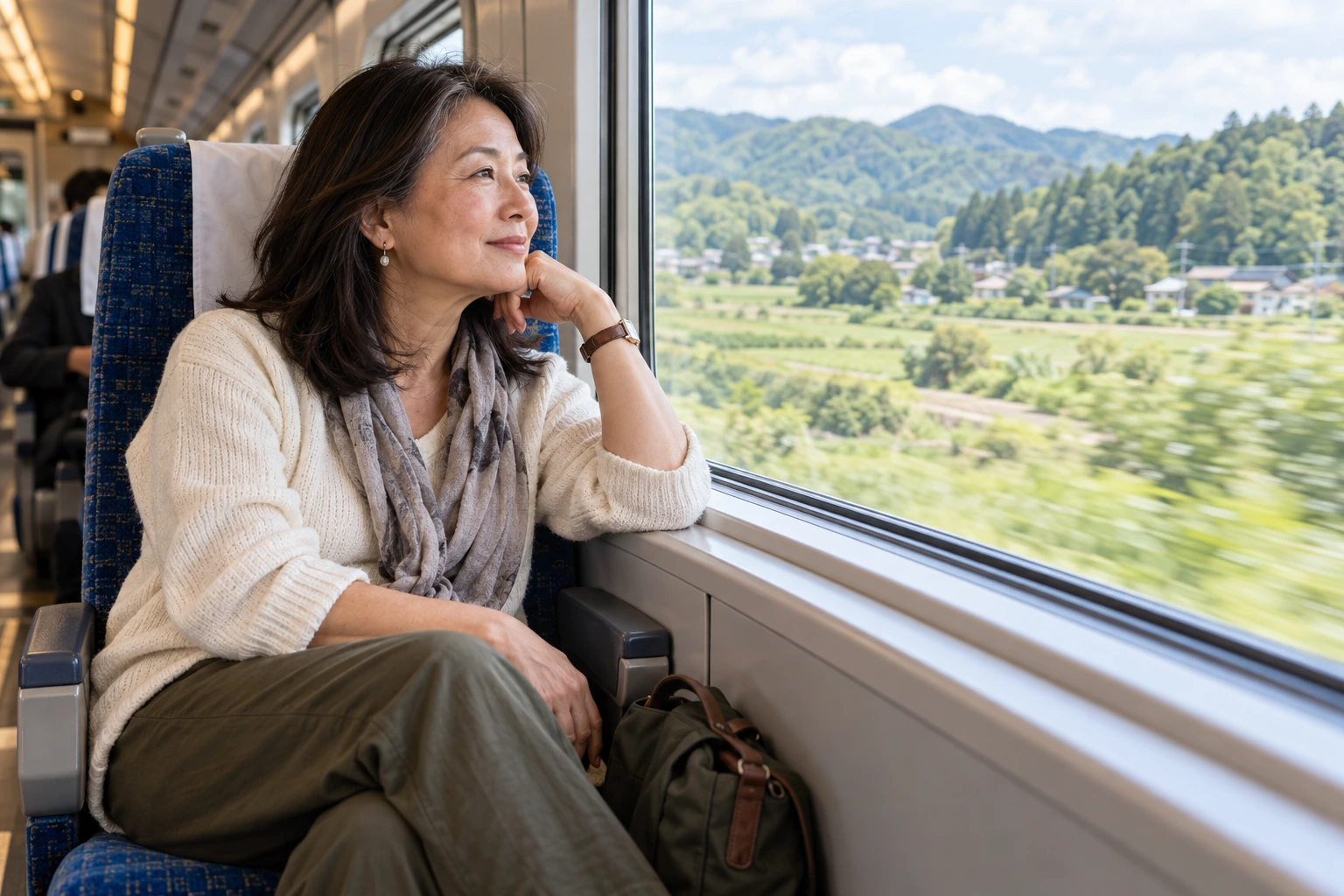
Let your luggage shape the plan
Before adding another city, picture the transfer with your actual bags. Can you comfortably manage them through the station and to the hotel? A shorter itinerary can make a small suitcase practical; a longer trip may call for a different arrangement.
JNTO describes luggage storage and forwarding options. Ask your accommodation or the carrier about availability, delivery time, cost, size limits and what may be sent. Do not assume a bag will reach the next hotel on the same day.
If using forwarding, carry what you will need until delivery, including essential documents and any other items you must keep with you. For bags travelling on the train, consult the operator’s current baggage rules and reservation requirements for that route. The useful decision is the one made before you arrive at the platform.
Give transfer days breathing room
A map can make an interchange look like a dot. In practice, you still need to find a platform, orient yourself and decide which exit reaches your hotel. Allow room for that work instead of arranging the narrowest connection you can find.
Consider what the day feels like beyond the train ride. A morning checkout, a lunch stop and a hotel arrival may be enough. Keep one optional activity nearby rather than putting a prepaid appointment immediately after a connection.
Take accessibility needs seriously when choosing stations and accommodation. Check the route to the property and ask about facilities rather than relying on the description “near the station.” Distance alone does not explain stairs, crossings or the entrance you need.
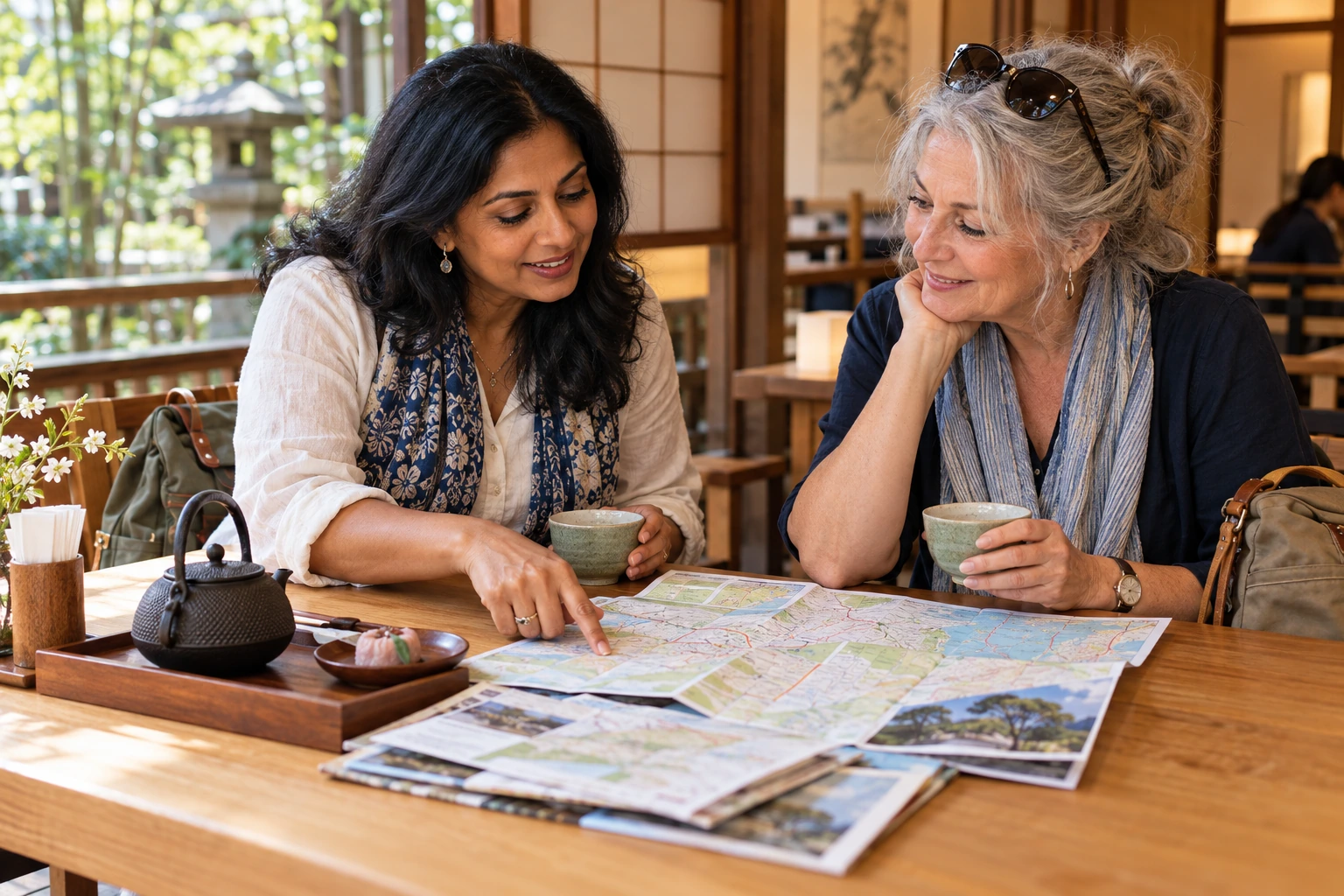
Travel as a considerate guest
JNTO’s train-and-bus guidance explains practical etiquette, including keeping backpacks from bumping other passengers and respecting priority seating. Follow local signs and staff instructions, and keep doorways and aisles clear.
Match the setting. A long-distance reserved-seat journey and a crowded urban train are different environments. Keep conversations considerate, avoid phone calls that disturb others and check whether eating is appropriate on the service you are using.
Leave enough time to follow the boarding process calmly. Look for the correct carriage and waiting position, allow passengers to leave first and ask for help if needed. Courtesy is easier when the itinerary has not made every minute urgent.
Plan one anchor, then leave room
Choose one important experience for each day: a museum, a neighbourhood walk or a booked visit. Let the rest respond to the weather, your energy and what you discover nearby. An open hour can become a tea stop, a bookshop or simply time to watch the street.
Our guide to learning vacations after 40 offers ideas for travelling with curiosity. You can bring that approach to a rail trip without enrolling in a packed programme. Read about the place before arriving; ask a thoughtful question; give an experience enough time to become more than a photograph.
Make the journey part of the holiday
Before booking, review the route once more. Count hotel changes, major transfers and early starts. Remove one that does not support your priorities. Check current tickets and baggage information, then leave a little space around the important reservations.
Unhurried does not mean unplanned. It means the planning protects time to enjoy being there. A train window, a familiar walk back to the hotel and an afternoon without another suitcase can become some of the trip’s most satisfying moments.