
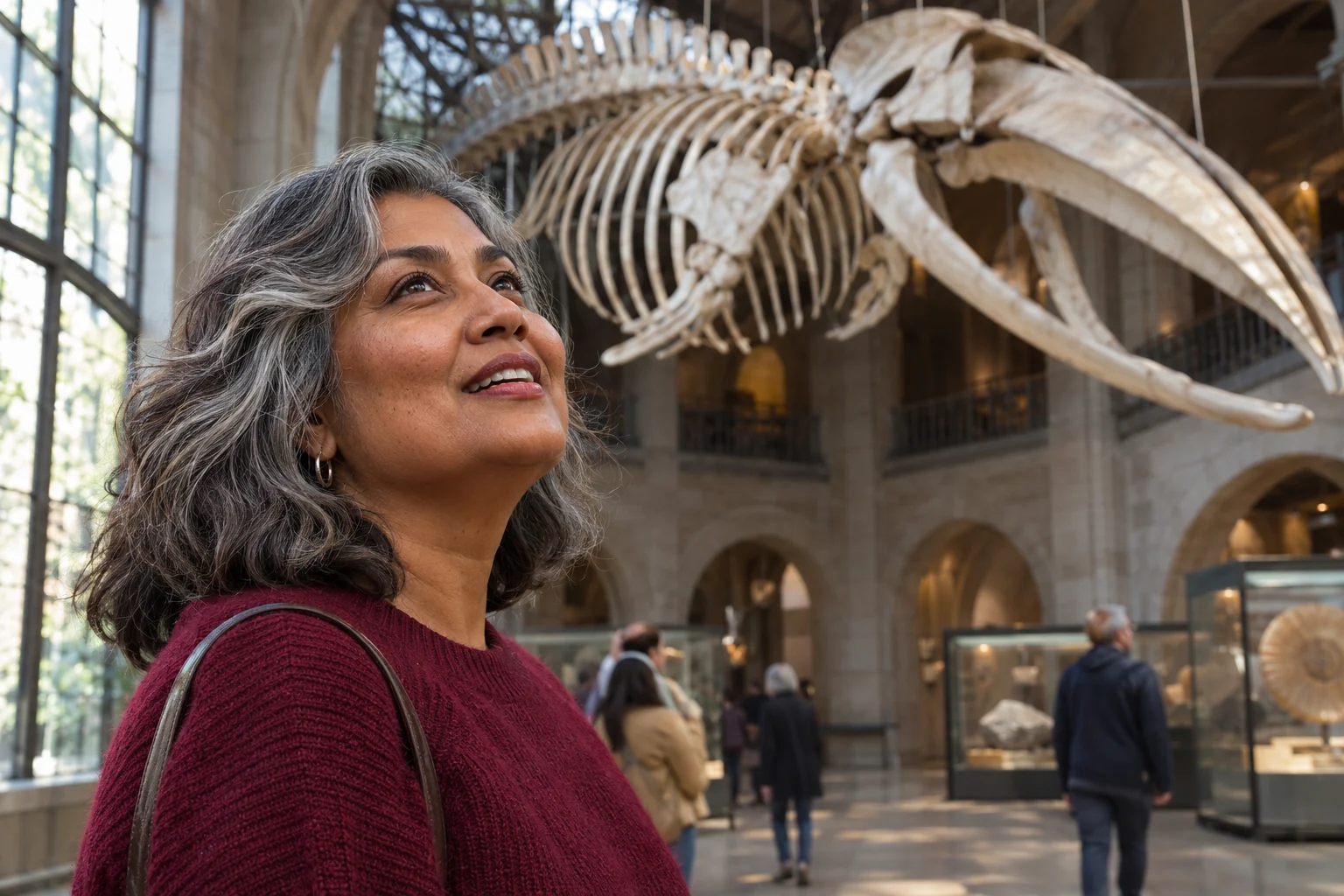
At the Canadian Museum of Nature in Ottawa, a 19-metre blue-whale skeleton stretches across the Water Gallery. It’s the sort of object that can take longer to look at than you expect. First your eye goes to the ribs. Then there’s how far the skeleton reaches overhead, and how much smaller the people in the room suddenly seem.
That sense of scale is enough to build a grey-weather afternoon around. Choose two galleries, give each one a question and leave time to sit between them. It works on your own, with a friend or with a companion whose ideal museum visit is shorter than yours. You can spend the time you have looking closely at something that rarely fits into an ordinary day.
Start with one thing you want to see
Begin with the museum’s floor map. The Water Gallery is on the second floor and the Fossil Gallery is on the first. Either works as your first stop. If you arrive with the whale on your mind, go upstairs before you get drawn into the rooms near the entrance. You can come back downstairs for fossils, a break or a slower look around the rotunda.
In the Water Gallery, stand far enough back to take in the outline of the skeleton, then change positions and see what you missed. Look at the gap between one rib and the next. Read one label all the way through. If there are two of you, ask what drew the other person’s attention first. The answer may send you back to a detail you passed on the way in.
The gallery can appeal to visitors who have little interest in identifying every specimen. Give yourself a question you can keep thinking about on your way out. For example, which part of the skeleton most changes your sense of the living animal? You could pose that question even if you have just twenty minutes in the room.
At the Canadian Museum of Nature in Ottawa, compare two scales
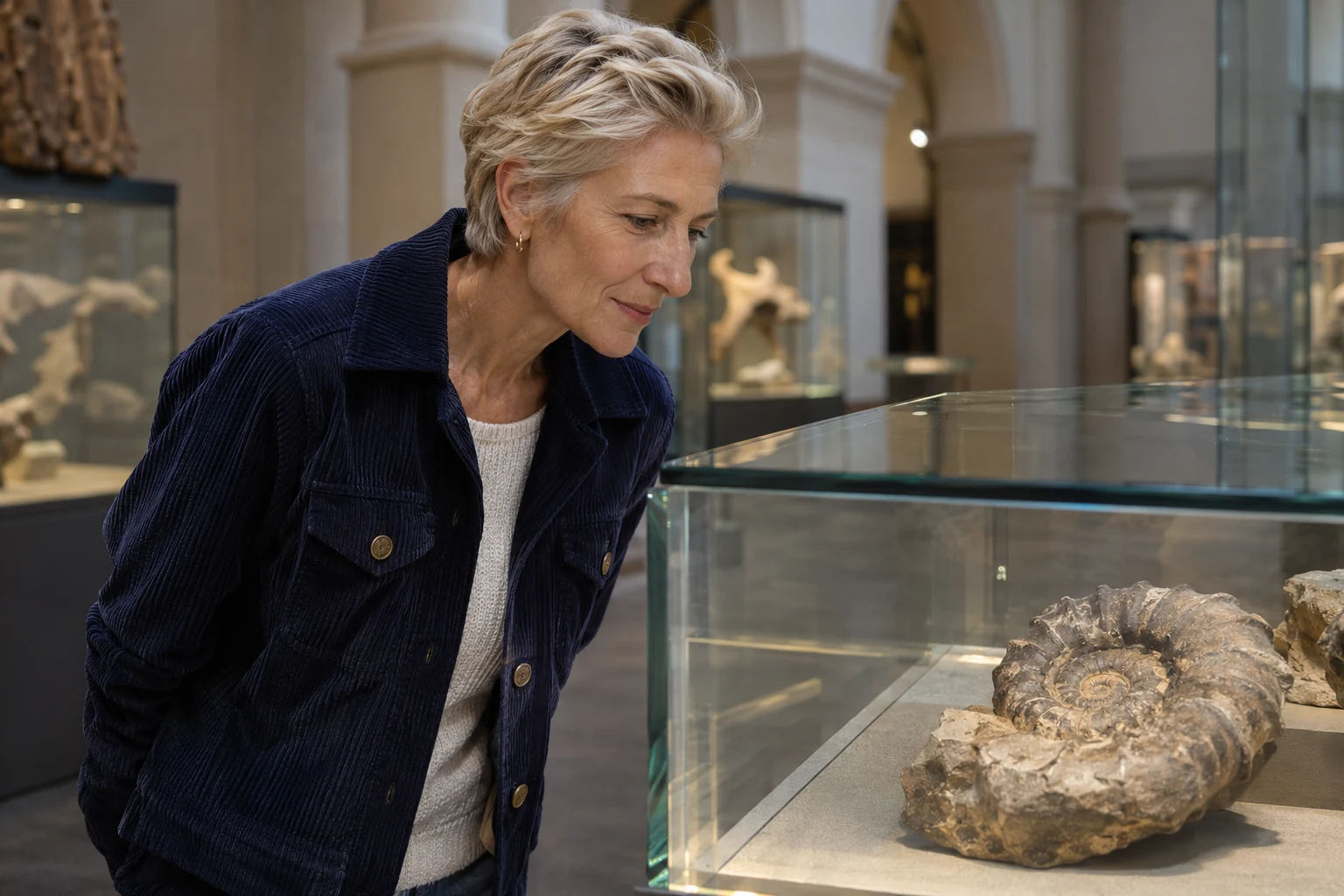
Switch from the large overhead view to the group of fossils you can examine from closer by. The museum’s Fossil Gallery visitor page identifies Triceratops among its specimens, along with a large Edmontosaurus panel mount. Pick one and give it several minutes of your time. See what the display lets you notice about the shape of the animal before you look for the next label.
If you like a little structure, choose one shape or texture to follow between the two rooms. Look at how a fossil’s outline leads your eye across a case, or which exhibit makes you step back instead of leaning closer. Museum visits often turn into a succession of names. Two rooms give you enough contrast to remember the visit as a pair of experiences.
You can also swap one of the rooms for the Bird or Earth Gallery. Decide before you arrive if you’re planning around someone’s interests, or stay flexible if the gallery you want is crowded. A return trip is easier to imagine when you already know what you would leave for it.
Put the break into the plan
Allow about 90 minutes to two hours if you want to try both rooms with time to linger. This is a suggested window, so a shorter visit can still revolve around a single exhibit. Pick a point to meet if people want to spend different amounts of time in one gallery. It’s easier to enjoy a label or a second look when the person you came with knows where you’ll be.
The museum’s accessibility guide lists seating in galleries, a drop-off at the main entrance, and wheelchairs and walkers available first come, first served. It also describes sensory supports if you want to plan for how the rooms will feel. Check the guide before leaving home if access will shape which part of the visit you do first.
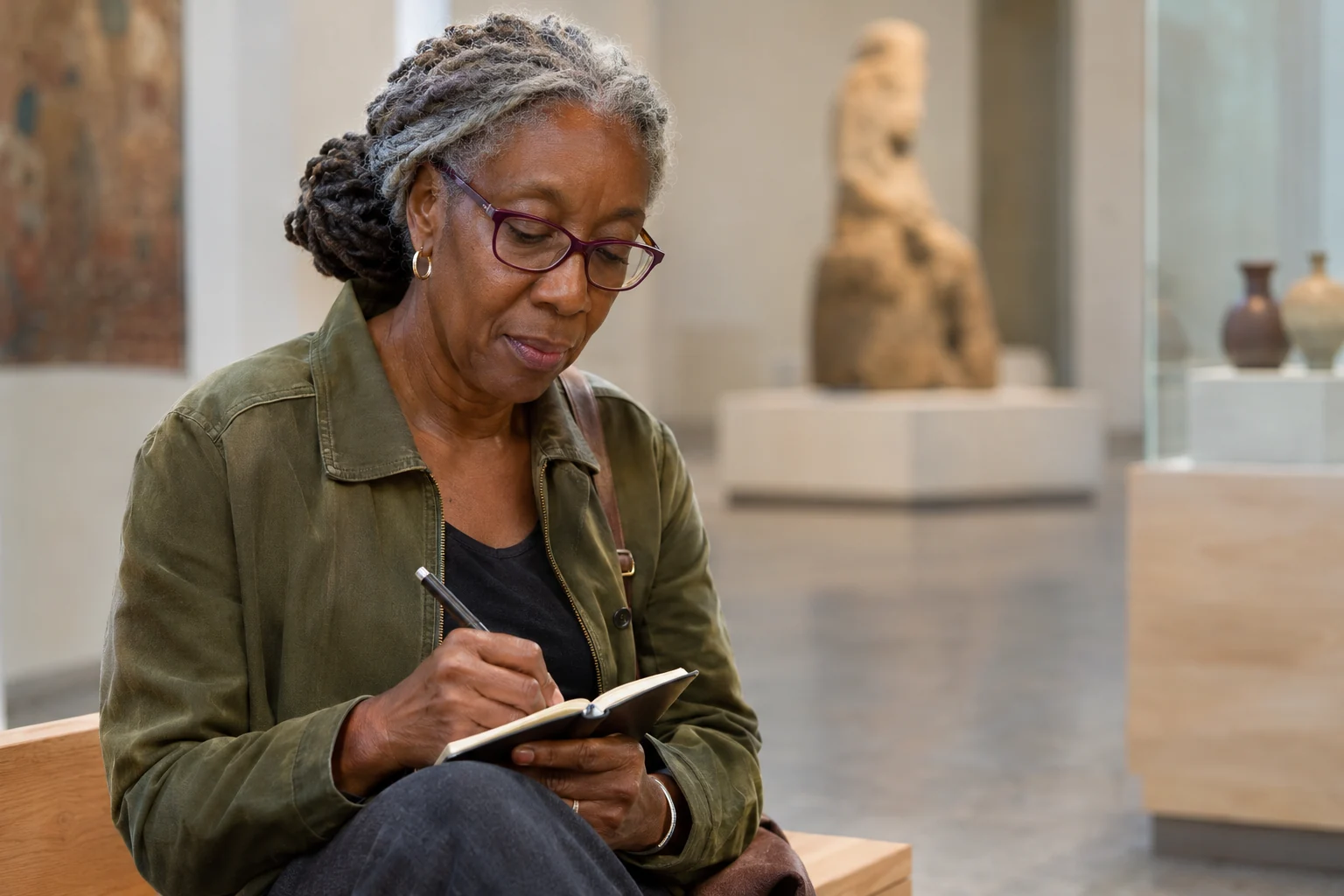
If you want something to take home, write down one object and one detail you still remember without looking. You can do it while you sit down, on the way out or over a drink after the visit. That small record gives you a way to carry what you saw into the rest of the afternoon. Later you can look up a question that’s still on your mind.
If you would rather put your phone away, keep one word from each gallery in mind. “Rib” and “horn” can be enough to recall how different the rooms felt. If a friend is along, compare your two words over a coffee and see where they overlap. It gives the conversation somewhere to begin without making the visit feel like an assignment.
Check the practical details before you go
The museum is at 240 McLeod Street in Ottawa. Its published winter schedule includes a Tuesday closure and later hours on Thursdays, with exceptions. Check the museum hours and notices for your exact date and look at the admission options before booking. If you’re coming from outside the area, leave enough travel time to arrive without rushing the visit.
Carry the same idea into the evening if you’re staying over. Choose somewhere to sit and talk that’s convenient from where you’ll end up. If you’re looking for another Ontario outing with a different rhythm, D’FYNE’s late-fall Kingston guide builds a trip around similarly flexible time. In Ottawa, let the whale or the fossil you kept returning to be the detail you tell someone about first.