
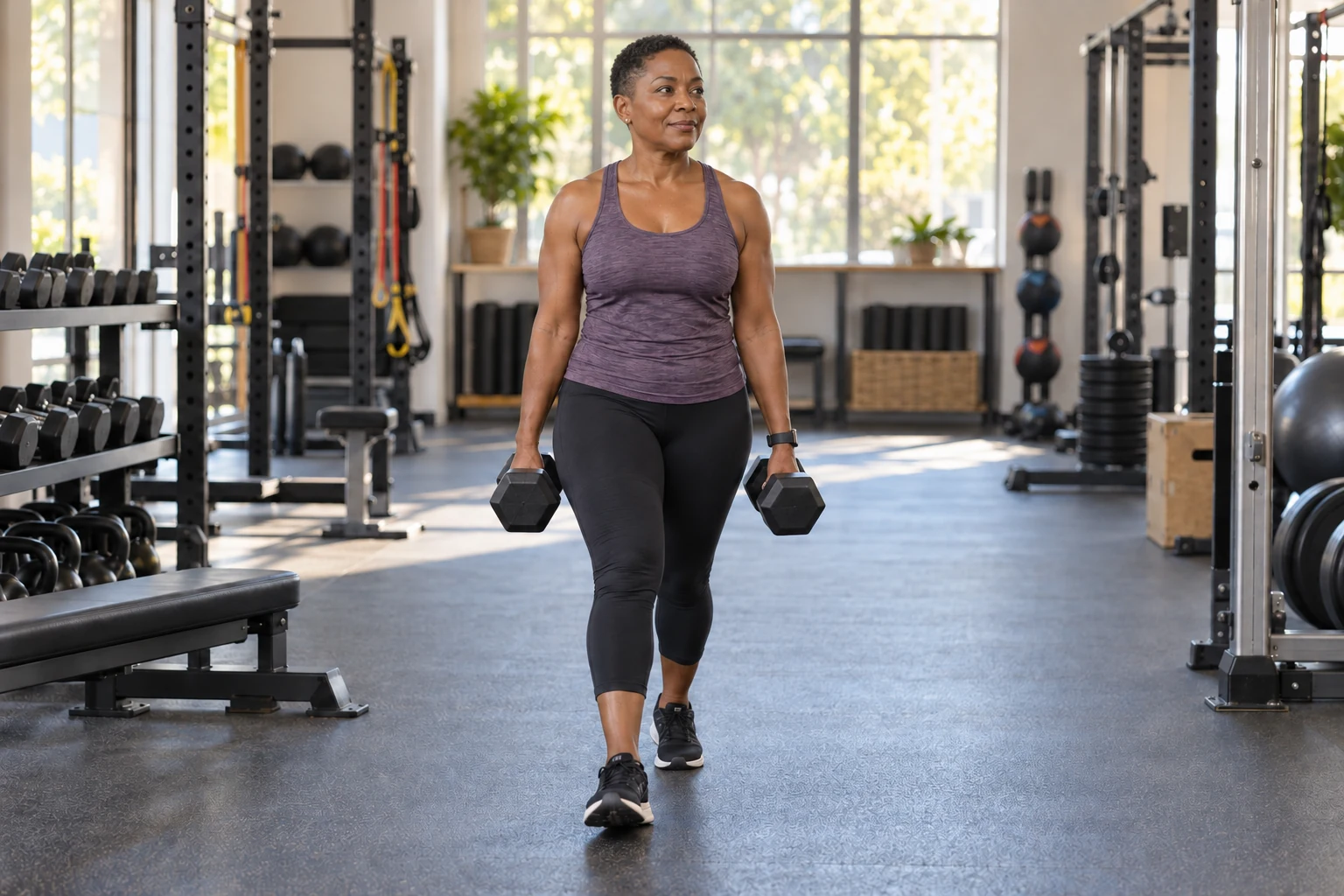
The shopping bags, the suitcase, the low chair: ordinary life offers plenty of reasons to get stronger.
The grocery trip ends at the front door. There are still bags to bring inside, a step to negotiate and a counter to reach. It is an unglamorous moment, but a useful place to begin thinking about strength training for everyday life. What would you like to do with more control, confidence or ease?
After 40, the answer need not involve a new identity as a gym person. You might want to carry your own luggage, move a planter or get up from a low seat without making the furniture part of the operation. Start with the life you want to keep participating in, then ask how training could support it.
What the current expert guidance says
The American College of Sports Medicine’s 2026 resistance-training update puts regular participation ahead of a complicated programme. Its review of evidence in healthy adults emphasizes working the major muscle groups at least twice a week and choosing a routine that fits the individual.
Stuart Phillips, PhD, FACSM, a McMaster University kinesiology professor and member of the position-stand writing group, makes that consistency point in ACSM’s published announcement. Bands, bodyweight and weights can all be part of a useful approach. This is his published guidance, rather than an interview conducted for D’FYNE.
For an everyday-life goal, that leaves room for something refreshingly ordinary: learning a few appropriate movements, practising them regularly and building from a level you can manage. A routine does not become more useful simply because its name sounds more technical.
Strength training for everyday life starts with a task
Choose one moment from your week and describe it precisely. “Get stronger” is broad. “Carry two modest shopping bags from the car to the kitchen” tells a trainer about the load, distance and setting. “Lift a small suitcase onto a waist-high surface” reveals a different task from heaving a heavy case into an overhead compartment.
Bring that description to a qualified exercise professional if you need help choosing a starting point. Ask them to watch the movement, explain the setup and show you a version you understand. The useful question is not which exercise looks most impressive. It is which version you can control and repeat.
Keep the task separate from a maximum-effort test. The fullest grocery bag in the house is not automatically sensible training equipment. Handles can dig in, contents can shift and a crowded hallway adds obstacles. A clear space and a predictable light load make a better practice setting.
Learn the lift before adding more
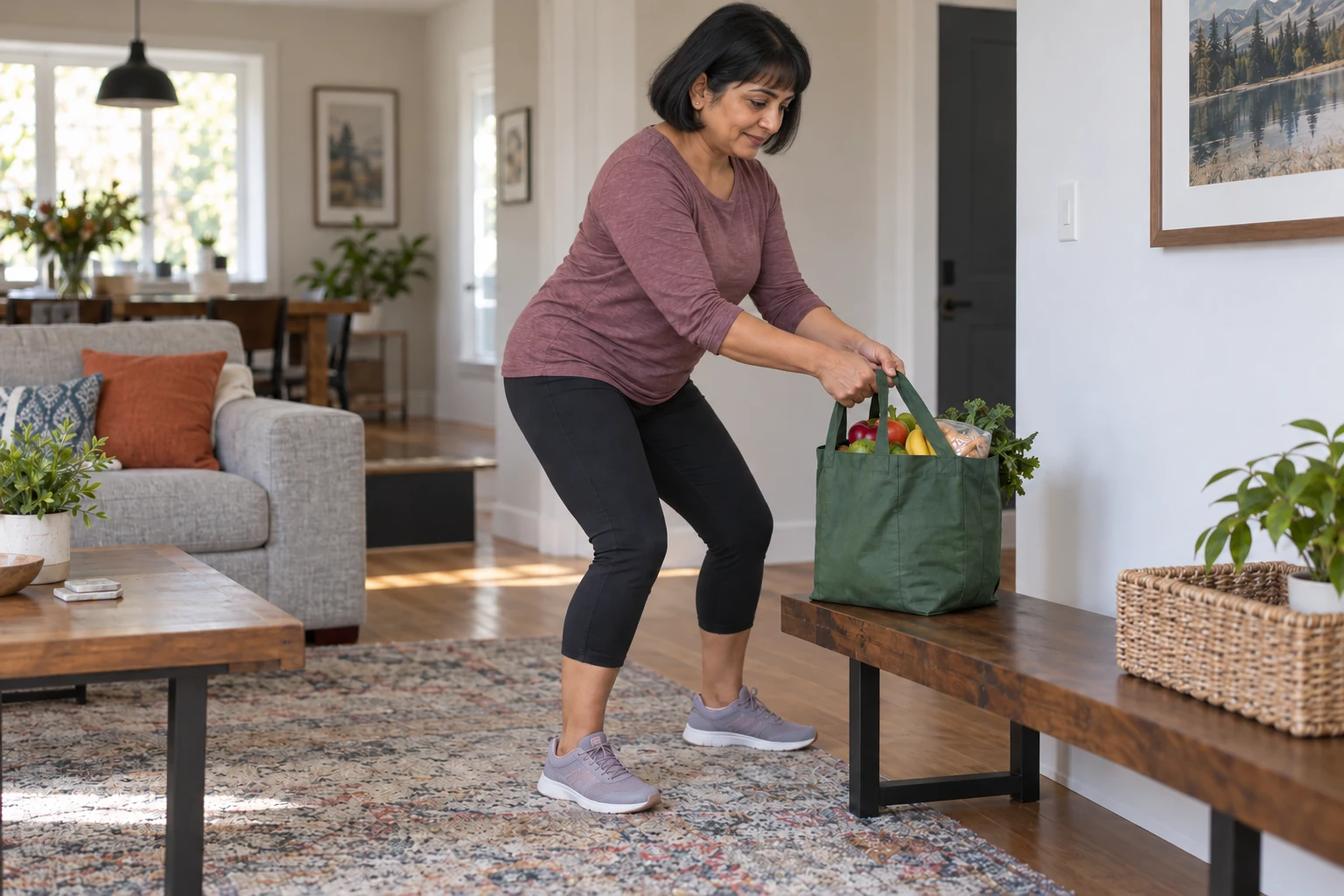
The American Council on Exercise’s hip-hinge demonstration teaches movement through the hips with careful attention to position. Treat it as a technique resource, not a reason to copy a loaded lift before you have learned the pattern.
In a coaching session, bring your actual question: where should the object begin, how close should it stay and how will you put it down? Ask to rehearse with a manageable object at a convenient height. Learning the return matters as much as the lift; the bag still needs a landing place.
Carry practice deserves the same attention. Establish a clear, level route and enough room to turn without twisting around furniture. Ask your trainer to select the load and distance rather than borrowing them from a stranger’s workout. A short, controlled effort is a better starting conversation than an ambitious lap with weights you cannot set down neatly.
Give the chair some attention
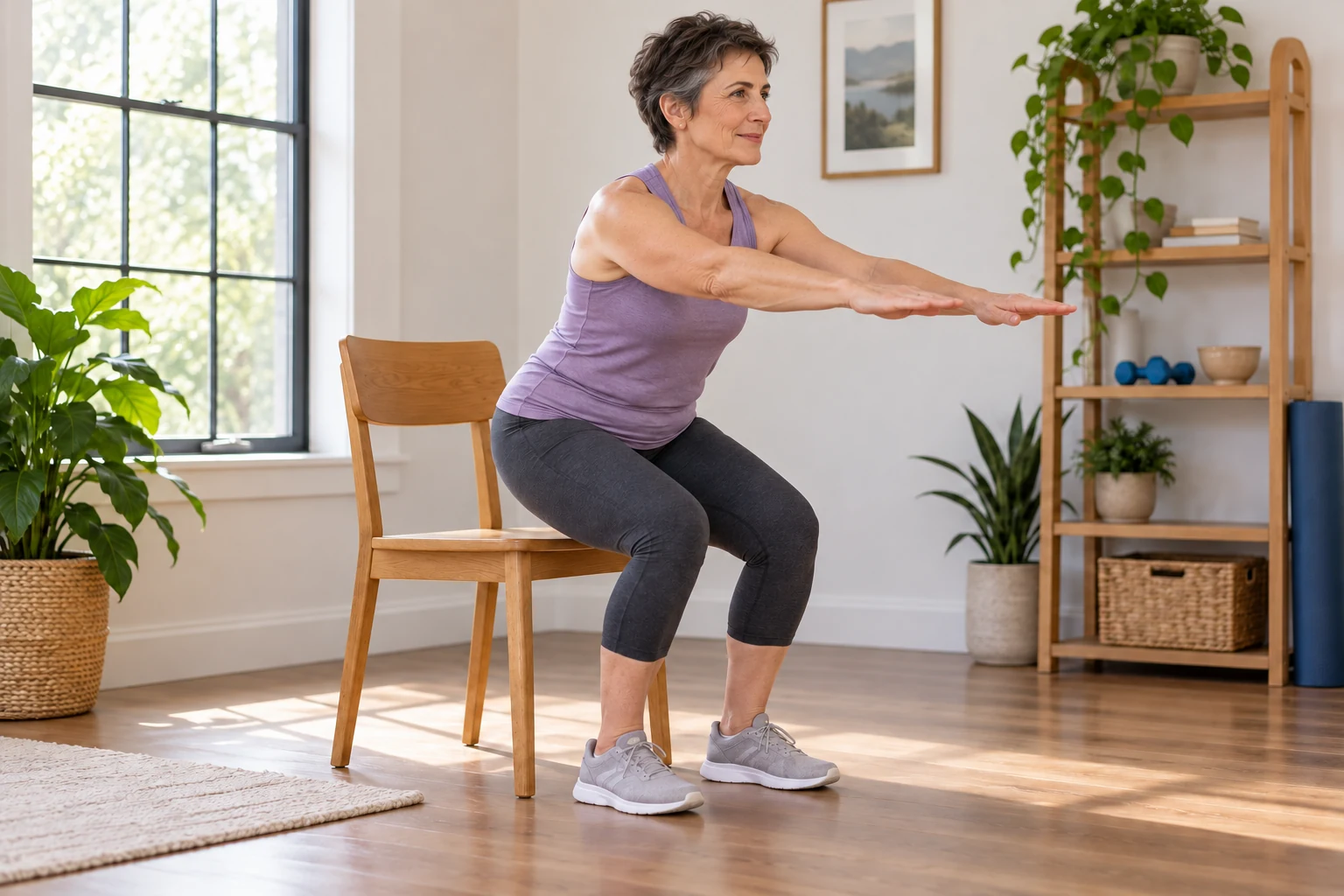
Getting up and sitting down is another ordinary movement worth noticing. The NHS home-strength guide includes a sit-to-stand using a solid chair that cannot roll or slide. Its demonstration begins with feet about hip-width apart, a slight forward lean and a controlled rise and return.
If you try that general example, choose a suitable stable chair and a clear floor. Keep the movement unhurried. The guide suggests beginning with five repetitions and building gradually; that is general published guidance, not an individual target you must reach. Ask for help selecting a suitable version if the setup is uncertain.
Write a routine you can actually return to
Two available appointments in your week are more useful than five imaginary ones. Put the sessions where they fit, including time to arrive, prepare and finish. A calendar entry that assumes you can teleport from a work meeting to a gym floor is already asking too much.
Leave the opening inside the appointment. D’FYNE’s guide to beginning a workout gradually offers a practical way to plan that transition. Then follow the programme you and your trainer have chosen, rather than adding every attractive exercise you saw that morning.
Keep a small record: the movement, the load or version used and whether you could control it. Bring that record to the next coaching conversation. It gives you something concrete to discuss when deciding what to adjust, instead of relying on whether the session looked sufficiently dramatic.
Notice useful progress
Choose a measure that belongs to your goal. Perhaps you can repeat the same planned carry without rushing, or you feel more organized about setting up a lift. Those observations can sit alongside the weights and repetitions in a training log. They are personal feedback, not proof that one routine works for everyone.
You do not need to turn daily chores into a workout, either. Take a second trip with the groceries when that is the sensible choice. Ask for help with an awkward case. Training for real life includes making practical decisions about the task in front of you.
Stop an exercise if it causes pain or you feel unwell, and seek qualified guidance about what is appropriate for you. This article offers general fitness information, not exercise treatment for a medical condition. The aim is a repeatable practice that serves your life: a little more intention in the gym, and a clear reason to come back.