

Breakfast can be a nutritional afterthought: coffee, fruit, toast,
then out the door. Protein often arrives much later, concentrated at
dinner. But protein at breakfast after 40 is worth a closer look,
especially for women who want meals that support an active life and feel
satisfying through the morning.
The important word is support. A higher-protein breakfast is
not a shortcut, a cure or a replacement for movement. It is one
practical way to spread protein foods across the day. Research on timing remains uncertain and does not justify a universal morning target for every woman.
Why the morning meal
is getting attention
Muscle tissue is constantly being renewed. Food and resistance
exercise both stimulate that process, and research suggests the
muscle-building response to food becomes somewhat less efficient with
age. A 2026 systematic review and meta-analysis found modest age-related
differences in muscle protein synthesis at rest and after eating, while
the response to exercise appeared more resilient. The authors also noted
that results varied and that more sex-specific research is needed.
That makes two habits useful companions: eating enough protein over
the full day and continuing to challenge your muscles. D’FYNE’s guide to
power training
after 40 offers a simple way to approach the movement side.
Breakfast matters because it can be the meal with the most room to improve. A July 2026 systematic review of seven randomized trials involving 305 adults aged 60 and older found no clear improvement in muscle mass, strength or physical performance from morning protein or amino acid intake. The evidence was very uncertain. This does not establish a special muscle-building advantage for breakfast, and these findings should not be treated as a prescription for women in their 40s and 50s.
What protein
at breakfast after 40 can look like
You do not need to begin with a calculator. Begin with a recognizable
protein food, then build the rest of the meal around it. Eggs, Greek
yogurt, cottage cheese, milk or fortified soy beverage, tofu, beans,
fish and leftover chicken can all work. Add fruit or vegetables, plus a
whole-grain or another carbohydrate that suits your appetite and
activity.
A useful breakfast should also be realistic. If you have ten minutes
on a weekday, a two-pan brunch is not a plan. Try one of these flexible
combinations:
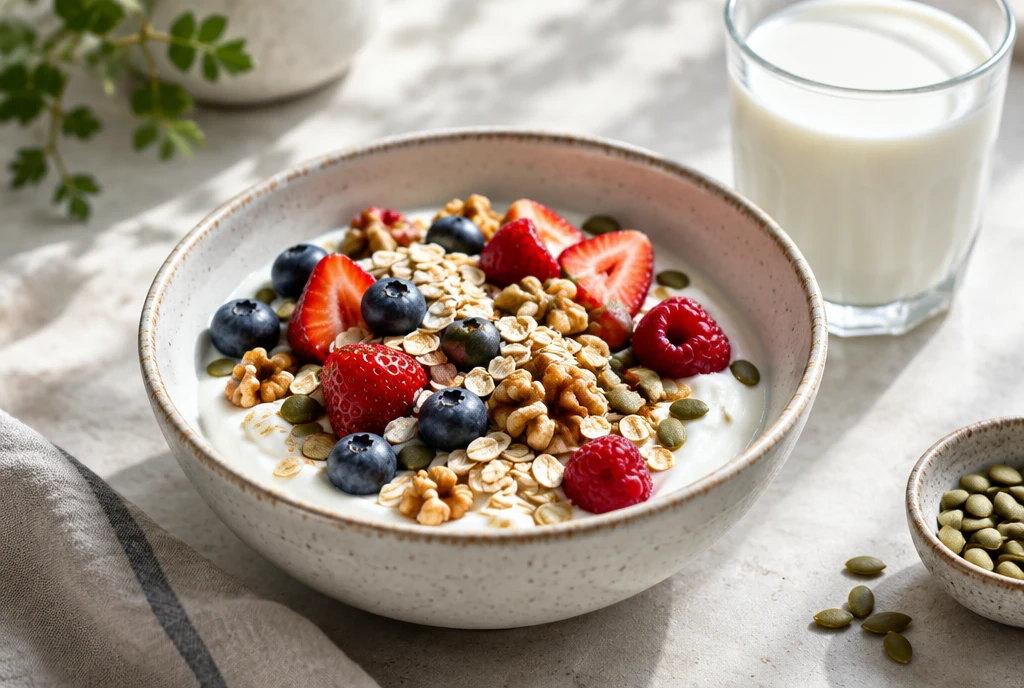
- Plain Greek yogurt with berries, oats, nuts and seeds.
- Eggs with whole-grain toast and fruit, with cottage cheese on the
side if needed. - A smoothie made with milk or fortified soy beverage, yogurt, fruit
and oats. - Tofu scramble with vegetables and toast.
- Leftover salmon or chicken in a breakfast wrap with greens.
Exact protein amounts vary by brand and portion. If numbers help you,
food labels can show how your usual breakfast adds up. Research and
expert recommendations for older adults often discuss roughly 25 to 30
grams at a meal, but that is a research-informed reference point, not a
prescription for every woman over 40. Your total needs depend on body
size, training, appetite, overall energy intake and other factors.
The total day still matters
most
A 2024 systematic review of 38 articles reporting randomized trials found that protein
supplementation could improve muscle mass in older adults, yet the ideal
dose, frequency and timing were not settled across populations. That is
a useful reality check. A carefully built breakfast cannot compensate
for an entire day that is too low in food or protein, just as one large
steak at dinner does not automatically create an ideal pattern.
Think in terms of distribution rather than perfection. If dinner
already includes fish, poultry, tofu or beans, look at breakfast and
lunch next. Could you add yogurt to breakfast? Tuna or lentils to lunch?
A glass of milk or fortified soy beverage with a snack? Small
adjustments are often easier to repeat than a complete meal-plan
overhaul.
Plant proteins count, too. Canada’s Food Guide encourages choosing
protein foods, including plant-based options, and making cooking part of
a healthy eating pattern. Beans, lentils, tofu, nuts and seeds also
contribute fibre and variety. Combining several foods across a meal can
make a plant-forward breakfast both practical and satisfying.

Three ways to make the habit
stick
Upgrade what you already eat. Stir Greek yogurt into
overnight oats, add eggs to toast, or blend silken tofu into a smoothie.
Familiar breakfasts require less effort than starting over.
Prepare the decision, not seven identical meals.
Wash fruit, boil eggs, portion yogurt and keep two dependable protein
options visible. You want a short menu, not a refrigerator full of
obligations.
Match breakfast to the day ahead. A recovery
morning, a long walk and a strength session do not always create the
same appetite. Let hunger, planned activity and the rest of your meals
guide portion size.
A one-week breakfast check
For seven mornings, write down the main protein food in your
breakfast. Do not score the meal or chase perfect numbers. At the end of
the week, ask:
- Did breakfast contain a clear protein source?
- Did it keep me comfortable until the next meal?
- Was it simple enough for the time I actually had?
- Did I eat a range of foods across the week?
That brief check turns a broad nutrition message into something
observable. You may discover that breakfast is already working well. Or
you may see that one dependable addition – yogurt, eggs, tofu or
yesterday’s leftovers – would make the morning easier.
Protein at breakfast after 40 is not a magic formula. It is a chance
to distribute nourishment more evenly, pair food with strength-building
activity and make the first meal of the day work harder for the life you
are living.
Sources
- Ikeda, K. et al. (2026). Protein or
Amino Acid Intake at Breakfast for Muscle Mass Gain in Older Adults: A
Systematic Review and Meta-Analysis. Food Science &
Nutrition. - Age-related
anabolic resistance and post-absorptive muscle protein synthesis:
integrative evidence from a systematic review and meta-analysis
(2026). PubMed. - Hettiarachchi, J. et al. (2024). The effect of dose,
frequency, and timing of protein supplementation on muscle mass in older
adults: A systematic review and meta-analysis. - PROT-AGE Study Group. (2013). Evidence-Based Recommendations for Optimal Dietary Protein Intake in Older People. Per-meal reference values concern older adults and are not universal targets for women over 40.
- Health Canada. Canada’s Food
Guide.