
Power training after 40 can sound like a niche reserved for athletes, but the idea is much simpler: produce force quickly. Strength is your ability to create force; power adds speed. It is the quality you call on when you rise from a chair with purpose, catch yourself on a stair or move a heavy bag before it swings into your leg.
The useful part is that power work does not require reckless jumping, complicated equipment or punishing workouts. For many healthy adults, it can begin by adding a faster upward phase to an exercise they already know, followed by a calm, controlled return.
Why power training after 40 deserves attention
The American College of Sports Medicine’s updated 2026 position stand reviewed evidence from more than 30,000 participants across 137 systematic reviews. Its broad conclusion was encouraging: resistance training improves strength, muscle size, power and several measures of physical function. For power specifically, the review found benefits from moving the lifting phase quickly, often with light-to-moderate loads.
That does not mean every repetition should be explosive. It means the intention changes. On the effort phase, you move as quickly as good form allows. On the return, you stay in control. The weight may travel at a modest speed, especially when it feels challenging, but the purposeful intent is what matters.
If regular strength work is not yet part of your week, begin there. D’FYNE’s two-day strength plan for women over 40 offers a realistic foundation. Power is a layer to add, not a reason to skip the basics.
A simple way to start
Choose one familiar movement near the beginning of a strength session, after warming up. Use a load you can control comfortably. Perform three to five crisp repetitions, rest fully, and repeat for two or three sets. Stop the set when your speed drops noticeably or your form changes.
That is deliberately modest. Power training depends on quality, not exhaustion. If you finish feeling as though you could have done more, that may be exactly right.
Do not confuse speed with hurry. Set your feet, brace gently and begin each repetition from a balanced position. A purposeful effort can still look calm. Filming one set from the side, or asking a qualified trainer to watch, can help you see whether the movement stays consistent as you add speed.
Keep the surroundings simple, too. Clear enough floor space, use equipment that will not slide and avoid adding speed to a movement you cannot yet perform smoothly. The goal is better expression of strength, not a dramatic-looking repetition.
Choose footwear and a surface that let you feel stable, and pause between sets long enough to recover your focus. These small details protect the crisp quality that makes power practice useful.
1. Fast sit-to-stand

Sit near the front of a stable bench or chair that will not slide. Place your feet where you can stand without rocking. Rise with purposeful speed, finish tall, then take two or three seconds to sit back down. Use your hands if needed at first. Progress by reducing assistance, not by racing the lowering phase.
2. Incline push-away
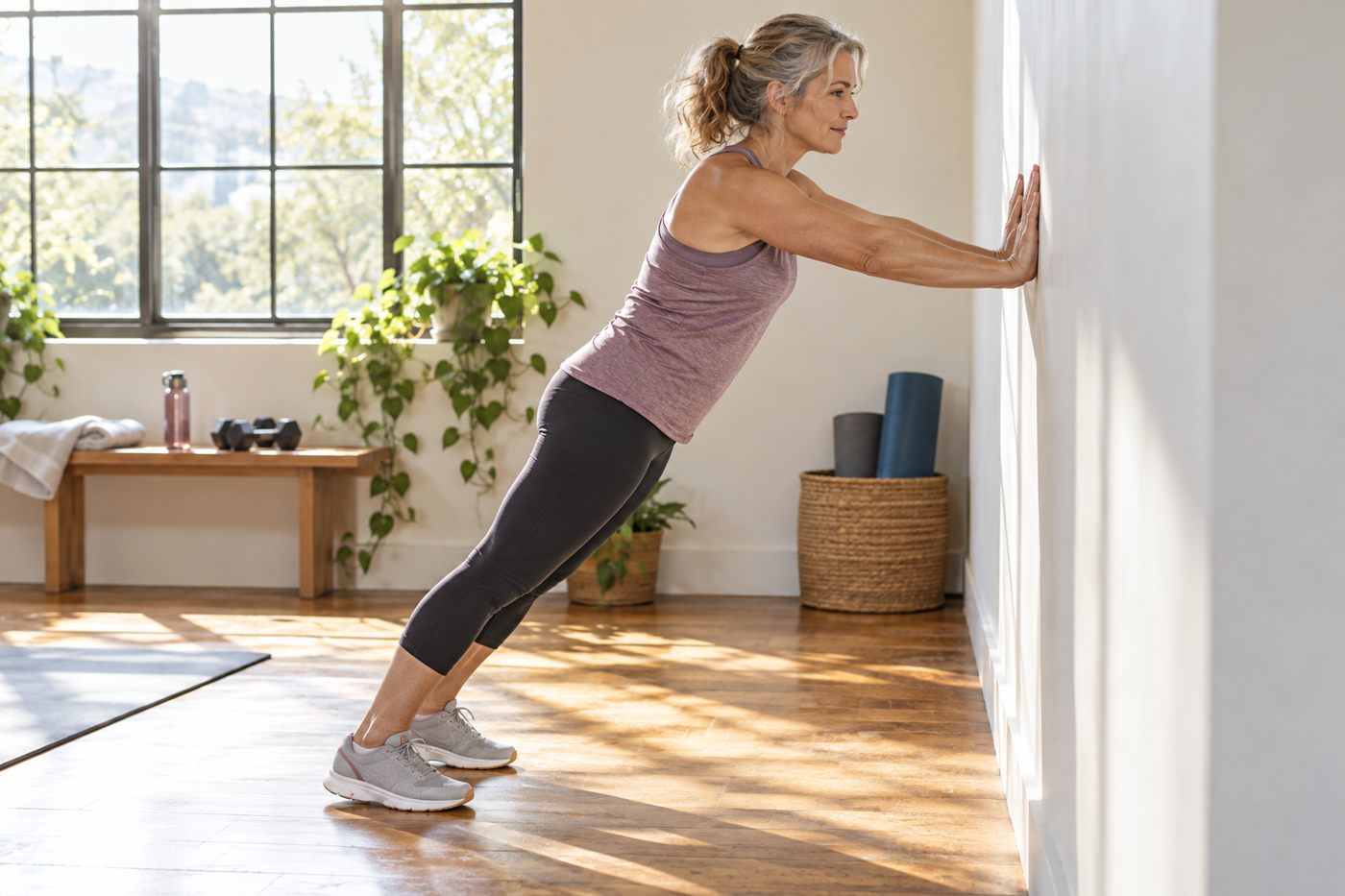
Stand facing a solid wall or firmly anchored rail. Lean in with your body in a straight line, bend your elbows, then press away quickly enough that your hands feel light. Keep the range small until the pattern feels natural. A higher hand position reduces the load.
3. Medicine-ball chest pass
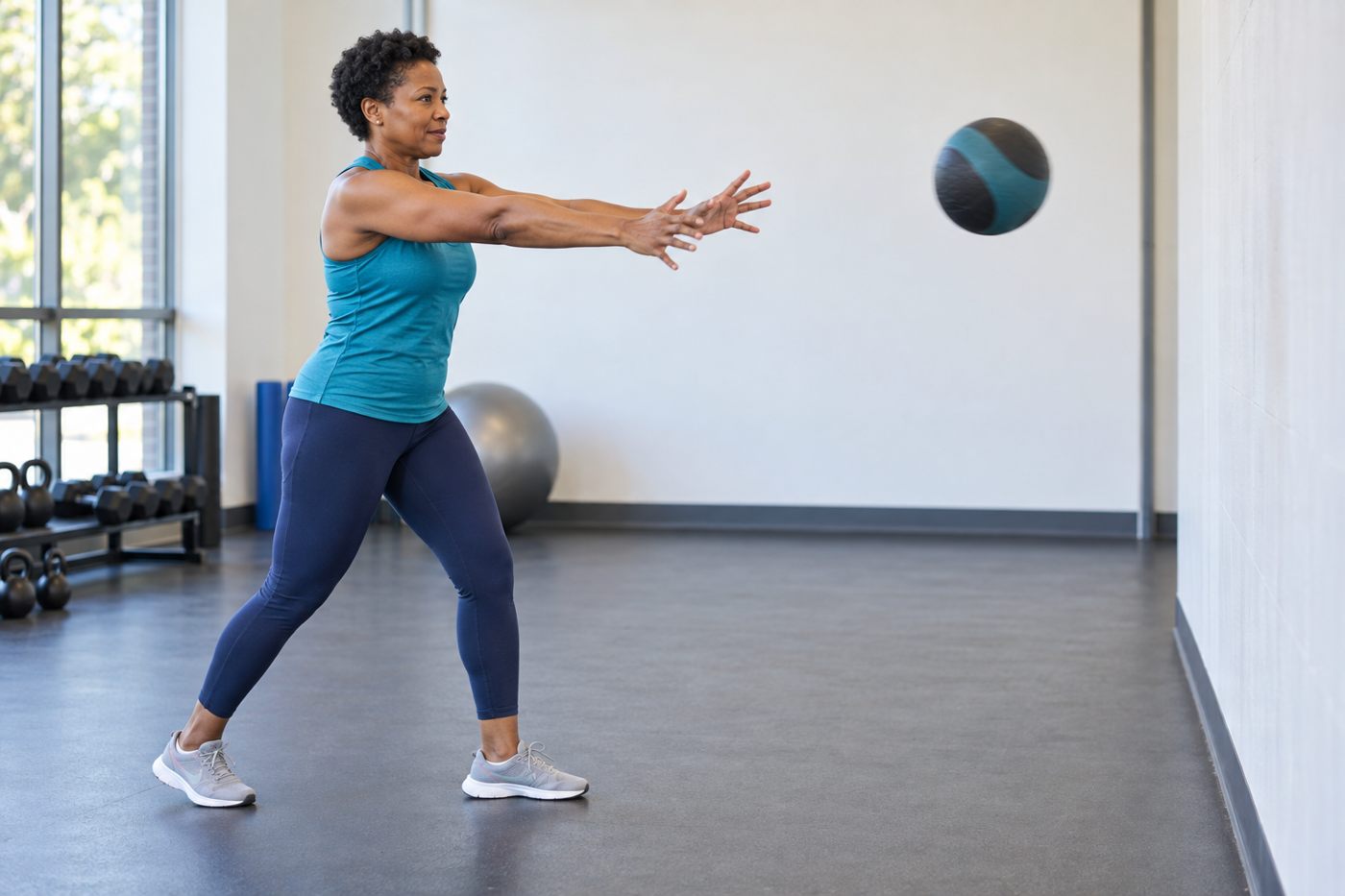
With a light medicine ball and a clear wall, hold the ball at chest height and throw it forward with intent. Let it rebound or collect it safely, reset, and repeat. The point is a clean, decisive effort—not the heaviest ball in the rack.
What good power work feels like
A good repetition feels sharp, coordinated and repeatable. You should not need to hold your breath, twist for momentum or chase fatigue. Rest long enough that the next set looks like the first. If you are training beside someone, they should see consistency rather than a gradual scramble.
The 2026 ACSM guidance also makes a broader point that matters for busy women: consistency beats a perfect programme. Moving from no resistance training to some resistance training delivers the biggest step forward. Bands, machines, free weights and body-weight exercises can all be useful when they are challenging enough and performed regularly.
How to fit power into a normal week
You do not need a separate “power day.” Add one power-focused movement to each of two weekly strength sessions. On day one, try fast sit-to-stands. On day two, use an incline push-away or medicine-ball pass. Keep the total dose small and record which version you used.
After several weeks, progress one variable at a time: a slightly lower chair, a slightly lower hand position, or a modestly heavier ball. Do not increase load, speed and volume together. The best progression is the one that preserves your confidence and technique.
When to slow the plan down
If a movement causes pain, dizziness, unusual shortness of breath or a sense that you cannot control the landing or return, stop. Anyone returning after a long break, managing an injury or unsure whether fast resistance exercise suits them should get individual guidance from a qualified health or exercise professional.
Power training is not a test of youth. It is a practice in staying ready: ready to move, react and use the strength you already have. Start with one familiar exercise, make a few repetitions purposeful, and leave the session feeling capable enough to return.
Sources
- American College of Sports Medicine Position Stand: Resistance Training Prescription for Muscle Function, Hypertrophy, and Physical Performance in Healthy Adults (2026)
- ACSM: Updated Resistance Training Guidelines (2026)
- ACSM Science Spotlight: New Position Stand on Resistance Training (2026)
This article provides general fitness information, not individualized medical advice.