There is a particular kind of optimism that arrives with a new training plan: fresh shoes, a perfectly organized calendar and the sincere belief that this time you will make it to the gym four days a week. Then work runs late, family needs you and Wednesday’s workout quietly becomes next Monday’s promise.
The useful news is that an effective strength routine does not have to take over your life. For generally healthy adults, the clearest evidence-based starting point is refreshingly realistic: train all the major muscle groups at least twice a week and build gradually. The Physical Activity Guidelines for Americans include muscle-strengthening activity on two or more days weekly, while the American College of Sports Medicine’s current resistance-training guidance emphasizes consistency over a complicated “perfect” program.
Why two days can be enough to matter
Two full-body sessions create a workable floor, not a ceiling. They give each major movement pattern regular attention while leaving recovery time between sessions. That makes the plan easier to repeat through busy seasons—and repetition is what turns a good workout into useful strength.
The updated ACSM message is less about chasing one ideal set-and-repetition formula and more about matching the program to the goal. Heavier loads can develop maximal strength; moderate loads and sufficient weekly volume can support muscle growth; moving a manageable resistance with intent can develop power. Most recreational exercisers do not need to optimize every variable at once. They need a safe routine they can perform, record and gradually progress.
The six movements that cover most of life
Think in patterns instead of isolated body parts. Across two days, include:
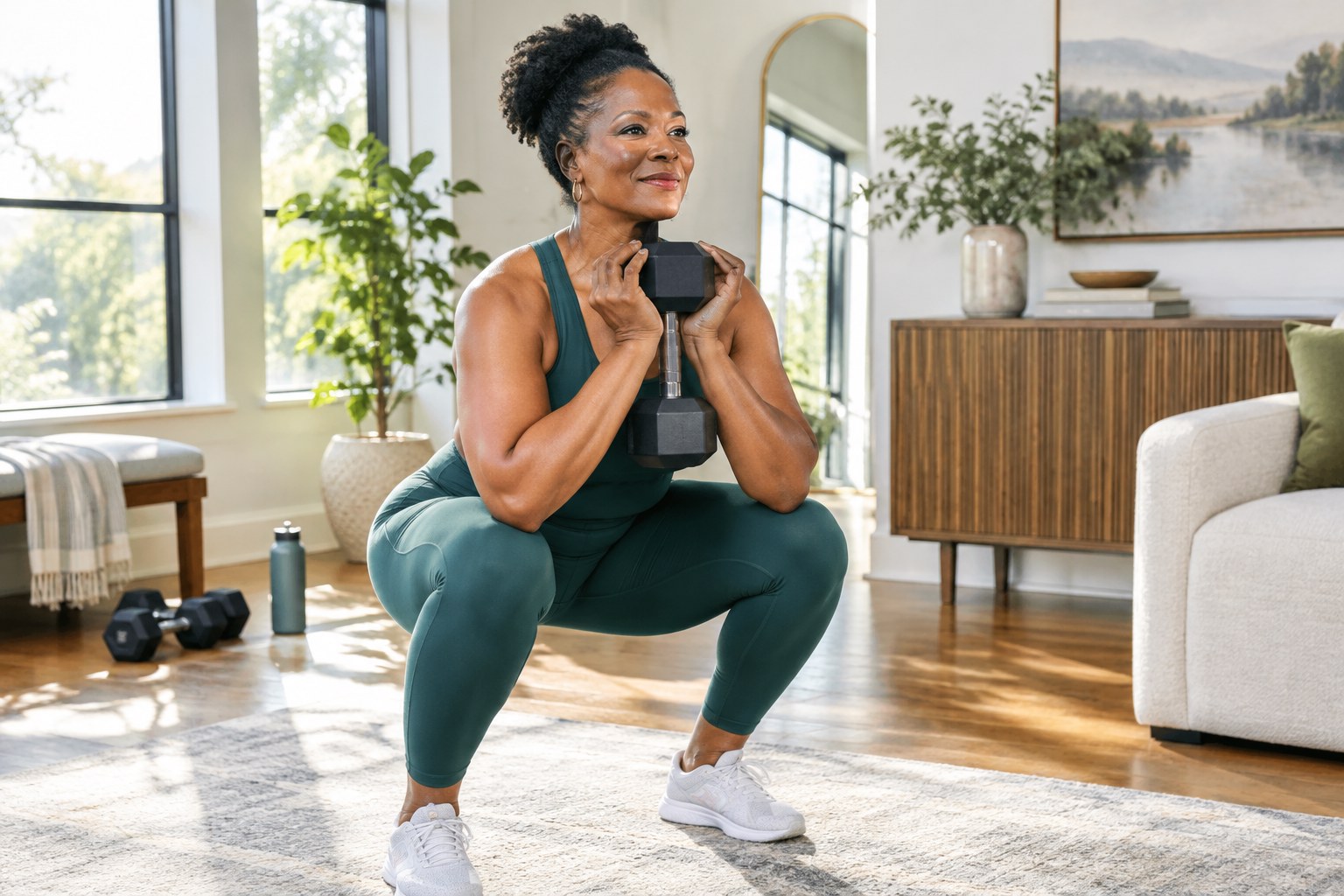
- Squat: sit-to-stand, goblet squat or leg press.
- Hinge: Romanian deadlift, kettlebell deadlift or hip bridge.
- Push: wall push-up, bench press or overhead press.
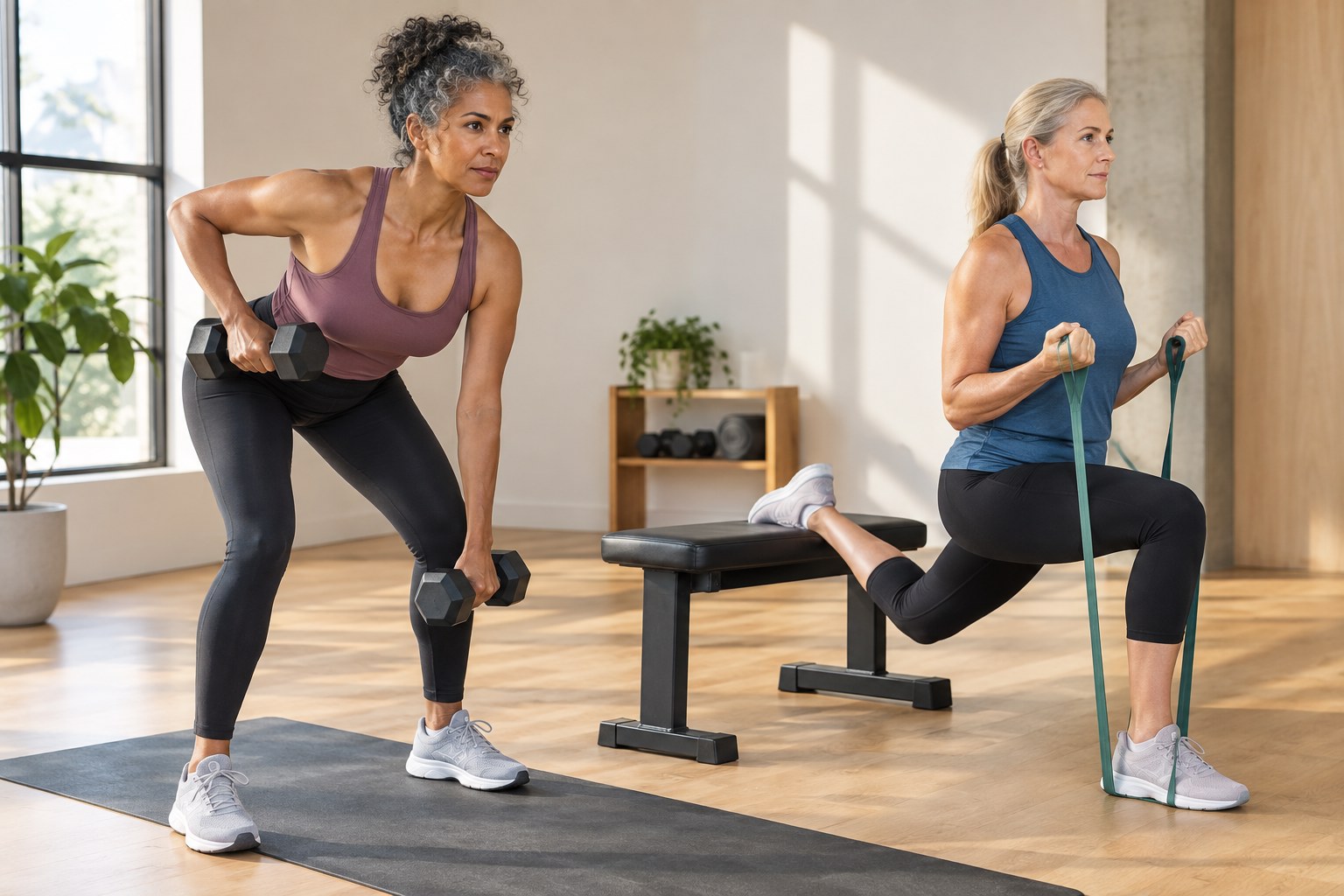
- Pull: band row, cable row or supported dumbbell row.
- Carry: farmer carry or suitcase carry.
- Core and balance: dead bug, Pallof press or supported single-leg stance.
These patterns echo ordinary demands: rising from a chair, lifting luggage, reaching overhead, pulling a heavy door and carrying groceries. The aim is not to turn daily life into a workout. It is to make daily life feel less demanding.
A practical two-day template
Day A: squat, row, hip bridge, incline push-up, suitcase carry and a balance drill.
Day B: deadlift, overhead press, supported split squat, pulldown or band pull, farmer carry and a core stability exercise.
Begin with one or two working sets of each exercise. Choose a resistance that lets you finish the set with controlled form while still feeling that the final few repetitions require attention. A common working range is roughly eight to twelve repetitions, but the number is a tool, not a test. Carries can be measured by time or distance, and balance work should be stopped before form becomes shaky.
Progress without turning every session into a battle
Progressive overload simply means asking the body to do slightly more over time. Add one repetition, use a little more resistance, improve the range of motion or perform the same work with cleaner control. Change one variable at a time. If every set is taken to exhaustion, fatigue may rise faster than skill or strength.
Keep a brief record: exercise, load, repetitions and one note about how it felt. When you can complete the top of your intended range with steady technique in consecutive sessions, a small increase may be appropriate. The next weight is not a verdict on your fitness; it is just the next experiment.
Make the plan easier to keep
Put the sessions on non-consecutive days, such as Monday and Thursday. Keep the exercise menu stable for four to six weeks so you have time to learn the movements and notice progress. On hectic weeks, perform one set of the six patterns rather than cancelling. A shorter session preserves the habit and still counts as training.
Walking, cycling, mobility and sport can fill the rest of the week, but they do not have to compete with strength work. The federal guidelines also recommend 150 to 300 minutes of moderate-intensity aerobic activity weekly for substantial health benefits, and explicitly note that inactive people can begin with small amounts and build up.
Know when to get individual guidance
This is general fitness education, not personal medical advice. If you have pain, dizziness, a recent injury, a health condition that affects exercise, or uncertainty about technique, consult an appropriate qualified professional. Pain is not proof that a workout is effective.
The smartest plan after 40 is rarely the most elaborate one. It is the plan with enough challenge to create change, enough recovery to support the rest of your life, and a schedule realistic enough to survive next Wednesday.